0
0

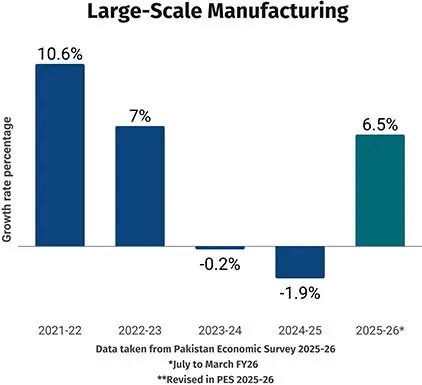
YET another State Bank report has been released, and yet another wave of self-congratulations is underway. On the face of it, a growth rate in excess of 7 per cent undoubtedly seems impressive as does another significant increase in per capita income. The only figure that the government has itself admitted as troublesome is inflation, which, according to the SBP, is touching 10 per cent. The coverage of the SBP’s report has fleetingly mentioned the continuing public relations problems of poverty and unemployment. The government’s official figures have never acknowledged poverty rates to be beyond 32 per cent that was widely quoted in 2001. In fact, the prime minister has insisted on numerous occasions that poverty has declined since 2001, and quoted an insignificant survey to suggest that poverty is below 30 per cent.
Be that as it may, one wonders whether all of this figure-quoting actually has any meaning whatsoever. If one were to ask the tens of millions of working-class people about the SBP report, the chances are that the response would reflect annoyance at best, and downright indignation at worst. A large number of independent economists have asserted that poverty in Pakistan is increasing at a quite alarming rate (whatever figures one might quote).
With the exception of top state functionaries, it is a widely acknowledged fact that the economic and social conditions of common people have been consistently poor for a long time. It would be naive to suggest that the downturn started only after the Musharraf takeover. The situation has been bad since well before 1999. The economic fortunes of a large number of working people started to decline towards the end of the 1980s.
There are a number of conflicting reasons offered by a variety of different sources for this state of affairs. The Musharraf government maintains that successive governments through the 1990s were guilty of mismanagement and corruption, and that the economic managers after the coup have orchestrated a remarkable revival. In particular, the economy has undergone structural reform over the past 5-6 years and is now on a ‘high-growth path’. But then why is the economic condition of the common (wo)man still poor ?
Economists try to explain such facts on the basis of theories about ‘rational’ human behaviour. According to the classical school of economics that underpins most academic and popular discourse, all individuals and all economic entities act in a ‘rational’ manner.
Accordingly the explanation for the lack of ‘trickle down’ since Musharraf took over is that investment is low. But the question rarely asked is, why public investment is low. In most cases, the focus tends to be on private, and more specifically, foreign direct investment (FDI) as if to suggest that FDI is the solution to all of Pakistan’s problems. FDI is a nicer way of describing multinational capital’s capture of local resources and markets.
As for public investment, it is necessarily low because the neo-liberal economic model that inspires our economic managers, is premised upon minimal public expenditure/investment and a corresponding increase in private sector control over the economy.
But how ‘rational’ is this paradigm? Is it not heavily coated by politics? And how meaningful are analyses of the economy that completely forsake the role of geo-political changes as well as the nature of the state itself?
A truly insightful reading of the economy should reconfirm what has been known to many serious observers for a very long time - that our economic fortunes have always been directly correlated with strategic aid and the manner in which this strategic aid reinforces the power of the military-bureaucratic oligarchy. Since the mid-1950s the ruling class has been rewarded for towing America’s line.
In the initial stages, the rewards were modest but policy frameworks were nonetheless heavily pegged to the orthodoxy of trusted US ‘advisers’. In the 1960s, the economy grew very fast, but then too the growth was heavily skewed towards the elite. In the 1970s, the relationship between the two countries cooled off considerably and Bhutto’s populist re-orientation of economic policies for once eased the burden on the working class.
By the end of the decade, the macro- indicators of the economy - so central to the vision of the policymakers - were stuttering because even Bhutto’s populism could not mask the fact that the state was structurally incapable of addressing the needs of the people.
With the start of the Afghan War, strategic aid was restored and the crisis was averted. And so in the 1980s, there was the mirage of stability. But as soon as the aid dissipated with the end of the Afghan war, the crisis re-emerged. And this time the neo-liberal policies propagated by the international financial institutions (IFIs) followed. So the state continued to renege on its welfare responsibilities while the myth of FDI equals growth equals development was propounded far and wide. But without the safety net of strategic aid, the results were always going to be disastrous.
It was not till the windfall precipitated by the events of September 11th that a near crisis was averted in familiar fashion. And now, only three and a half short years later, the economic managers praise one another for a great rescue act. This time however, in contrast to the 1980s, the crisis has only been averted insofar as macro indicators have been propped up.
As pointed out at the onset, the economic and social conditions of the majority of people are anything but stable. Nonetheless, and not surprisingly, the focus of the state and the foreign press continues to be on the high growth rates, increases in per capita income and the like.
It must be reiterated that with the exception of the 1970s and 1980s, our working-class has been consistently deprived of basic freedoms, including education, health, employment and shelter. And it must be stressed that if in these two decades the situation was slightly better it was because of the deviations that Bhutto made from radical capitalist orthodoxy, even if a number of these deviations were haphazard.
In general, the economy has more or less been hooked on strategic aid almost since 1947 which has transformed it into a prisoner of geo-strategic changes and a relatively entrenched military-bureaucratic oligarchy. The latter remains empowered by its foreign patrons to prevent social and political upheaval of the kind that needs to take place for the situation of working-class people to improve genuinely.
No matter how impressive the growth rates the SBP harps on about, there are structural constraints that prevent such growth from having an equalizing effect in society.
First, the nature of the state and its patronage of the propertied classes ensures that economic growth will never benefit working-class people in any meaningful way.
Second, the economy is so dependent upon foreign monies that enhancement of its productive capacity is hardly ever sufficient to offset the massive debt burden.
Is it really a surprise then that the prevailing state of affairs is celebrated by its beneficiaries as a great escape from the abyss of the 1990s? The critical question is, what will happen when the strategic needs of the US change again and Pakistan once again enters the doghouse?