0
0

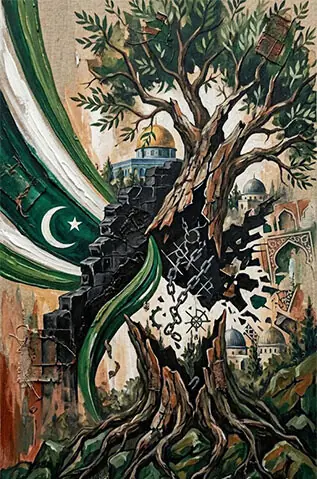
Hard talk on Kashmir
Mr M. P. Bhandara, a respected MNA and evidently a learned man, has hard-talked on Kashmir (Nov 29). Hitherto we have been soft-talking that the whole of Kashmir, which includes the valley, Jammu and Ladakh, belongs to Pakistan.
This contention has emanated from the Partition Plan which stipulated that all Muslim majority areas would constitute the dominion of Pakistan, the Hindu-dominated areas would remain with India, and the princely states would have a right to accession to either of them - keeping in view the wishes of the majority of their subjects.
In 1947, Jammu and Kashmir, including Ladakh, had a 77.11 per cent Muslim majority, 20.24 per cent Hindu, 1.64 per cent Sikh and 1.01 per cent Buddhists, according to the figures supplied by Professor Mushtaq Hasan (apropos of his letter 'Jammu's demography' Nov 29).
Now we have to hard-talk as Mr Bhandara implies. He says India can ill-afford to change the status quo just as Pakistan cannot agree to accept the Line of Control as an international border. The imbroglio remains as it is.
Since the war of 1971, it has been my firm belief that India cannot agree to any peace or peace talks unless it is sure that the benefits of friendly or good neighbourly relations are twice as many as that of Pakistan''.
Lesser benefits, let alone better or even equal benefits, will never be acceptable to India no matter what words or half-hearted efforts are made in to normalize the situation.
The perquisites presented by the writer are tantamount to (a) accepting the dividing line as a border, (b) stopping the violence from either side and, (c) granting autonomy to the valley - meaning awarding 'controlled sovereignty'. Controlled or liberal, India would not agree.
The only possibility, in my view, remains mediation by an external party or parties. As it is, we know there are three parties to the problem: Pakistan, India and the Kashmiris. I suggest five.
The other two should be the UN and a country friendly to both Pakistan and India. The first three should agree to a timeframe which should not consume years. Participating members should take turns to hold sessions in their respective capitals ending at either Srinagar or Muzaffarabad.
S.M. KAZIM NAQVI
Karachi
(II)
This is with reference to Prof Arun Khanna's letter "A suggestion on Kashmir" (Dec 8). The learned professor is absolutely right and has hit the proverbial nail on the head by stating that the question of Kashmir is for its own people to decide.
The Kashmiri people, including the entire Hurriyat conference, have been asking for precisely this very right and the whole struggle over the last 57 years has been along this line - for the opportunity to elicit a decision by Kashmiris as to their future.
The reason given by the Hurriyat for boycotting the polls is quite convincing. Despite the approval of neutral and international observers, the ground realities cannot be overlooked.
Kashmir has a rugged and mountainous terrain and the villages are remotely spread out. Observers only see the major cities and are escorted around by the defence forces. The psychological effect of the presence of 700,000 overtly hostile soldiers cannot be disregarded.
I support the Hurriyat's just demand that elections be held under a neutral authority. The Hurriyat's demand is simply to elicit the wishes of the Kashmiri people, but not under Indian army bayonets.
BARRISTER FAZAL HAMEED
Jhelum
DHA development charges
The Karachi DHA's recent announcement on the payment of development charges of Rs1,000 per square yard in Phase VIII can only be called sheer extortion, not with standing the DHA director-general's press statement and its PRO's attempt to whitewash the issue.
The DHA can do anything with impunity since no one has dared take it and the CCB to court for failing to fulfil their contractual obligations, even in phases where they have recovered total development costs.
Recently, our grandchildren enrolled at a private school near the Creek Club, and to save them from commuting over 15 kilometres, morning and noon, from our present Clifton residence, for the next several years, we thought of relocating near Creek Club.
Phase VIll was ruled out because of the recently imposed exorbitant development charges, and the estate agent showed us plots near Aisha Mosque, claiming that they were located in Phase VII on Khayaban-i-Saadi.
At Khayaban-i-Saadi, named after one of Asia's illustrious poets, we could not see even a dirt track, or katcha road, let alone a Khayaban. The whole area was littered with debris and rubble left over from previous structures that had been bulldozed. There were two deep ditches and bushes grew wildly there. There were no electricity poles, no water pipelines, and certainly no Khayaban- i-Saadi.
Some courageous plot owners have constructed isolated houses at the Creek Club end of the non-existent Khayaban. During our visit we saw water tankers supplying them water.
They are no doubt living at the mercy of the tanker mafia. At the Korangi Road end there was a small section of Khayaban-i-Saadi, which has been carpeted, typical of the haphazard, half-hearted development undertaken by the DHA/CCB.
Recently, the CCB cut the main Zamzama Boulevard to lay a pipeline and, as is the norm all over Karachi, left the dugout portion inadequately filled and tarred. This has resulted in massive traffic jams, since on both sides of the road cars have to slow down to cross the deep rut to avoid damaging their cars.
The CCB has, without the owners' permission, appropriated every convenient vacant plot, all over Defence and planted garbage bins, thereby massively contributing to pollution in this "posh" area, creating unhygienic conditions, a foul stench, and providing breeding grounds for flies, mosquitoes and bacteria. All this is the reward for residents who have paid full development charges.
Let us hope that after paying the newly-imposed development charges, plot owners in Phase VIII will receive the promised benefits, which house owners in other phases still yearn for.
PRO BONO PUBLICO
Karachi
'Reconciliation: the new mantra'
Mr Ayaz Amir (Dec 3) has termed the signing of the 'President to Hold Another Office Bill' by Senate Chairman Mohammedmian Soomro "the most important achievement he will ever be able to claim credit for in his lifetime".
We, citizens of Karachi, disagree: setting his seal on the mushrooming devastation of the city is actually his crowning triumph. In 2002, as governor of Sindh, he promulgated an ordinance enabling the "regularization" of illegal buildings.
These structures, promoted and built by the builders' mafia-KBCA (Karachi Building Control Authority) nexus, have degraded beyond recognition the environment of planned areas of the city, ruined utilities (water, sewerage, electricity, etc) and overloaded the infrastructure (schools, hospitals, playgrounds, parks, police stations, roads, etc).
Mr Soomro's "regularization" ordinance has encouraged even more illegal construction as it has established that one can pay one's way out of any criminal activity in Pakistan.
When a protesting group of citizens met him to try and prevent the promulgation of the damaging amnesty, governor Soomro stated that he was doing it for the (proverbial) 'widows and orphans who had been cheated of their monies'. But he promised (Dawn, Aug 30, 2001) to ensure that the involved builders and colluding KBCA officials were taken to task; in fact, some of them would be referred to NAB.
Since then, over 5,000 unauthorized buildings have been 'regularized' in Karachi. When we asked Mr Soomro to provide us with a list of the corresponding criminal builders and errant officials who had been prosecuted as per his commitment, we received no reply.
Perhaps, the Senate chairman will spare some time from the signing of landmark bills to provide (for publication in this newspaper) the asked-for list. Such an inventory of punished builders and KBCA officials may discourage other mafia members who wish to destroy what is left of Karachi.
ROLAND DESOUZA
Shehri, Karachi
NAB & political detainees
This refers to Mr Ali Mohammad Ansari's letter "NAB and political detainees" (Nov 18). There cannot be two opinions on the government's use of NAB to meet political motives, which has belittled the working of this prime organization in the eyes of the general public.
Apart from the government, this institution has been misused by vested interests to settle scores with their competitors, political or otherwise, with the result that in many cases political turncoats benefited.
The president of the ruling party, Chaudhry Shujaat Husain, has also repeatedly said that NAB should be headed by a judge of the apex court instead of an army general so that its working appear transparent.
The statement made by Mr Mushahid Hussain, secretary-general of the Muslim League, declaring Mr Asif Ali Zardari, Mr Yousuf Raza Gilani and Mr Javed Hashmi political prisoners, speaks volumes of the government's use of NAB against its political opponents.
It is, therefore, in the best of interests that all parties should join hands to review this law and make necessary amendments to make it more judicial. Since no fresh case has been registered against Mr Zardari, the government appears to be ready for reconciliation with the major political forces.
The government, therefore, should declare a general amnesty to all those hit by NAB as a gesture of goodwill. All corruption cases should be tried by ordinary courts instead of special NAB courts which should be disbanded forthwith.
NIGHAT RANA
Karachi
'Bachat' bazaars
It is very strange that two 'Bachat' bazaars on Friday and Sunday are being held at the same spot in Karachi in the vacant area meant for a green belt in front of thickly-populated residential complexes near Two-minute Chowrangi, North Karachi.
After these bazaars are over, their management does not bother to clean up garbage left by stall owners. All the garbage is dumped in a nearby open rainwater drain, turning it into a breeding ground for flies and mosquitoes.
In addition to this, items at these bazaars are no cheaper than those at regular markets. On both counts - prices and hygiene - I appeal to the authorities to do something.
MRS SHIALLA MURTUZA
Karachi
ICC credibility
This refers to Mr Rafat Mahmood Ansari's letter "ICC & doosra" (Nov 27) in which he says: "Previously on two occasions the ICC regarded his (Muralitharan's) 'doosra' as an illegitimate delivery."
I agree with Mr Ansari that the ICC has shown itself to be unreliable by overruling its own decision. Chucking has been a thorny subject for cricket administrators ever since Australia's Ian Meckiff was called four times in an over during a Test series against South Africa in 1963-64.
The issue of throwing has long caused controversy in cricket with a fierce debate on whether the unorthodox action of bowlers such as Sri Lanka's Muralitharan should be allowed.
Muralitharan's 'doosra', a leg spinner bowled from the front of the hand, was outlawed by the ICC last May after a report concluded the Sri Lankan bent his arm during delivery and so threw the ball.
At present, spinners are permitted five degrees, medium pacers 7.5 and fast bowlers 10. Muralitharan's 'doosra' was initially measured at around 14 degrees. The Sri Lankan's famous or infamous 'doosra' delivery is expected to become legal along with all other modern bowling actions once the International Cricket Council chiefs have ratified a proposal from its committee, which includes Test stars like Sunil Gavaskar, Arvinda de Silva, Angus Fraser and Michael Holding.
The proposal is to allow bowlers to flex their arms at the elbow by up to 15 degrees during a delivery. The move follows research that indicated most bowlers in history have released the ball with a bent arm, although this was only rarely visible with the naked eye.
A report of The Daily Telegraph, London, claims the ICC findings have shown that 99 per cent of all bowlers in history have not had legal actions. Former England batsmen Geoff Boycott has slammed the ICC's proposal to relax the rules on chucking as a result of pressure from Sri Lanka on behalf of star spinner Muttiah Muralitharan.
Boycott claimed that the development has nothing to do with consistency and fairness. The blunt speaking Yorkshireman told the BBC: "It's a sad day for cricket that this pressure can allow Muralitharan to bowl whatever he wants."
Meanwhile, ICC chief Ehsan Mani said: "Our cricket committee has recommended 15 degrees tolerance limit for all bowlers because biomechanics have told us that if the bowling arm is bent less than 15 degrees, the human eye cannot detect it."
Tim May, a member of the ICC's cricket council and the chief executive of the Australian Crickets Association, said about the new rule: "This is not a licence to throw, this is a licence to properly police law using technology."
The ICC committee found that even Steve Harrison, Glenn McGrath and Shaun Pollock are chuckers under the existing laws. Former New Zealand wicket-keeper Ian Smith has termed the ICC's assertion that greats such as Sir Richard Hadlee, Dennis Lillee and Imran Khan threw the ball "grossly insulting and degrading to the history of cricket".
Pakistan's spin bowling all-rounder Shoaib Malik and India's Harbhajan Singh are the latest players to fall foul of existing regulations. The ICC has proven unreliable since it let the issue of chucking get out of hand over the years.
If the proposed new ruling is accepted, it would mean that bowlers will be allowed to chuck the ball which may also mean the dismissal of batsmen. Why should batsmen be on the receiving end while bowlers get an extraordinary advantage?
The ICC's original task is to clean up any unfairness and promote rules through legal means, but by adopting such recommendations the game of cricket will only suffer.
However, bowlers who have problems in their body structure should be allowed such concessions. The ICC should take practical measures to bring down chucking to a minimum level if it cannot be erased completely.
The ICC has often been criticized for its whimsical decisions, and, yet again the flip-flop over India Captain Sourav Ganguly has made it a laughing stock. Ganguly was handed the two-match ban by referee Clive Lloyd for his team's slow over rate during a one-day defeat against Pakistan on Nov 13 at Eden Gardens.
Ganguly won his appeal after the ICC ruled in his favour. I would like to ask the ICC the simple question: what is the logic behind formulating laws and placing referees when the ICC overrules them as and when it wishes?
NAIMA ASLAM KHAN
Karachi
Female doctors and engineers
At the NED convocation on Nov 30, one observed that from most departments more than 50 per cent of the degrees went to girls. And the freshly-admitted first year class at the Sindh Medical College has only 20 boys out of a total batch of 250 students, i.e., more than 90 per cent are girls.
According to a rough estimate, the government spends one million rupees on average on each graduating professional engineer or doctor. If a survey were conducted of engineers and doctors who graduated 10 years ago, it would show that 70 per cent of girls who got their degrees as doctors or engineers left their profession, particularly after becoming mothers.
Not only have the nation's resources spent on them been wasted, but boys who aspire to become career doctors and engineers are deprived of the opportunity. Although no one is against women's education, considering the statistics, planners and decision-makers must enforce a ratio on the admission of boys and girls to professional universities and colleges before the shortage of doctors and engineers becomes alarming.
ENGR. FAROOQ FAZAL
Karachi
'Best of the best'
'The best of the best' policy was introduced about two years ago as a criterion for promotion in civil service. But the policy has only been favouring officers who are sycophants and penalizes those who have been comparatively honest and straightforward, and who have not allowed these principles to affect their ACRs.
In recent CSB meetings on promotion, for instance, a large number of senior officers with two or three decades of service under their belt and belonging to different occupational groups such as the DMG, police, information, commerce and trade, were passed over for promotion to Grade 20 and superseded by juniors on one pretext or the other.
This is utterly unfair and demoralizing for the bureaucracy. The government should revise its policy of civil service promotion and revert to the original criterion of seniority cum fitness.
SYED ANWAR ALI
Islamabad
Milking the motorist
These days it is quite acceptable for the corporate sector to increase its revenue by covertly fleecing consumers. Oil-producing and distribution companies have come up with the bright idea of milking motorists in connivance with the traffic engineering bureau and the police department.
Busy intersection signals are closed at peak hours and especially in the evening. The PIDC-Sheraton-Pearl Continental roundabout signals and the Mehran Hotel-Cantonment Station intersections are closed daily.
Motorists thus have to wait and burn fuel for at least 15 minutes. This extra forced consumption of gallons of fuel helps companies generate easy income without any cost in service.
Whether prices stay stable or are reduced, companies have their cake and eat it too. Traffic police seem oblivious to this dilemma. Motorists have little hope.
GHEEWALA A.G.M.
Karachi
Filth around colleges
There is a Lahore road leading from Kutchery Road (near Anarkali) to Urdu Bazaar and Bhati Gate. The road passes between the Government College University and Oriental College.
It remains in a filthy state and poses a health hazard, especially for students. Owners of horse-drawn rehras have turned the road into a permanent stand. Old-book sellers have made it a market. Even kite string is prepared here. Would the district nazim care to visit the road and do what is needed?
IMRAN ALI
Lahore