0
0

Tears, fears at passport office
Is there anything new being said here in the lament that the thought of going to a public dealing office in this society is a depressing and a discouraging one? It borders on despair, if not downright despair. So when the new Prime Minister Shaukat Aziz talks of good governance it makes a lot of sense. Fingers crossed though.
Having said this, is there anything new being said in the grievance that getting a passport renewed or a new one made, or having mistakes corrected in that green coloured passport is to be willing to undergo a harassing humiliating experience? A way out is to either spend money or find the right contacts, and the connections (not connectivity as the blessed Information Technology guys would say) and this modus operandi is what is used each time you need to go any government public dealing office. In fact, I have noticed that even in the private sector, in the commercial organizations, there is nothing as efficient as a personal contact that works supremely better than the given so- called system.
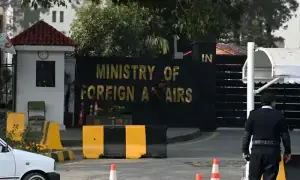
Here let me focus on the green passport that we have and which according to one news agency report from official sources, will go blue very soon! Have we tired finally of the image that the green passport has brought us in 57 years? But it is not so much the image that we concern ourselves here, as we do with the hassle and the humiliation that it means to the genuine bonafide citizen of this country when he deals with the main passport office in Saddar. Not surprisingly, a private TV channel had a detailed news report in what exactly (or almost) goes on within the passport office domain there. I am amazed that for all the money that the passport office makes officially, and the pivotal position that it has the place looks shabby, neglected, and in a state of depression. Is that done with purpose? The question makes you wonder.
The report was telecast during the last week, and a couple of days ago another news came that this Saddar based passport office would shift to a temporary centre in the Awami Markaz. Keep in mind that a new passport, called the Machine Readable Passport (MRP), is to be issued from this month. The date given so far is the 15th of September. One hopes that it will be honoured; there will be no exceptions and that the public will not be subjected to hidden costs, and undisclosed and unforeseen frustrations. One also prays that the homework done by the departments concerned has been of quality, and would reflect the values of good governance that is emphasized by Islamabad. Fingers crossed once again, though.
All these bits and pieces of information drive one to contemplate the passport delivery issue with more than some degree of apprehension. For instance, what will be the quality of shifting, were one to take into account the loads and loads of files, data and records at the Saddar Passport office. How much of that data will be retrieval at the Awami Markaz, and one hopes that the passport applicant will not be asked to make repeated visits (that is the case, presently, indicated in the television news report).
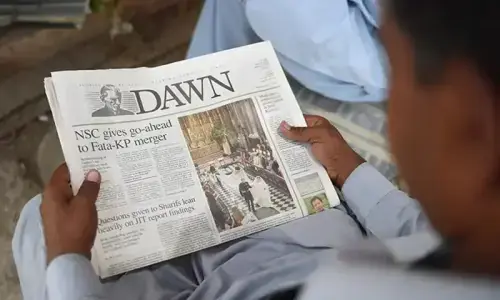
Here I refer to a letter that appeared in Dawn on Aug 21 entitled "A bad day at the passport office". It begins like this "I would like to highlight the problems faced by thousands of people who visit Karachi's main passport office everyday. Only recently I had applied for the renewal of my passport". This applicant, a woman, narrates her story, when with over a hundred people in the queue for the so-called ladies line, suddenly had a heart attack on duty, and the assistant director on duty expressed his inability to help out the applicants who had been waiting for hours. (There is always an unnecessary wait of hours and days at the passport office in uncomfortable environment one may add here).
It was a depressing letter at the end of which the citizen asked why was there insufficient staff to deal with the rush that was there, yet again. And the other point emphasised was why the applicants were without even fans and that the senior officials were sitting in air-conditioned office.
It reminds me about another person who had never dealt with the passport office in Saddar without having some influential link. For indeed, one of the hassles not just at the passport office in this case, but, in most of private and public sector offices is to find out who is the right person to contact. To understand the world of mind boggling ever-changing, and often undisclosed world of what are known as procedures or systems. But as one cynical friend rescues me at times, when he says that "what you have to understand is that there are no systems. That is precisely the system. Once you do this then you will save yourself from a lot of unhappiness".
Elderly people and women in particular avoid the dreadful experience of going to the passport office and this was evident from the way in which some applicants in that television report where the reporter and the camera seemed to have surprised the passport office staff, including the director, spoke. Some of them appeared angry, some weary, some irritable, some in tears.
Some of the women were in tears, and appeared to have undergone those frustrating conditions that we all know about but are helpless to remedy? Is this passport office situation, beyond remedy? For example, can there not be a decent dependable system of providing prompt guidance, information, assistance to the people who come there, rather than allowing those agents and their sub-agents who operate there in such large numbers and make money, which the passport office spokesman in the programme interpreted as a way of providing jobs in a society with such high unemployment rate. Strange attitude.
The bureaucrats may not have any real solutions, but, they sounded optimistic about the future vis-a-vis a better deal for the applicants. And this shifting to the Awami Markaz? One has doubts and fears not only about the deal that awaits applicants who will go there, but also about when will the passport office return to the Saddar location. That should be made public. As indeed should the rules and requirements that relate to the applicants.
There is another aspect to the issuance of passports that arise. (I am tempted to talk of the image of the green passport, and the fake passports that people still manage, as the reports say, to acquire as a result of which even the genuine Pakistani passports are treated with suspicion abroad). Why should there be for a city as large and growing as Karachi have such a centralized operation, all in Saddar? Can't there be smaller, efficient, passport offices in different towns of the city for the convenience of people. Imagine the flocking of people from all over the city; Landhi, Korangi, Malir, North Nazimabad, North and New Karachi and so on who have to repeatedly visit Saddar passport office.
See the time and cost involved, and see the difficulties they face, and the number of trips they have to make. Even Awami Markaz was not the best option for majority, argued one gentleman who had a recent experience at the passport office. Decentralize the passport office in Karachi, he says.
Thoughts go out to the passport office in Saddar, as I have known it since the early seventies. Karachi has changed grown and even improved in numerous areas. Think of the role that overseas have played and continued to play in the national economy, the educated people who have migrated and the simple uneducated who have either done that or simply gone abroad to make money. Think of the attention that the bureaucrats and planners have given to the passport office, and the priority.
That is one of the reasons perhaps why the illegal passport is such an ugly embarrassing reality. So much so that visa restrictions have been imposed by several countries because our very travel documents, including the passports issued here can be fake, and forged, and duplicated, and so on. A variety of ways to cheat here too. But in all this change, and growth, the getting of a passport remains a hugely frustrating task, and the average citizens dread going out to get it.
A report this week from Islamabad said that "foreign missions show MRP acceptability". Its contents make you reflect. It establishes the point that "the foreign missions in Pakistan have shown acceptability of machine readable passports which are being launched from the 15th of this month, and assured that they would ease visa restrictions on Pakistani nationals due to transparency of the document. "It says that the diplomats frequently visited Nadra offices, and expressed their satisfaction at what promises to make Pakistan the first country ever "to issue a passport using both the Automatic Finger Identification and Facial Recognition system".
There are other safety features promised, including prompt reduced time delivery, design and colour changes, and sophisticated features all of which seek to ensure that the passport is respected overseas. Sounds good. "But, what about the issuance of these passports?" wonder doubtful citizens who apprehend that applicants may find getting these passports far more cumbersome. And that passport agents may thrive even more for the public will be unfamiliar with the forms procedures and changed "systems". The MRP fees ordinary and urgent, has not yet been fixed, and this remains a question mark.
A colleague, who found it of significant value that foreign diplomats had taken such keen interest in new passports, suggested that it would be an equally good proposition were diplomats and other overseas opinion-makers and lobbies show some concern at the poor state of affairs that exist at the stage where these passports are issued. Where even the bonafide applicant is made to feel suspect.
Lahore's Kakkayzai 'horse traders'
The original precinct of horse riders in the old walled city of Lahore is known as Kucha Chabaksowaran inside Mochi Gate. This area was inhabited by people who were, in one way or another, involved with horses, be it riding, manufacturing saddlery, riding boots, reins, belts, whips, or simple horse trading. Anything to do with horses has always had a 'chabaksowar' connection.
Horse trading was the 'natural' business of the Kakkayzai clan of this 'kucha' - precinct, and they operated through the various 'nakaskhanas' of Lahore, especially the one opposite the Wazir Khan's mosque. These horse traders were known as 'chabaksowars', though the very name itself means 'horse riders'. In earlier times this is where the cavalry soldiers dwelt, especially during the Mughal period. But the time the Sikhs took over power in 1799, various other traders linked to the cavalry started moving in. By the time the British came in 1849, Kucha Chabaksowaran had an array of traders, manufacturers and officers of the Sikh cavalry living here. But it is the Kakkayzais and their horse trading that had always dominated the area.
A number of detailed accounts exist about 'horse trading' in Lahore, but none as colourful and detailed as the one in the book Yaadgar-i-Chishti by Maulvi Noor Ahmed Chishti, who also wrote the famous Tehkeqat-i-Chishti. The Kakkayzai horse traders all acted as one, with the profits being added to a pool. The normal profit rate was four per cent, which was deposited in a collective fund, and on the first Thursday of the new moon week, the collective fund would be distributed equally among all the horse trading Kakkayzai clan. This clan had their own strict ethics, and they had a tradition whereby they never uttered a word during the entire dealing, except when praising or condemning a horse.
The method they used was unique. Whenever the price of a horse was asked, after ascertaining the seriousness of the buyer, they would throw a handkerchief over their hand and use a unique sign language. The price was always told through a sign, never through words as that was considered inauspicious. The sign language was the movement of fingers informing of an acceptable price.
Once a deal was struck, the piece of cloth was thrown over the horse and the deal finalized. Once the price was paid, the cloth, the reins, some green fodder and the basic saddlery went with the price. Giving green fodder was considered a sign of good luck. No horse was ever sold without the seller providing some green fodder.
The Kakkayzai clan had an ethics all their own, and it goes without saying that the people of Lahore never did quite swallow their working methods. They had a reputation for being very tough negotiators, and people have, over the years, been rather wary of them, at best trying to avoid getting into any fray with them, for once they get into a fight, the Kakkayzai clan seem to all unite. Yet they have proved to be the biggest enigma, as a people, that have ever lived in the walled city.
These horse dealers had an exceptionally aggressive attitude towards their customers, yet when it came to their womenfolk, they are placid walkovers. The Kakkayzai women are known, even today, as a set of women who fight, sometimes over trivia, for hours, using a language that would make hardened criminals blush. They keep a verbal fight going for days and weeks and even months.
They start arguing in the morning after putting their kitchen utensils upside down, and then a slanging match starts. Such is the colourful language that no man in the walled city would dare to pass through their area. They all use the side streets, blushing at the invectives as they rush through. As I have experienced this scene once in my college days, I can assure you that one would rather be shot dead than face these aggressive women.
But then besides horse dealing, the Kakkayzais of Kucha Chabaksowaran were known for their infidelity. Their fondness for the 'good' things of life were legendary, and some say that their pooling of resources was one way of ensuring that they all had an equal fling at life. There is an old saying in the old walled city, that "a Kakkayzai sleeps best after selling a horse", probably because he is assured of some good time in the very near future. It is, therefore, understandable, why their womenfolk have gained such legendary status, for they are known to even tease their 'fellow opponents' about the impotence of their husbands.
Such have been the ways of the Kakkayzais of Kucha Chabaksowaran. Their customs also need to be studied, for, according to Chishti, unlike other clans in Lahore, they celebrate a woman's pregnancy throughout the nine months of expectancy. Every month they send sweets to the house of the expecting mother, even if she is involved in a fight with a neighbour. The men strictly keep out of his activity, preferring to pool resources and enjoy themselves collectively. It makes eminent sense. Once a child is born they then react in extreme behaviour, depending on whether it is a male or a female. Need one say more?
But then times have changed since the Kakkayzais of Kucha Chabaksowaran were horse dealers almost 150 years ago. They initially moved out of the walled city towards Shahdara, where a Basti Kakkayzaian exists. There, even today, the daily ritual of verbal fights among the women takes place. Others spread out to other parts of the city. Some remained, working in the leather trade. Today this clan, like all others, works in the diverse trades that are available today, though still known as aggressive and tough to tackle. It is probably in the genes, for one source puts down their origins to the tough Cossacks of Russia that came to Lahore over 600 years ago with the Turkish invaders, all horsemen that they were.
There is an area in Turkmenistan that is called Kakzai. But the word Kakkay is from the Greet word 'Kakophnos" meaning 'bad'. The word 'kaka' has Indo-European roots like 'kratia' is from kratos meaning 'strength, power, rule'. So these tough Cossacks, the men who rode in on horses, remained with their horses till such times machines replaced them. It comes as no co-incidence that over 50 per cent of all racehorse owners in Lahore are Kakkayzai, as are the jockeys and trainers. Till this day they are, like their womenfolk, not easy to deal with. It's the genes without doubt.
The life of Nietzsche
Kazy Javed, currently the resident director of the Pakistan Academy of Letters (PAL), has been a research scholar in the Punjab University's department of philosophy. He spent 10 long years in that capacity. He is now the author and translator of several books on a variety of subjects, including a series on contemporary Western philosophers. His books on Voltaire, Rousseau and Bertrand Russel have already been published. He has now come up with one on Friedrich Nietzsche, the 1844 born son of a pastor who turned out to be a free thinker and eventually came to be known as anti-Christ.
The book is a simple and straight account of the life of Nietzsche - his birth, early loss of his father, education, military service and literary work. It ends up with details of his illness and ultimate death. In between the reader is told how the study of Shopenhauer brought about a revolution in his thoughts and how he remained close to Richard Wagner, the German composer of operas and music dramas.
Among the modern philosophers, Nietzsche is better known in our country mostly because Allama Iqbal has made many references to him. People have even been trying to equate Nietzsche's superman with Iqbal's perfect man.
So far as matters of spiritual and metaphysical significance are concerned, Iqbal was in agreement with Goethe. He was also an admirer of Nietzsche yet he sharply criticized his philosophy. The only similarity of views between the two greats is confined only to minor points, the difference between the 'ideal man' of Iqbal and the 'superman' of Nietzsche being rather too wide. Iqbal's concept of the ideal or perfect man corresponds to the ideas of Rumi and only bears some resemblance with those of Nietzsche.
Moreover, Iqbal stands for the equality of all human beings and believes that every individual has the potentiality of developing into an ideal man whereas Nietzsche divides mankind into a dominant 'master class' and a largely dominated 'herd'. Iqbal's appreciation of Nietzsche is confined only to that aspect of his thoughts which are in consonance with the teachings of Islam and his scathing criticism of Christian ethics which advocates renunciation and negation of the self.
Again, whereas Iqbal is a staunch believer in God, Nietzsche denies his very existence. On top of it, where Iqbal wants his ideal man to be a benevolent and God-fearing individual, Nietzsche visualizes his superman to be malevolent, merciless and selfish with the aim of destroying everything in the struggle for increase in power. Nietzsche also denies that good and evil are eternally determined.
A proper and fuller study of Nietzsche would prove that his philosophy is totally different from the thoughts of Allama Iqbal. There is no doubt that the Allama did admire Nietzsche and his powerful superman, yet he found the transcendental element lacking in it. He has, therefore, added spirituality to the idea of Nietzsche.
* * * * *
I have known Taslim Ahmed Tasawwar since the 1970s when I came to Lahore to live permanently. A poet of merit, he was engaged those days in the book publishing business besides editing and producing a monthly magazine by the name of Suraj. One day he spoke to me about improving his magazine and giving it a new look. Eager to help, I forthwith convened a meeting of literary figures to make necessary suggestions. Those invited were Munir Niazi, Dr Agha Suhail and Farkhanda Lodhi. The meeting was held, some suggestions were made, but that was about all that the committee did. In the end Taslim was left to look after himself.
Being an enterprising person, Taslim did not confine himself to his business interests but also took up a job with a newspaper, the popular Mashriq of those days. Soon after he met with a serious accident which almost made him an invalid. However, he refused to be cowed down by adversity and resumed work with the newspaper as soon as he was able to move. I have seen him literally dragging himself up the stairs of the daily Mashriq on the Abbot Road. Taslim also had stints with other newspapers after the closure of the Mashriq.
At the same time he kept persevering with his publishing ventures and has produced many books over the years. I am particularly impressed by his publication of Zard Patton Ki Bahar, the travelogue of Mianwali-born Indian writer Ram Lal after his visit to his homeland. Anyway, Taslim has not forsaken his first love, Suraj. Converting it into a quarterly, he has recently produced a most laudable issue. Not only has he succeeded in securing contributions from such top class writers and poets as Ashfaq Ahmed, Saeed Sheikh, Bushra Rahman, Azra Asghar, Dr Khurshid Rizvi, Mohsin Bhopali and so many others but has also provided 350 pages of choice reading material.
In this connection I would specifically like to mention the article of Aslam Kamal about his visit to the Makli graveyard. I had already heard from Dr Arifa Syed, who had been her student at Harvard, that Dr Schimmel always wished to be buried in the Makli graveyard. Although her mortal remains were interred in Germany, a group of her devotees specially visited Thatta to install a tombstone with her name in the Makli graveyard.