0
0

To Palestinian children, from a mother
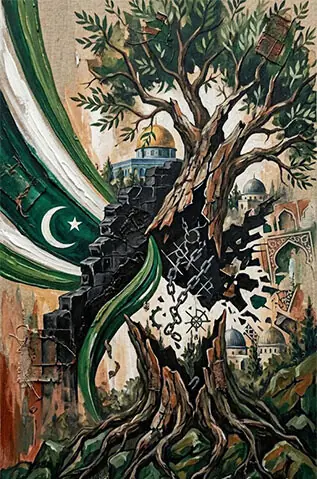
Palestinian children, I am a mother like your mothers. I feel your sufferings, your courage, your sacrifices - and yet we are told you are terrorists by both Americans and the Israelis. No, dear ones, you are the honour of your country and honour of all those who are fighting for their freedom and are now attempting to protect their freedom.
Some of us with a very insignificant voice often discuss you, side with you, feel a tremendous rage against those who kill you mercilessly, but what else? How can we be useful to your struggle? We weep, we mourn, but we do not have your courage to even demonstrate against the atrocities committed by the great democratic countries of the world. You, dearest children, give life to save life.
We are told by the world media, which is very powerful, that you are barely human beings, that you are nothing and don't deserve sympathy or love. We are told that American blood is much more sacrosanct, and as the capitalist imperial power calculates everything in dollars, much more valuable.
One American loses his life and there is an uproar, but when hundreds of innocent people in your country are killed by Israeli rockets, there is hardly a murmur anywhere. Are the Arab countries surrounding you so impotent that they cannot even raise their voice against injustice and cruelty? Probably they are too absorbed in their own comfort, but I am certain there must be ordinary Arab people who do raise their voices, but they are not heard anywhere, because it does not suit the rulers or the rulers' ruler.
Do you know what a homeland is? Surely not - all that you have seen is blood, guns and death. How would you know that flowers are beautiful, that the sky is beautiful, that schools are safe places to go to? When mothers send you to school or to play outside, they wait in anguish, wondering whether you will return or not.
They wait for you to give you dinner, to wash you, to talk to you, to kiss you, to put your head in their lap and massage you with almond oil, but what they receive are bodies drenched in blood, with Sharon's bullets baptized by Bush.
I know you don't want to die; you want to see the trees grow; you want to have a picnic near some beautiful stream with tulips all around; you want to play games with your parents; you want to play football; you want to see a clear sky with millions of stars twinkling, with your beds out in the open.
Have you ever seen these simple things of life which do not cost anything? But all that you have seen are guns, blood, death - dirty gun smoke which obliterates all that is beautiful. You do not know what a homeland means.
Will you live to remember things? Your broken home with missing parents and relations, but that is not what you should be ever thinking or seeing. You should be thinking of fresh air, open fields, bright sky, hills laden with flowers, the scent of lemon blossoms, alleys where you visited your friends and played together. You should be dancing, singing, climbing trees, playing hide-and-seek, but you have no homeland which provides all this, hence you are all the time in search of a homeland.
"Homeland for him, he said, is to drink my mother's coffee, to return safely at nightfall" - Mahmoud Darwesh.
TAHIRA MAZHAR ALI
Lahore
Steps to boost housing industry
The president's directive of April 15 to boost the housing industry is very timely. In this regard the first action needed is to remove the disincentives which do not permit the people to build a house or to add a portion to be given on rent. In these disincentives are removed, it will boost the housing industry, overcoming the huge gap in the housing sector.
These include building rules which do not permit issuance of approval and completion certificates for even minor differences, and the rent laws which involve very lengthy and costly litigation for having rented premises vacated, even for legitimate reasons.
The other impediment is the extremely high rate of property tax recently imposed at the rate of over Rs5 per square foot for rented houses. This has crippled the investment in housing, as the owners or tenants are not in a position to pay such exorbitant tax. This deserves immediate review keeping the capability of the owners and the expected return on their investment.
These can be easily resolved by a high-powered commission, consisting persons of unknown integrity who may consider the legitimate grievances of the developers, house owners and other stakeholders - for example, allowing the elected union councillors/ nazims to deal with such grievances instead of allowing lengthy and costly litigation.
The question of high property tax should be reconsidered in the light of the cost of construction, age, location, expected return on investment, and, above all, other taxes already imposed, which amounts to multiple taxation.
Other measures that deserve serious consideration include providing approved standard designs, with built-in provision for some facade changes to avoid monotony, for various types of plots. Such designs may be made available at nominal cost, offering automatic approval, besides easy availability of standard components - doors, windows, lintels, beams and precast roof items, thus permitting easy and economical construction.
It is hoped the president and PM will appoint such a commission to look into all these aspects and recommended remedial measures.
S. M. H. RIZVI
Karachi
Cricket and goodwill
The historic cricket series between India and Pakistan is over. The results of the series may have been disappointing for many cricket fans, but the cricketing event has brought about a change in the traditionally charged relations between the two countries, besides starting a new era for people-to-people contacts.
I have been living in the United States for some time and am used to meeting Indians as neighbours and co-workers. I often wonder why the people of the two countries are alienated from each other.
On a recent visit to Pakistan, I was exhilarated to see Indians and Pakistanis having fun together on and off the cricket ground. I think this newly developed environment of mutual respect and friendship can go a long way both in overcoming hurdles to peace and in bringing the two countries together.
Most Pakistanis here were particularly delighted to see Yousaf Youhana and Danish Kaneria playing in the Pakistani team and winning praise from fans. Many Indian friends here are astonished to know that Danish Kaneria is a Hindu and that there is a sizable population of Hindus living and prospering in Pakistan.
A local Indian newspaper here published an interview with Kanneria, asking him some probing questions about the status of Hindus in Pakistan. The young bowler's replies were forthright and candid. He genuinely expressed his love for the country, saying that he was first a Pakistani and then a Hindu.
I want to convey to Kaneria and Youhana that for millions of Pakistani fans, they are young players who have a great future in the game and their religious beliefs are their personal matter. They are an asset to the country. Isn't this what the founding father, Quaid-i-Azam Muhammad Ali Jinnah, preached and talked about?
LT-COL (retd) ARIF MAHMUD
Sayreville, New Jersey, USA
Popularity of junk food
Junk food is defined as any food packed with an abundance of fat, sugar, sodium, and chemicals and little nutritional value or food that is injurious to health. Fast food items, such as hamburgers, fries and fried chicken, are considered junk food when the amount of fat, calories, sodium, and chemicals they have is disproportionate to their total nutritional value. Satisfying your appetite with this kind of food may lead to nutritional deficiencies, high cholesterol levels, and eventually heart problems.
The dazzling spread of both fast food outlets and snack products keeps them constantly "in your face." Fast food outlets have become an international symbol of modern culture, and the industry is growing at an overwhelming rate.
Along with stress, time-pressure heightens the appeal of junk food, known for its speed and convenience. The snack and fast food industries thrive on impulse eating. Junk food allows you to eat without planning, without dressing up, without making a lot of decisions, sometimes without even getting out of your car. The menus at fast food restaurants and products in convenience stores are consistent, predictable, familiar, and comfortable. They fit well into our hurried, pressured lifestyle.
Although the popularity of junk food is increasing, so are the health hazards with it. The convenience it provides and the adverse effect it has on our health are two sides of a coin. You can't have one without the other. So the only solution is to balance the diet. You can have junk food once or twice in a week or if that can't be done, try an exercise routine. Remember: health is wealth.
SURAKASHA NOOR & ARFA HUSSAM
Hyderabad
Exam hassles
I took my BA annual examination in Lahore as a private candidate this year. From submission of form till appearance in the examination, I had to face a lot of problems. Several times I had to visit the Punjab University for getting the relevant information and sometimes I had to visit both its campuses on the same day.
When I went to submit my form at the Old Campus I was told that it was to be delivered at the New Campus. When I went to get the syllabus, I was told that it was available at the Old Campus and finally when I went there to submit my form, I was told that it should be deposited at the New Campus.
I am a part-time student. This shuttling caused me a lot of trouble. In spite of all my visits, I could not get the information that I required for making a good plan for my studies.
The university, keeping in view the inquiries of private candidates on such issues as the date when changes were last made in the syllabus, change in the pattern of papers, and information regarding supplementary examination, should prepare a list containing answers to all such queries. It should either attach the list to the admission forms or launch a website to this effect whose address should clearly be mentioned on the form.
Problems of this type may seem trivial but they are most confusing and tiresome for a large number of private candidates.
MUHAMMAD ZUBAIR
Lahore
Honouring peacemakers
Pakistan President Pervez Musharraf and Indian Prime Minister Atal Behari Vajpayee were honoured by Search for Common Grounds (SCG) at a colourful ceremony on March 18 at the Austrian embassy in Washington. Both were cited for committing their countries to a peaceful resolution of their long- festering disputes.
The SCG, an NGO dedicated to the promotion of peace and harmony around the world, also honoured several others on the occasion. A praiseworthy effort at a time when the world is full of victims of terrorism, religious and ethnic strife and political assassinations.
The 2004 award ceremony was dedicated to the memory of late president Boris Trajkovski of Macedonia, who died in a plane crash last February. He is unanimously credited with keeping his country united and saving Macedonia from the kind of carnage that was inflicted on the people of Bosnia and Kosova in the nineties.
The International Diplomacy Awards to President Musharraf and Prime Minister Vajpayee were received on their behalf by the deputy chiefs of their respective missions here.
In presenting the honour, the Indian and Pakistan leaders were praised "for their courageous commitment to re-launch the peace process".
An interesting choice this year was two religious leaders, one Muslim and the other Christian, from Nigeria. Imam Muhammad Nurayn Ashafa and Reverend James Movel Wuye are co-directors of an Inter-faith mediation centre in Kaduna, Northern Nigeria.
In the past five years, the Muslim and Christian communities have been locked in a bitter religious conflict, costing the lives of nearly 10,000 people. Imam Ashafa and Reverend Wuye were previously leaders of rival Muslim and Christian youth gangs who were engaged in bitter and bloody communal fighting.
Each suffered the loss of family members. The walls of hatred, however, started to crumble when Imam Ashafa and other Muslim community leaders went to visit the ailing mother of the Christian church leader in the hospital to inquire about her health.
This simple gesture ushered in a new era of friendship and mutual cooperation. Both leaders are now working together to promote religious tolerance. Especially noteworthy recipient of the award was a joint team consisting of Palestinians and Israelis.
The unusual story of the four Israeli and four Palestinians started on the New Year's Day when they sailed from the southern tip of South America to explore and climb a mountain in Antarctica which no one had done before.
Determined to demonstrate that their communities can live and work together peacefully, they embarked on this adventure, appropriately named "Breaking the Ice." Fighting brutal climatic conditions and struggling to scale icy slopes together, they realized how much they depended on each other for survival.
On January 16, 2004, they finally reached the summit of the 3,300-foot mountain situated in the vast wildness of Antarctica and named it "The mountain of Palestinian-Israeli Friendship."
We left the ceremony with a reinforced belief, even if only transiently, in the innate good nature of humankind.
DR SYED AMIR
Via email
Location of Punjab CM's office
The Punjab chief minister's office with committee rooms is located at the historic Civil Secretariat, Lahore. It is better that the chief minister holds his office there rather than in GOR-I.
Increased traffic due to the office of the chief minister being located there has polluted this residential area. The chief minister has one office at the Punjab Assembly as leader of the house and another one was acquired by the former chief minister at 90 Shahrah-i-Quaid-i-Azam, the old Freemasons Hall near the Zoo, which was a historical place.
Now the chief minister's office is to be extended up to the Zoo whose main gate would be used only for the entry of the CM. For visitors to the Zoo a new gate would be constructed. If the chief minister's office is extended, this shall be an encroachment on the Zoo. So cutting of old trees and extension of the CM's office up to the Zoo should not take place and the mosque there should not be damaged either.
I on behalf of senior citizens feel obliged to advise the chief minister that as a politically-oriented person he should keep his office at the Civil Secretariat because it would increase its efficiency and the people also would have easier access to the province's chief executive.
DR M.A. SOOFI
Lahore
KESC billing system
My electricity meter was replaced in April 2003 when inflated bills for the months of May, June, July and August 2003 were received and duly paid under the impression that the past month bills were being adjusted.
In the bill for March, an amount (Rs11,903) for the period July 2002 to March 2003 has been shown as arrears. I approached the SDO Clifton to get it rectified, considering it a bona fide mistake. He ordered my "consumer (AL 803746) statement of accounts."
It revealed that supplementary units to the extent of 2,588 have been charged from 14.7.2002 to 28.3.2003 (nine months). I may state that the old meter gave correct readings until September 2002. I, therefore, fail to understand the 'double taxation' for July, August and September 2003. The consumer needs a friend, not just a revenue collecting officer.
When I respectfully disagreed, the Clifton management gave me a relief of Rs1,400 only. I am an old pensioner. My contention is: why this supplementary bill and that too after a lapse of almost a year?
NISAR AKHTAR
Karachi
Terrorism and economic development
This refers to Dr Mahnaz Fatima's comment "Economic development and terrorism" in the Economic and business Review (April 19). She has correctly pointed out that the Pakistanis as a nation have to make a choice to pursue either territorial or socio-economic interests, or both. We cannot afford to leave this decision to our government.
Society and the intelligentsia have to make efforts at 'a moral level' to fight terror and its causes 'with courage and conviction', especially within the country.
I believe that a progressive mindset needs to be adopted to rid our nation of forces which seek to instil fear and insecurity. I believe that unless we as a nation pressure our government to think and act progressively, i.e., beyond territorial interests, we shall be unable to achieve socio-economic welfare.
If we do not achieve socio-economic welfare, we shall also be unable to address our religio-political issues.
MIR USMAN ALI
Karachi
Non-payment of salaries
At the initiation of the Right Bank Outfall Drain project the Sindh irrigation department had employed hands, both clerical and technical, on nominal salaries. It was then expected that the salary would be paid on a monthly basis as was being disbursed to other government employees. But unfortunately these employees have not been paid their salaries for months together, forcing them to face sheer hunger and starvation.
Despite protests by the workers, the authorities remain unmoved for reasons best known to them. Will someone look into this problem and resolve it?
SAYED ROSHAN ALI SHAH
Dadu
Funds' misuse
Taxes are recovered by the government from the poor people of our country in the same manner as Shylock claimed his pound of flesh but most tragically at least 40 per cent of this money is embezzled by government functionaries responsible for spending it.
Funds lie idle for the whole financial year and then at the end of it a sort of emergency is declared, phone projects are chalked out and since the money is to be exhausted by June 30, every penny is shown through fictitious activities to have been utilized by that date. Nobody cries foul because everyone gets his due share in this annual ritual.
Thus, in Muzaffargarh, funds have been released for the repair of the DHQ hospital buildings at this late stage. The government is requested to ban all new construction or repair activity from April to June every year to prevent leakage of public funds.
M. QASIM
Muzaffargarh