0
0

ISLAMABAD: Awash with guns, opium, bands of armed militants, mediaeval laws, smugglers, rugged tribesmen and breathtaking mountains, the Pakistan-Afghan border is one of the wildest places on earth.
But as the hunt intensifies for Osama bin Laden and his Al Qaeda fighters, pressure is growing to tame the semi-autonomous region and impose 21st-century courts on a people who have defied conquest and state authority for centuries.
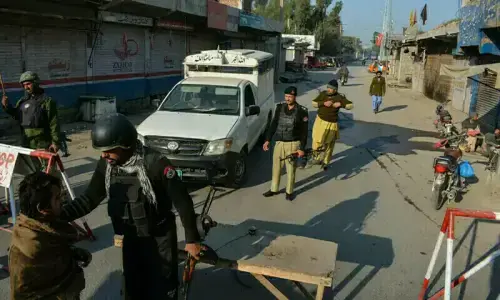
A raid last month by thousands of troops on hundreds of suspected Al Qaeda and other militants in South Waziristan, in which at least 120 people died, has thrust the issue of reforming the area into national debate.
"What this whole effort has lacked is a political plan as to what this region's future status will be," said Ahmed Rashid, a leading author.
Nearly the size of Belgium, the 27,200 square kilometres Federally Administered Tribal Area (Fata) has been a haven for hundreds of Arab, Afghan, Uzbek, Chechen and other foreign militants since the 1980s when the US government funded bands of fighters to drive the Soviet army out of Afghanistan. Many are believed to have escaped the recent fighting.
With tens of thousands of troops now in the region, authorities have given tribal elders until April 20 to expel the militants or risk more bloodshed.
"Pakistan has had to pay a high price for tolerating the strange exclusiveness of the area. This is unacceptable," said an editorial in a newspaper.
"Fata needs to be brought within the national fold to avoid another bloody operation of the kind that was witnessed," the daily said.
President Pervez Musharraf says improving living conditions for the area's six million poor and folding the devout Muslim enclave into the mainstream is a priority.
But in a television interview on March 31, he stopped short of forecasting an end to its curious self-rule, saying now was not the time. But he said development would press ahead, led by army engineers and backed by 54 million dollars from Washington.
About 50,000 troops deployed there since 2002 - the biggest incursion in the belt since 1947 - have opened 550 schools, set up health clinics, planted trees and built 1,300kms of road.
"When we sent the army inside in all tribal agencies, the objective was not to hunt Al Qaeda...it was to integrate them into Pakistan," said President Musharraf.
That has helped the government break down some tribal resistance.
"There was opposition in the past because they thought roads bring government," said a local journalist.
"But now, whenever a dignitary goes there, whether it's an army general or a governor or a minister, invariably they make a demand for girls' schools, roads, everything," he said.
HIGH STAKES: Dismantling the tribes' jealously guarded system of law by jirga (council of elders), could also awaken Pakhtoon separatism at a time when Islamabad needs tribal help in the hunt for Al Qaeda fighters on both sides of the border.
State control would effectively end a Pushtunwali feudal code that tribes say has worked for centuries but critics say is vulnerable to abuse and exploited by smugglers and militants.
Although it jails thieves and administers conventional justice, it appals rights groups by condoning the murder of women who marry outside the tribe and fuelling traditions of blood revenge.
"To deny people civil and political rights by saying this is the tribal way of life is convenient, but it doesn't pay in the long run," said Samina Ahmed, Pakistan director of the Brussels-based International Crisis Group.
It also could breed more militancy, says a former chairman of the Human Rights Commission, Afrasiab Khattak. "If the situation continues, the area will be further alienated and the social and political vacuum can be exploited by extremists."
But tribal belief in the jirgas runs deep. "Most people feel the jirga is better than Pakistani law," said the local journalist.
Ultimately Islamabad may do what Washington did in Afghanistan: call an international aid donors' conference, hoping the lure of cash can overcome a long history of suspicion among tribesmen toward the centres' rule.-Reuters