



 0
0

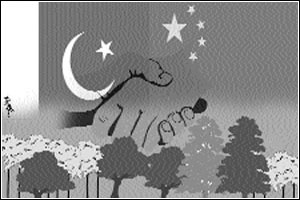 Pakistan and China are the two neighbours bound in strong bonds of friendship for the last 52 years. Spread over a period of more than half a century, this friendship has not only survived ups and downs of time and changing scenarios at the international politics, it is becoming stronger with each passing day.
However, the policy makers of the two countries have mainly focused on strengthening strategic relations. The demand of the friendly multidimensional relations is that cultural, economic and trade relations too should be based on strong foundations.
Though there have been some positive developments in the recent past aimed at increasing the bilateral cooperation in economic and trade fields. President General Pervez Musharraf ‘s visit to China is particularly reassuring in this regard.
However, such efforts still fall short of the huge potential of cooperation that exists for the promotion of economic ties particularly in agriculture sector.
While Pakistan has been a recipient of Chinese assistance for economic and technological development for long, such cooperation is hardly visible in the agriculture sector, which is the key component of the economy of both the countries.
Here in Pakistan, we know China as a country heading towards unprecedented heights of development in technological and manufacturing fields. But it is also a fact that at the same time, China has succeeded in increasing its agriculture produce manifolds by modernizing this sector with the use of sophisticated techniques and machinery.
Federal Minister for Food, Agriculture and Livestock, Mr. Yar Mohammad Rind visited China in July this year and had important meetings with Chinese officials, including his counterpart Mr. Edu Quingin. This visit ended on good notes. During these consultations, the Chinese officials have showed willingness to transfer agriculture technology to Pakistan.
It is unfortunate that millions of acres of land in Pakistan is lying uncultivated as barren. What we need is high-powered bulldozers to make this vast land cultivable. Experts believe that if Pakistan can get 600 to 1000 such bulldozers, there can be significant increase in area under cultivation.
This would result not only in food sufficiency but also make a lot more agricultural produce available for export. Such heavy machinery is being produced in China and needs the attention of policy makers to be transferred to Pakistan.
Pakistan and China are among the top 10 countries, which are producing the 90 per cent of the world’s rice. China’s upward journey in rice production and export has been possible with the use of modern rice plantation and harvesting techniques and machinery.
The production of rice in Pakistan is suffering because of old fashion methods used during plantation and harvesting.
The expertise of China can make a lot of difference in increasing Pakistan’s share in this primary export. The two countries can develop a joint marketing strategy to explore the global world rice market and enhance their exports of the commodity.
The effective and widespread use of water saving modern technology for irrigation has also proved highly beneficial in China. Here in Pakistan, the wastage of large amounts of water is no secret and no doubt a major hurdle in the way of development of agriculture sector. Pakistan should plan immediately to get a helping hand from China in this regard.
Importantly, the Chinese machinery is not only competitive in international markets but also suits Pakistan’s domestic requirements and practices. It is good omen that Pakistan has decided to import tractors from China, which are well performing and relatively cheaper.
During the visit of Mr. Rind to China, his hosts also agreed to make substantive investment to promote corporate farming in Pakistan. He persuaded the Chinese officials to enter into joint ventures in corporate farming in Pakistan, which they agreed to.
Pakistani authorities are identifying lands for such Chinese investment. Chin’s investment companies are investing all around the globe. During the recent visit of General Pervez Musharraf to China, he has also offered to set up exclusive zone for Chinese investors.
It may also be pointed out here that China’s vast northern autonomous region of Xinjiang is geographically located nearer to Pakistan’s Northern Areas than mainland China. Agriculture and production of fruits hold significant position in the economies of the frontier areas of both the countries. A large quantity of these products on both sides is spoilt due to lack of package and processing facilities.
Joint ventures can be started in this field with small investments. Vast opportunities also exist for cooperation in the fields of mountain farming for the mutual benefits of both the countries.
And regarding cooperation in the field of agriculture, we must keep in mind that China, after its entry into the World Trade Organization (WTO) is a major force in the process of negotiations for liberalization of global farm trade under Agreement on Agriculture (AoA).
The officials of the two countries may evolve a strategy to work in close coordination to fight for their rights at international fora.
There is no reason in the present circumstances that neighbouring countries like Pakistan and China, already enjoying strong strategic relations, should not improve multidimensional relationship.
All the resources and capabilities should be pooled in to develop broad based relations between the two neighbouring countries particularly for agricultural development as
this sector holds a lot of promise to get the millions out of poverty.





























