0
0

Pakistan-India ‘peace race’
WE have seen an arms race between India and Pakistan, but this is the first time we are seeing a peace race between the two countries. Pakistan has matched India’s confidence-building measures by offering a ceasefire on the Line of Control and India has replied with a ceasefire offer in Siachen.
These offers, counter-offers and counter -counter-offers betray a negative attitude on both sides. The race seems to be on who is seen in the world’s eyes as the one making the peace moves.
Pakistan found itself in a dilemma when India made 12 peace proposals in October. It could not tell the world the peace initiative was a stunt as global opinion seemed to have received India’s moves very well. At the same time, Pakistan did believe that these measures were no more than a symbolic gesture and failed to address any real issue. This, in Pakistan’s view, was not a peace move at all.
So, Pakistan took the tit-for-tat way of proposing a ceasefire, just when it thought it had succeeded in projecting itself as the maker, and not just the follower, of peace moves, India “shot back” with the offer on Siachen.
In a way, the race is harmless in that the focus has moved from military might to peace. But still, it also shows that genuine trust and mutual respect has not yet developed between the rulers of the two countries and both of them are only trying to shape world opinion in their favour.
This will undermine the core issues facing the two countries such as Kashmir and poor bilateral trade. Atmospherics are fine up to a point, but the two sides must get down to the negotiating table as quickly as possible.
Merely throwing these peace salvos at each other will not help. For starters, India can confirm Vajpayee’s presence at the Saarc meeting to be held in Pakistan and also invite Prime Minister Jamali to India to discuss the agenda for talks.
There must also be a time limit to solve the Kashmir issue, just like there are deadlines under the World Trade Organization’s agreements. Otherwise, the world will soon realize that the South Asian neighbours are playing diplomatic games.
S. SRINIVASAN
Bangalore, India
THIS refers to the news report “Pakistan declares ceasefire along LoC unilaterally” (Nov 24).
India has responded conditionally to the unilateral declaration of ceasefire along the Line of Control from the Eidul Fitr by Prime Minister Mir Zafarullah Khan Jamali.
I hope India will seize the opportunity in the larger interest of the downtrodden in South Asia. Thus, Pakistan will also be in a position to concentrate on its economic, political and social problems.
According to World Bank statistics, another 40 million Indians slipped into absolute poverty in the last decade, making the total over 400 million — the world’s largest concentration of the impoverished. The Prince of Wales, during his recent visit to India, was also visibly distressed to see large numbers of destitute women and children living mostly on the city’s sidewalks.
Let’s not spend our resources on spilling innocent blood. Instead, we should invest in the four-decade-old dream of connecting Europe with Southeast Asia via Iran, Pakistan, India, Bangladesh, Myanmar, Thailand and Malaysia through the trans-Asian railway link project. This project was first discussed at the UN commission in 1960, but got derailed on account of considerable problems, the foremost being the wars between India and Pakistan and Iraq and Iran.
If this dream becomes a reality, the rail network will boost regional trade and open up remote areas of these beautiful countries to tourists, resulting in prosperity and a progressive decline in miseries of the common man.
The key to ever-lasting peace lies in finding a solution to the disputed territory of Jammu and Kashmir in accordance with the UN resolutions through a mutual dialogue based on tolerance and adjustments, and not nukes. A positive initiative has been taken by Pakistan and the two countries must pursue it vigorously.
LT-COL (RETD) SYED AHMED TI(M)
Mississauga, Ontario, Canada
Tenure appointments in KU
THIS has reference to the Dr Riaz Ahmed’s letter (Nov 14) regarding the development of certain world class centres in Pakistan, such as HEJ Research Institute of Chemistry.
I have been associated with this institute since the beginning when it was founded by the late Prof Salimuzzaman Siddiqui. Led by dedicated men of learning like Prof Siddiqui and later by Prof Attaur Rahman, the HEJ institute opted for a contractual system of appointments under which only the best could survive, and an international evaluation of research productivity was made mandatory before permanent jobs were given to faculty members.
Dr Ahmed has misread the international grants won by the HEJ institute through its own efforts as those of the government’s. The average support by the government to this institute over the last 20 years has been of the order to Rs5-10 million per year and not Rs900 million as mentioned by Dr Ahmed. The larger grant referred to by him was originally won by the HEJ institute from the IDB on the basis of an internationally competitive process, against which rupee cover was provided by our government for buying equipment.
The institute has won grants on merit from Germany, Japan, the UK, France, the IDB and the US.
If the Department of Applied Chemistry wishes to win such a grant, it is up to its faculty members to make efforts for it. One should not begrudge the development of certain world-class centres of excellence in Pakistan such as HEJ institute, National Institute of Biotechnology and Genetic Engineering (Faisalabad) and Pakistan Institute of Nuclear Science and Technology (Islamabad).
After the establishment of the Higher Education Commission, sizable research funding is now available to universities against good research projects, and funds are provided after a highly competitive peer review.
Moreover, the instrumented facilities at national centres have been opened up to all scientists in the country so that they can no longer complain of lack of facilities. This access is being provided free of charge under a recently-approved project by the government and payment for analytical charges is made by the HEC to the centres providing the instrumentation service.
This step, taken recently, will help to avoid duplication of costly equipment through free access of instrumentation facilities throughout the country.
Prof Rahman needs to be supported in his efforts to transform the higher education sector through such bold steps.
PROF (DR) VIQAR UDDIN AHMAD
Karachi
Age limit for airhostesses
I AM shocked at a recent judgment by the Supreme Court setting the maximum age limit for PIA airhostesses at 45. It’s irrational and discriminatory. The argument put forward by PIA and accepted by the apex court that passengers prefer younger hostesses reflects bias against women and the opinion of the few. It does not reflects scientific data on passenger’s opinion.
As a frequent flyer I am least concerned with the age of the hostess. I am more concerned with the quality of the service. In our culture (families), it’s very common for a lady of 45 plus to serve younger men and women, while we don’t see older men serving young women and men.
In fact, there is a gentleman in PIA who must be 50 plus with a long, white beard. He serves as a host, which makes me uncomfortable as culturally I am not used to be served by men of that age.
If PIA wants to set an age limit, it should apply to men keeping in view of the fact that elderly men do not serve young people in our culture, or it should apply the same rule to both genders.
MIRZA SAJID BAIG
Karachi
Tribute to A. B. S. Jafri
I CANNOT claim to have known Mr A. B. S. Jafri for a long time and regret that I had not met him earlier than I did, but the few years that I did know him revealed to me many facets of his life that are not commonly known.
Of course, I had been reading his columns and comments for a very long time and was impressed not only by his flair for writing but the causes that he espoused in his columns; causes that were dear to his heart in the interest of the common man; causes that he passionately felt and wrote about. He was a fearless journalist par excellence.
He was an authority on Ghalib and seemed to remember the entire Diwan by heart. I cannot remember any meeting with him where he did not recite two or three couplets of Ghalib pertinent to the subject under discussion.
He was passionate about cricket and followed the game keenly wherever it was being played. It was only later that I came to know that he had also been a cricket commentator in the past.
The thing that impressed me most was his attitude towards his illness. He knew he had cancer but fought it so bravely that I have seen very few patients who have done so. Unfortunately when the disease was diagnosed, it was already too late for any surgical intervention; he was advised radiotherapy but that too was ruled out as he had already had radiation after his previous throat surgery some years back.
So, the only treatment left was chemotherapy to which he was subjected only a few days before his death. I had visited him in the hospital the afternoon before his passing away and he was full of his usual cheer and humour; little did I know that I would never see him again. His death is a sad loss to the nation in general and the journalistic profession in particular.
DR SALAMAT KAMAL
Karachi
Fertilizer prices
THE agriculture of the country has been grossly messed up during the recent past. The non-availability of required pesticides and the abundance of spurious chemicals in the market have already played havoc with the cotton crop of Punjab and the paddies of Sindh.
For safeguarding the interests of the fertilizer mafia, the tested and tried system of uniform prices of fertilizers is not being introduced in the country. As a result, the mafia recently charged exorbitant prices for DAP fertilizer during its off-season sale.
Knowing well the fact that diesel is used more in agriculture-related works than by motorists in the cities, its price is increased every fortnight.
President Gen Pervez Musharraf and Prime Minister Mir Zafarullah Khan Jamali must take notice of all these happenings and change their team of agricultural managers if they want to save agricultural, the backbone of our economy.
SYED MOHSIN RIZVI
Lahore
Killing in the name of honour
THIS is with reference to the ongoing debate on the so-called ‘honour killings’. Women in Pakistan have a very few rights. They have no freedom at all owing to our patriarchal culture. It is extremely ironic how a woman’s behaviour is attributed to a man’s honour (ghairat). The honour of a man instead of being from within is searched and then manifested in a woman’s honour.
Even when a woman is raped, it is the ‘honour’ of the man or the family that comes first rather than the trauma of the survivor. We tend to reinforce certain attitudes and myths such as what ‘kind’ of woman was raped since ‘rape does not happen to good girls’. Factors such as the woman’s lifestyle, her background, her family, her friends, what she was wearing at the time of the crime and who was she with are given as justifications to the crime. The offence itself or the abuser are hardly taken into account.
Secondly, a number of women in our country are victims of domestic violence and they do not even get justice because the offence of domestic violence has not been defined under any Pakistani law. Our law does not even recognize incest or marital rape as crimes and the justification they provide is that such offences are alien to our culture, which is far from the truth. Why is that women in our society have to a pay higher price just because they are females, a factor beyond their own control?
MADIHA KHAN
Karachi
HBFC loans
I NEEDED a house loan, and so I compared housing loan products of some private banks with those of the HBFC. I used the common IRR (internal rate of return) formula to calculate the actual cost of each loan I would have to bear in the shape of interest, and was surprised to find that while the IRR of private bank loans was between 9.5 and 11 per cent, that of the HBFC was 18 per cent (keeping the tenor constant).
It seems that the HBFC is fleecing a gullible public which does not have the know-how to financially compare different loan products. The HBFC is not justified in charging such a high rate of interest when most of its borrowers are from low-to-middle income groups, and the cost of borrowing for the HBFC itself is currently at 3-4 per cent.
The HBFC should immediately correct this anomaly and reschedule loans to low-income borrowers and give them relief.
SYED FARAZ HAIDER
Karachi
Misplaced priorities
According to a private TV news report (Nov 20), President Gen Pervez Musharraf has appealed to the philanthropists to promote literacy and education among children because the government does not have funds to do that.
The same day’s Dawn carried a news-item which says that “over Rs10 million will be spent on federal capital beautification plan, made specially for [forthcoming] Saarc summit”. Another news-item reports that there are 3.3 million child labourers in the country, of whom 11,000 may be lucky enough to be taken out of hazardous occupation over a period of four years.
The TV channel also aired a documentary showing thousands of poor and half-starved children, many of them drug addicts, picking garbage and begging for a living and sleeping on footpaths and out in the open in cold and rain. That being the situation, should that Rs10 million not be spent on these children rather than on beautifying Islamabad which is already the neatest and the most beautiful city of Pakistan, particularly those areas where Saarc delegations will meet and move around under tight security?
As Islamabad does not need more beautification, but these children urgently need some relief from their miserable existence, I appeal to the president to spend this money on improving their lot.
MANSOOR ALAM
Islamabad
Iraqis
WHY are Iraqis against occupation forces? It transpires that these armies are in terrible haste and are firing and killing civilians indiscriminately. This is democracy. They even do not keep the tally of civilian casualties, let alone paying compensation?
AHSAN ALI KHAN
Karachi
‘Debate, not fatwa’
MY article in which I had advocated the idea of Pakistan recognizing Israel appeared in the opinion columns of Dawn on Nov 20, under the headline “Debate, not fatwa”.
First, I would like to point out that you misspelt my last name, printing it as Mullick.
Secondly, I would like to state for record that you excluded many pro-recognition arguments from the article, making it seem like a half-hearted attempt at presenting a point of view.
SIDDIQUE MALIK
Via email
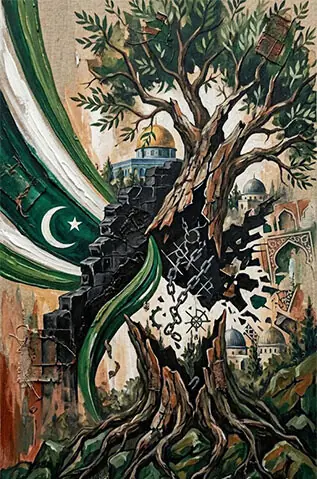
The ghettoization of Palestinians
PRESIDENT George W. Bush on a recent state visit to London remarked: “Israel should freeze settlement construction, dismantle unauthorized outposts, and the daily humiliation of the Palestinian people and not prejudice final negotiations with the placement of walls and fences.” This hardened stance on Israeli fence is a departure from what President Bush previously called the fence a “problem”.
Israeli Foreign Minister Silvan Shalom instantly spurned the appeal by its closest ally while commenting on Israel’s Army Radio from Vienna: “We have reached a clear and unequivocal decision to build this fence, to prevent the extremists from attacking us. We are doing everything we can to put up this fence that will prevent infiltrations.”
All eyes are focused at Israel’s security but nobody talks of Palestinians’ insecurity. Their territory is studded by Jewish settlers who are armed to the teeth, supported and protected by Israeli forces.
Palestinians describe it as a new “Berlin Wall” that reflects an attempt to create a political border. Saeb Erekat, Palestinian minister for negotiations, called it the apartheid wall. The UN General Assembly called overwhelmingly for Israel to tear down its security barrier in the West Bank, describing it as a breach of international law, but the Jewish state gave a blunt refusal.
“There is no acknowledgement that Palestinians are going through things even South African blacks were spared during apartheid,” said Edward Said in an interview two years ago, “their homelands were never bombed by F-16s or Apache helicopters. Palestinian hospitals, schools, refugee camps, civilian residences have been at the receiving end of a merciless, criminal assault by Israeli troops huddled inside their helicopter gunships, F-16’s and Merkavas, and still the poorly armed resistance fighters take on this preposterously more powerful force undaunted and unyielding.”
Since the Al-Aqsa intifada began in September 2001, Palestinians have been sequestered by the Israeli army in no fewer than 220 discontinuous little ghettos, and subjected to intermittent curfews lasting weeks at a stretch. Every day brings with it unopposable land grabs and house demolitions. The Israelis even make a point of destroying trees and orchards on Palestinian land. General Sharon (whom President Bush once called “man of peace”) whose sole idea is to kill, reduce, maim, drive away Palestinians until ‘they break’.
President Bush’s view about the Israeli fence is nothing but a hollow rhetoric, because European officials consistently complain that Bush has been far less engaged in solving the Arab-Israeli conflict than was his predecessor, Bill Clinton, and accuse Bush of favouring Israel over the Palestinians to the detriment of the peacemaking. The emptiness of Bush’s condemnation of the fence is corroborated by the fact that in the same breath he towed the line of Ariel Sharon when urging Europe to sideline Yasser Arafat.
The United States is a “dishonest broker” (Edward Said once said) in the peace process due to its long-standing support for Israel and Sharon wants terrorism, not peace, as he does everything in his power to create the conditions for it.
Against this backdrop, Mr Armitage asserted: “The support of the United States for Israel is something that is a bedrock principle of the United States.”
PROF (DR) P. NASIR
Gujrat