



 0
0

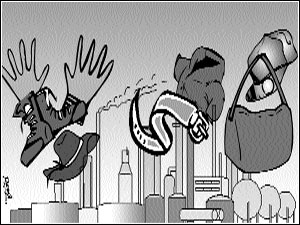 The leather industry in Pakistan is the second largest foreign exchange earner after textiles. It is one of the established indigenous manufacturing sectors that have developed reasonably very well over last 55 years. Leather exports have increased at an average rate of 11 per cent per annum.
At present, the industry contributes at least 5 per cent to manufacturing GDP, 7 per cent to total exports and provides direct employment to more than 200,000 people. There are more than 2500 tanneries and footwear manufacturing units, mainly located in Karachi, Lahore, Sialkot and Kasur. If Kasur specializes in processing of raw hides and skins into finished leather, so does Karachi, Sialkot and Lahore but the later with additional expertise in manufacturing of apparel/garments, gloves and footwear respectively.
Pakistan is well known in the world for very high quality and wide-range of finished leather, garments, (sports jackets) and gloves (working and industrial). Pakistan’s contribution of leather goods (hand bags, purses, suit-cases, key chains, belts etc) and footwear is very small, mainly because the former sub sector is least developed and the other is inward/domestic market demand-oriented.
Pakistan has a natural advantage in developing leather industry because of substantial livestock population. Details of livestock population are given at Table I.
At present, the country produces 7.8 million hides and 38 million skins per annum. Although the local production of hides and skins used in the tanning industry has been increasing, the local supply is insufficient to keep pace with the growing industry demand. Therefore, industry has to import raw hides & skins from international market to keep industry running. Pakistan imported Rs20.5 million worth of raw hides and skins in the year 2001-02.
The leather industry has been export-oriented for several decades. Until 70s, Pakistan exported raw hides and skins and semi-processed leather in the form of pickled, wet blue and crust leather. It was not until the early 80s that finished leather and leather products become major export spinners. The export figures have increased from 77 million dollars in 1978 to 671 million dollars in 2001-02. The change has occurred not only in volume but also in the composition of leather exports. Just 13 years ago in 1989-90, the total exports of finished leather and leather products were $483 million and out of this, the share of value added leather products was only 42 per cent.
In 2001-02 the share of value added leather products in total exports is no less than 65 per cent. Reference to Table-II shall give fair idea about the volume, composition and trend of Pakistan’s leather exports for last few years. It appears that leather exports have remained stagnant in every respect for last 10 years. This is definitely not a healthy sign. Moreover our leather exports are mainly (more than 85 per cent) directed to USA, UK, China, Hong Kong and Korea.
Pakistan’s contribution in world leather and footwear market is hardly one per cent (Table- III).
There exists lot of opportunities for Pakistani exporters. Out of total world market of $74 billion, USA and EU alone account for more than 50 per cent of total global imports. Just gaining one additional per cent of world market share shall increase our exports close to $1.5 billion. How is it possible or do we have the capacities? Like many issues, the answer is simple but difficult to realize practically.
The people in the leather garment sub-sector believe that only this sub-sector possesses the export potential of one billion dollars. On the other hand, almost 40 per cent of total installed capacity of tanning sector remains unutilized. Many footwear units in Lahore are operating well below 50 pert cent of installed capacity. Leather goods sector is very weak. Whereas market opportunities for goods category is no less than $10 billion world over.
Except for very few big exporters of leather garments, most of the exporters are producers of low quality and low priced leather garments. Our product range is very narrow dominated by leather jackets and gloves (mainly working gloves). Direct investment by international companies with well-known brands is almost non-existent. Nevertheless, few units do manufacture their products for well known brands but either on franchise or as job workers.
Given production capacities and world market demand, the dream of increasing leather exports to $1.5 billion can be realized within 5 to 10 years. But a lot has to be done by all the stake holders.
For long term approach, the efforts should start right from livestock management. Thirty per cent of total value of hides and skins is lost due to skin diseases, malnutrition and primitive slaughtering techniques. Improvement in livestock population and slaughtering techniques with the help of MINFAL and provincial livestock departments can go a long way in sustaining our long- term export targets.
This industry is very responsive to foreign direct investment especially by branded companies and the growth of tourism. Development of leather industry in Thailand (the largest exporters of hand bags) and Vietnam (second largest exporter of footwear after China) is primarily due to these two factors. Failure to promote these two factors will render other efforts almost fruitless.
Another, big issue associated with this industry is compliance to ecological and social standards. We must give credit to the entrepreneurs in the industry and the government, especially, Export Promotion Bureau, who have realized this fact. Many big units have already obtained ISO-9000 and 14000 standards. Effluent treatment plant have been established in Kasur, Karachi (under construction) and cleaner production technologies in individual units are being implemented in Sialkot. This achievement should be projected at international forums to attract green consumers.
Other measures that should be adopted immediately by the exporters should include employment of skilled work force, especially for product design. Development and introduction of new products such as furniture and upholstery leather, fashion garments, fancy gloves, belts, hand bags, suit cases, key chains and even leather jewellry shall give considerable boost to our exports.
Emphasis on quality and design will definitely increase per unit price as well. Finally aggressive marketing is another tool to secure share in foreign markets. Footwear is an emerging product with lot of potential. Substantial support to this sector can also bring very encouraging results.
Leather and footwear sector combined together possess export potential of nearly $3 billion. The development of theses two sectors shall not only bring employment to hundreds of people and additional foreign exchange to the country but its positive trickle down effects could also be felt in the rural areas.





























