0
0

RAWALPINDI, April 4: More than 1.3 million children in Pakistan are suffering from the deadly disease of Thalassaemia Major.
Doctors at a blood camp organized by the National University of Science and Technology (Nust) said 7,000 children suffering from this disease were born in the country each year.
About 10 per cent of the country’s population suffers from this disease, they said. Thalassaemia, a hereditary disease, is of two types — minor and major.
Thalassaemia Minor is not a serious problem in the country, and according to doctors only seven per cent people suffer from it.
A doctor, while explaining the disease, said: “The structure of haemoglobin comprises two molecule — haem and globin.” In this disease, he said, haem worked properly, but globin was incomplete or malfunctioning.
A major cause of this disease is inter-marriages within the family, or between individuals, both of whom are affected with Minor Thalassaemia. Such parents may give birth to a Thalassaemia major child.
The doctor said AIDS and Hepatitis might be contracted due to patient’s own negligence, but, in case of Thalassaemia, parents were responsible.
In this disease, a patient needs blood transfusion every month. The ratio of iron increases in the body of the patient, which also disturbs other body functions.
Excessive deposition of iron may lead to death because of heart failure even at the age of 12 years — this is a major cause of deaths among such patients.
Patients have to spend Rs40,000 to Rs50,000 per year on treatment.
The complete treatment of this disease lies in bone-marrow transplant, which costs Rs2 million, and the chances of recovery are 60 to 90 per cent.
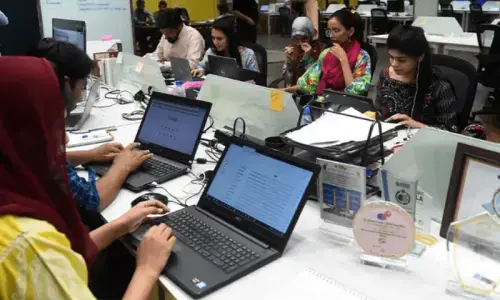
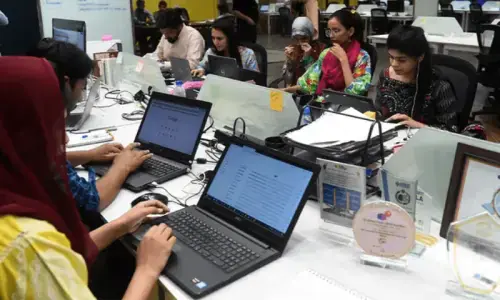
The blood camp was organized by Nust students for Pakistan Thalassaemia Welfare Society (PTWS), and about 180 pints of blood was donated.
The PTWS secretary-general, Brig Mohammad Sarwar (retired), said: “We have more than 900 registered patients in twin cities, and we need 30 pints of blood every day to save lives of Thalassaemia patients.” He said his society had been experiencing great difficulty in meeting this task.