0
0

UNITED NATIONS: The United Nations announced on Wednesday that it will formally withdraw its peacekeeping mission from Bosnia-Herzegovina by the end of this year.
Jacques Paul Klein, the UN’s special representative in Bosnia-Herzegovina, said that a decade of UN peacekeeping in the one-time politically troubled country is about to end.
“I believe that an objective assessment would show that our record was mixed, not disastrous,” he told reporters on Wednesday.
The UN pullout will mark the end of a decade-long effort to keep the peace in a small European country: an effort that cost the lives of some 272 UN personnel.
Klein described the UN Mission in Bosnia-Herzegovina (UNMIHB) as a “success” not only for what it achieved but also for what it leaves behind.
But, unlike UNMIHB, most UN peacekeeping operations have been plagued by a rash of problems — political, financial and military.
Over the last few years, peacekeeping missions have been derailed or thwarted for several reasons: weak mandates, shortage of funds, ill-trained soldiers, paucity of troops, absence of basic military equipment and mismanagement at the ground level.
The United Nations has claimed peacekeeping successes in Namibia, Mozambique, El Salvador, Eastern Slovenia, the Central African Republic, the former Yugoslav Republic of Macedonia, and at least partially, in Cambodia.
But its tragic failures, including Rwanda, Somalia, Haiti and Angola, have far outweighed its successes, according to some diplomats. In the April 1994 Rwandan genocide, nearly a million people were slaughtered, despite the presence of UN peacekeepers.
Klein attributed the success in Bosnia-Herzegovina to several factors: the “unqualified success” of the recent elections in the country; the return to rule of law; and a crime rate lower than in most countries in Western Europe.
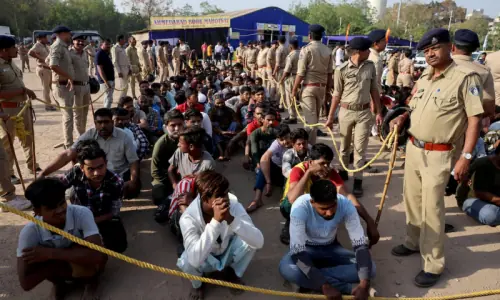
Additionally, Bosnia-Herzegovina is no longer the principal entry point into Europe for illegal immigrants. The number of suspected illegal immigrants has been reduced from nearly 25,000 in 2000, to a few hundred so far this year, he said.
As a result, UNMIBH has made it possible for the United Nations to handover the longer-term responsibility for monitoring police reform to a European Union Police Mission (EUPM) which will take over in January next year.
Klein said that all law enforcement institutions have been de-politicised and certified as meeting European norms and procedures. A state border service has been created — the most modern in the Balkans — to curb the flow of illegal immigrants.
The region’s most intensive programme to attack the “insidious problem of trafficking in women” has led to the closing of half the country’s brothels and the repatriation of more than 200 victims. Klein also said that heightened security in Bosnia- Herzegovina is giving refugees and internally displaced persons the confidence to return home. —Dawn/InterPress News Service.