0
0

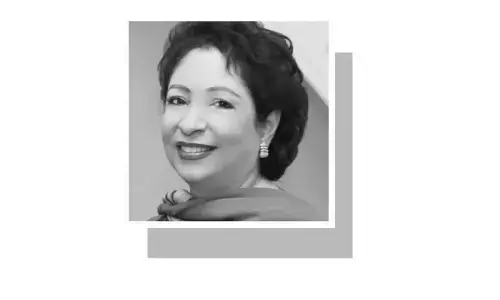
KABUL, Oct 23: Asma Jahangir, UN special rapporteur on extrajudicial, summary or arbitrary executions, called on Wednesday for an independent, international commission of inquiry to document crimes against humanity and other serious violations during Afghanistan’s 23 years of conflict.
She said the findings of such a commission would be a stepping stone towards a mechanism to bring perpetrators to justice.
Asma Jahangir told a news conference at the end of a 10-day visit to Afghanistan that the number of people executed in the past 23 years was “staggering” and she was also recommending a halt to the death penalty until international standards for imposing capital punishment could be met.
At the same time, she said the cycle of violence could not be halted unless impunity ended.
“The process of accountability must be addressed without delay,” she said. “I am particularly concerned about bringing to justice perpetrators of crimes against humanity.
“It is not the obligation of the people and government of Afghanistan alone, but the entire international community to ensure justice where such grave human rights violations have been committed.”
The UN official said she would soon submit a report with recommendations to the UN Commission on Human Rights, which will convene in March.
When asked if she envisaged a court or tribunal inside or outside Afghanistan, Asma said it was too early to say what mechanism would be appropriate.
“It is my assessment that if we jump into something at the moment, we would not be able to achieve the real objectives of justice,” she said.
“Therefore, I believe that even if it goes towards to any other form — a higher form of tribunal, which is not clear in my mind at the moment, it must start first with a mapping out of what happened.”
ENCOURAGED: She said she was encouraged by assurances from President Hamid Karzai that he would soon recommend to his cabinet accession to the statute of the International Criminal Court.
Asma Jahangir visited the towns of Herat, Kandahar, Mazar-i-Sharif and Paghman during her stay, which included a trip to a mass grave. She said her impression was incidents of extrajudicial and summary executions had dramatically decreased.
“However, an atmosphere of fear prevails, especially in areas outside Kabul,” she said, adding that a proper assessment was difficult because of weak structures for monitoring human rights.
She said she was aware of a number of recent extrajudicial killings or summary executions, which were likely the “tip of the iceberg”.
“It’s enough to show that impunity is still there,” she said.
She referred to one case in which a man was killed after firing a shot at a United States marine in Kandahar and his body hung up with a note of warning. There were also reports of women being killed by their families in the name of morality.
Jahangir said she was “disturbed” by the alleged execution of prisoners after the fall of the Taliban and allegations of indiscriminate and excessive use of force by the US-led coalition in Uruzgan province in July were a “grave concern”.
The discovery of mass graves in the north containing as many as 1,000 Taliban prisoners who died in the custody of a US-backed warlord last year has been an embarrassment for the coalition, as have the deaths of more than 40 Afghans in Uruzgan villages mistakenly attacked by US aircraft.
Asma Jahangir said there were overwhelming reports that some people guilty of crimes were still in powerful positions in the provinces and Kabul, and stressed: “The objective should be to ensure that justice be done. And I do believe that it must be done regardless of what position anybody holds in the world.”—Reuters