0
0

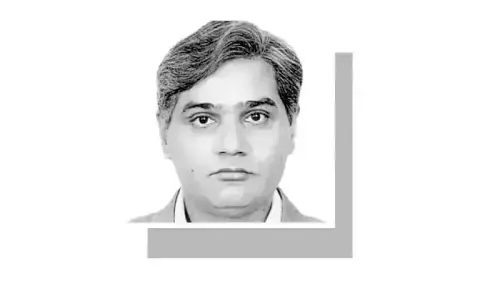
LAHORE, Oct 1: While the elections are due to be held on Oct 10, it is for President Pervez Musharraf to take a decision on when the new prime minister should be elected and what should be the “schedule and extent” of the transfer of power to the elected representatives, a prominent constitutional expert said on Tuesday.
Talking to this correspondent, Abid Hassan Minto said that the May 2000 Supreme Court judgment, which had validated the military takeover, did not mention the word “transfer of power”. And even if it is assumed that the holding of elections will be a step in that direction, Mr Minto explained, the verdict did not clearly state whether the transfer of power would be in accordance with the 1973 Constitution or under the “heavily-amended constitutional instrument”. (Mr Minto did not deliberately use the word Legal Framework Order as, according to him, the LFO did not mean what the military regime had used it for).
Making it clear that the mere election of the prime minister would not mean the transfer of power, the former president of the Supreme Court Bar said that power would be deemed to have been transferred to the elected representatives only when the Constitution was restored in its entirety.
“But Article 4 of the Legal Framework Order,” Mr Minto pointed out, “says that the 1973 Constitution shall be revived only on such day as the Chief Executive may determine, and the revival shall be subject to all the amendments made by the CE”.
Mr Minto said it was not necessary that all provisions of the 1973 Constitution were revived at the same time, and President Musharraf could keep any provision or part of the Constitution in abeyance, keeping in sight the requirements of the situation.
Even after the elections and holding of the meetings of the National Assembly, Senate and the provincial assemblies, it is the president’s discretion to decide when to withdraw the military order and allow the democratic order to replace it.
It may be pointed out that the first meeting of parliament elected in Gen Zia’s period was held on March 23, 1985, but the martial law was lifted on Dec 31, and that too because of the reiterations made by then prime minister Mohammad Khan Junejo that democracy and martial law cannot co-exist.
This time, the elections to the Senate are due to be held on Nov 12, more than a month after the elections to the National Assembly and the provincial assemblies. Official sources say it is for Gen Musharraf to decide whether the new prime minister should be chosen before or after the Senate elections.
Mr Minto said that keeping in view the provisions of the LFO it was clear that the transfer of power would “not be a complete one”, and even a partial and incomplete transfer of power would take place only when the present establishment deemed it fit.
Holding that the real transfer of power had never taken place in the country’s history as the remnants of the martial law had remained there even after the restoration of the so-called democratic system, Mr Minto said that this time it would be a blatant curtailing of the actual power which has to be transferred to the elected institutions, which are supposed to be independent and repository of the sovereign power of the state.
Mr Minto said that “extensive amendments to the Constitution are sought to be made permanent even after the elections. Article 3 of the LFO permits the Chief Executive to make further amendments to the Constitution if he deems it necessary. This authority does not come to an end with the establishment of the elected bodies”.
Even more important was the provision that the LFO could not be challenged before any court of law on any ground, Mr Minto remarked.