



 0
0

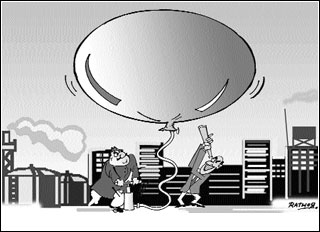 PAKISTAN has suddenly become very ambitious in the area of seeking free trade area agreements. Instead of moving step by step, beginning with Sri Lanka and Bangladesh with which we have been having free trade area negotiations, Pakistan wants to make a large leap to America and seek a free trade area agreement with the largest and most developed economy in the world.
President Pervez Musharraf raised this proposal with President George Bush during his recent visit to the US and Bush asked him to discuss the issue with the US officials. The Commerce Minister, Razak Dawood, discussed this issue with the US ambassador, Nancy Powel, in Islamabad and she promised to look into it.
President Musharraf told Bush that Pakistan did not want only to take something from the US in the form of larger trade access to the US in Pakistan. Pakistan seems to be wanting to enter a very complex area without knowing its full implications and in the process it may come to lose eventually more than it gains.
Normally, countries which are similarly developed or similarly under-developed seek free trade areas. But in the case of Pakistan seeking a free trade agreement with the US, we are moving from one extreme to the other. If some of the countries in such groups are less-developed they are given a time limit by which period they are expected to come on par with the more developed countries. The European Union is an example, particularly the euro zone agreements.
The free trade agreement with Sri Lanka and Bangladesh are taking time as those countries have to examine the full implications of the agreements with Pakistan and their impact on their export and import trade as Pakistan has a more developed economy than theirs.
Before Bill Clinton as president of the US could make the North American Free Trade Agreement a reality, including the US, Canada and Mexico, there was a great deal of debate in all the three countries. There was the fear in the US that cheap Mexican goods made by South Korea and other East Asian countries could flood the US markets and swamp its economy. So instead of making NAFTA a free trade area agreement between the US and Mexico, Canada too was brought in to make a tri-partite organization. It was also noticed that much of imports coming into the US were made by American companies in Mexico which wanted to profit by the cheep labour of Mexico. Some other Latin American countries, too, wanted to join the NAFTA, like Brazil and Argentina but they were not encouraged to press for entry into NAFTA.
Clinton then moved to the Pacific which is described as an American ocean, and came up with the APEC—Asia Pacific Economic Community with 22 member countries. Distant dates were prescribed for them to achieve a preferential trade area and finally to have a free trade area. Meanwhile in 1997-98 came the East Asian economic meltdown, and with Clinton no longer the president, an Asian and Pacific Free Area is something very distant.
Recently at a meeting of the Asian economic leaders at Brunei, an attempt was made to promote a mega trade zone which would include not only the ten ASEAN states but also Japan, China and South Koreas. The initiative for that came from Japan which has been seeking greater integration of its economy with those of other Asian countries. But opposition to that collective move came from ASEAN countries led by the Singapore trade minister.
They argued that the ASEAN countries should be negotiating with Japan, China and South Korea separately one after another, and try to get the best terms out of those more developed economies of East Asia. The ASEAN countries want to play it safe instead of getting swamped by the economies of China, Japan or South Korea. So for the time being the move for the mega economic zone is on hold. Clearly to talk of a free trade area coming up soon, the US is absurd or utterly unrealistic. It will take a very long time for any such deal to materialise in the face of many US concerns.
President Musharraf and Commerce Minister Razak Dawood have been complaining that while the United States government had agreed to give greater trade access to Pakistan, particularly in respect of its textiles, that has not come to pass in reality; in fact, the exports to the US and Canada had gone down, says Razak Dawood. In the US the textile industry is having serious problem and unemployment in that sector is heavy. And the political clout of the textile industry, particularly in the less developed areas of the US is very strong.
Hence the US government is not able to give a practical shape to the agreement to enable larger textile exploits to the US from Pakistan. Hence a free trade area agreement between the two countries may not bring miracles to Pakistan’s exports in reality. Instead what is more likely is that more of American imports would come into Pakistan and hurt Pakistan’s economy.
We may have more of McDonald and more of Pizza Huts and other H.S. consumer services which is not the need of the hour for Pakistan. And we do not want to get more of our tikka shops closed while a good deal of foreign exchange is remitted out as the profits of American eateries in Pakistan. Indisputably we ought to do for more for the development of the export sector. In spite of all the talk of diversifying the exports and exporting more of non-traditional items and to non- traditional areas, around 66 per cent of our exports are cotton- based or textile components.
And textiles will face intense competition when the quota system goes by the end of 2004. We have to be prepared for the intense competition in terms of prices, quality and develop the right brands and make them internationally popular. When the quota system goes we will have a kind of free trade environment in textiles around the world and we have to perform far better than we do now and competing against giants in textile trade like China. So while we seek free trade agreements with S.Lanka and BD we should not keep too many of our eggs in one basket. We have to become realistic instead of seeking illusory short cuts and unreal quick fixes.





























