0
0

PESHAWAR, Aug 11: Terming the street children the most marginalised section of society, the Society for the Protection of the Rights of the Child (Sparc) has urged the state and civil society networks to make basic services especially education, health and legislative protection, available to these children.
In its recently launched report, “The State of Pakistan’s Children 2001,” the organization claimed that the street children phenomenon was becoming a global one and had become an integral part of the urban scene in most of the developing countries.
“Rapid industrialization, urbanization, urban and rural poverty, socio-economic pressure, to name a few, are the major causes for the growth of street children problems,” stated the society, which works for the rights of children.
Unicef has categorised street children under three categories: children on the street with continuous family contact; children on the street with occasional contact with family; and, children who live on the street on their own (the abandoned and orphaned children).
The organization claimed that as a signatory to the Convention on the Rights of the Child (CRC), the state had a fundamental duty to protect children from being on the street. It is recommended that the existing laws should be reviewed in the light of the CRC and other relevant international instruments, where necessary revisions should be undertaken and new laws should be introduced.
In addition to legal reforms, efforts at effective law enforcement should be strengthened and adequate financial resources should be allocated for effectual implementation of laws, the report observed.
The annual report, fifth in series, covers topics like education, child labour, street children, health and Afghan children.
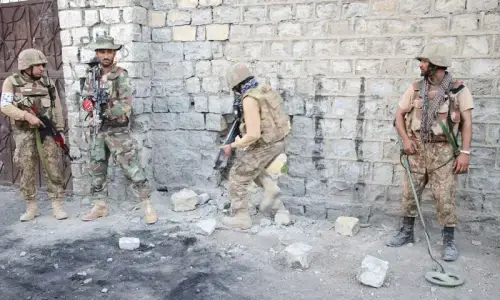
Quoting a UN Secretary-general’s report, the society claimed that more than 10,000 children were killed or maimed by landmines every year, and children in at least 68 countries live with the daily fear of these weapons. “Entire generations are still growing up surrounded by armed conflict and insecurity. Conflicts killed more than two million children in the 1990s and left many millions disabled and psychologically scared. At the end of the decade, 35 million people were either refugees or internally displaced, of whom about 80 per cent were children and women,” the report said.
About the plight of Afghan children, the report states that 24 years of armed conflict has had a devastating impact upon the lives of millions of Afghan children. “It is believed that the Afghan children are the most traumatised in the world, having the highest mortality rate after Sierra Leone, Angola and Niger, with one out of every four children dying due to diseases, malnourishment, migration and lack of basic necessities,” the report claimed.
At present, Afghanistan is the most mined and UXO (unexploded ordnances) affected country in the world. There are some 2,00,000 survivors of mine/UXO accidents and the death and injury rate runs at 150-300 per month, the report said.