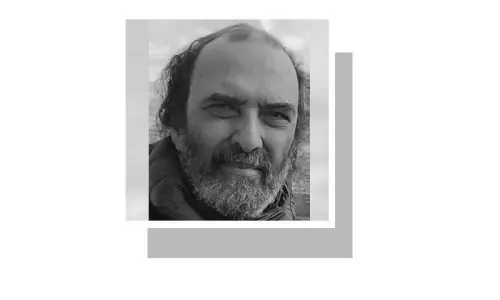
ABBOTTABAD, June 25: Omar Asghar Khan graduated from the Cambridge University. He earned quite a name when he was ousted from the Department of Economics, University of Punjab, by the university administration during the military regime of Gen Ziaul Haq.
He later made efforts to form a thinkers’ forum in Abbottabad and was also able to gather some intellectuals on its platform, who were given a tough time by the military regime.
In 1989, Omar Asghar Khan formed a non-governmental organization called Sungi and became its executive-director. Sungi gained not only nationwide popularity, but also won various awards from foreign donor agencies. The main area of work of the NGO was the community-based health care, forest protection, sustainable agriculture, women empowerment and the re-settlement of displaced persons.
Among the major tasks he carried out as the head of Sungi were the fight for the settlement of the affected people of Tarbela Dam. He did a commendable job to stop deforestation in the Hazara division, prepared different studies for the most deprived sections of the society, specially women, labourers and farmers. He gave new ideas about joint ventures of NGOs, government and donor agencies.
The target areas of the NGO in the Hazara division were Haripur, Balakot, Kaghan and other far-flung areas, where, on the partnership basis, he developed a chain of small NGOs, working in different villages of Hazara. Sungi was awarded the 1996 United Nations Economic and Social Commission for Asia-Pacific Award for its exemplary work in the field of human resource development.
Omar Asghar Khan reviewed the elections’ results and published a white paper. He had been a non-active member of his father’s party, Tehrik-i-Istaqlal, for a short time before he was made the party chief of the Frontier province. He, however, preferred to work for his NGO.
He was a relatively young, but dynamic politician, whose mysterious death on Tuesday in Karachi, shocked his admirers across the country. He travelled to different countries and attended countless workshops, seminars and meetings. He had developed good working relations with a number of donor agencies and government functionaries of other countries. His works benefited him when he was appointed the federal minister for manpower, labour and overseas Pakistanis by President Pervez Musharraf.
According to some circles, the local bodies plan was the brainchild of Omar Asghar Khan, who as the minister for local bodies, did the spadework. In his earlier days, he was very close to labour leaders and organizations.
Being an active member of the Musharraf regime, he was considered to be an ideal choice for the future setup. Some circles had been dropping the hint that he might be given an important slot in the future setup after the October elections.
After working as the minister for more than two years for the Musharraf government, he resigned and formed his own political party, Jamhori Party, which is still in its infancy. His untimely death was widely condoled in the Hazara division. Omar Asghar Khan is no more among us, but he will remain in the hearts of his admirers, specially labourers.