0
0

ISLAMABAD, Dec 3: The coalition spokesman Kenton Keith said on Monday that he thought Osama bin Laden is still inside Afghanistan.
During daily briefing at USIS, Ambassador Keith said it is fair to say that the bombing campaign was a decisive factor.
Replying to a question he said that Al Qaeda network is still there but we have no confirmation where the members of the Al Qaeda are hiding.
When asked how Pakistan is contributing in searching Al Qaeda members, Mr Keith said that Pakistani forces are not involved inside Afghanistan in any operation.
However, he said the role of Pakistan is very important and it is playing very important role by sealing its borders which is a key to the efforts to search Osama bin Laden.
He said several countries are part of the coalition and are involved in fight against terrorism. Pakistan is one of the important and active parts of the coalition.
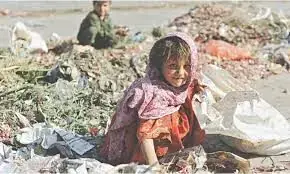
About civilian casualties in Afghanistan due to the coalition’s bombing campaign Mr Keith said you would have seen pictures of those apparently injured in villages at Tora Bora or Jalalabad.
“These are sad pictures of people with real injuries. But it is not the case that these people were targeted as civilians by coalition aircraft,” he said.
He said the coalition did everything it can to minimize civilian casualties. “Where there have been civilian casualties, we have acknowledged them.”
It should be remembered he said that those responsible for the atrocities on Sept 11 did everything they could to maximize civilian casualties.
But I can tell you he said that a large number of surface to air missiles have been fired by the Taliban troops from residential areas in Kandahar in the hope of drawing coalition attacks against civilian aircraft.
“These have not hit or damaged any aircraft and coalition aircraft have not and will not chose to retaliate by targeting civilian areas,” Mr Keith said.
About Bonn talks, Mr Keith said that the senior coalition observers in Konigswinter told him on Monday that the talks continue to make good progress. Agreement has been reached on the basic framework, and the UN has circulated a first draft of the proceedings.
He said the delegations will be putting forward their own modifications to the basic document. “It remains to be seen whether any of these modifications will pose insuperable difficulties, but there is a general air of ‘cautious optimism’.”
He said the next stage is the negotiation over the names of specific individuals to fill specific positions in the transitional authority. “Clearly this will require flexibility and good will on the part of all the groups around the table.”
About the coalition’s view of the departure last week of a senior Pakhtoon delegate, he said while I obviously will not be able to address the actions of individual participants, I will simply note that the delegate in question was present for last night’s conference meeting.
Mr Keith said the eyes of the world are on these proceedings (Bonn Conference), which we hope will lead to a multi-ethnic, broad based government that will open the way to the reconstruction of Afghanistan.
But it should be remembered, the spokesman said that these negotiations are purely Afghan. “This is the only way that an agreement can be reached that will be respected and supported by all factions.”
On the humanitarian front, he said I can confirm that the World Food Programme have met their target for November. This means the delivery of 52,000 tonnes of food — enough to feed six million people for a month.
He said about 90,000 tonnes of emergency food aid is now in the region. About 33,000 tonnes of the estimated 51,000 tonnes required in the central region of Afghanistan over the next three months has been distributed, according to the WFP.
The spokesman said humanitarian agencies are cautiously entering various areas to provide emergency assistance including Kabul, Faizabad, Jalalabad, Spin Boldok and Hairaton.
He said food distribution remains difficult in many areas because of the security situation — for example around Kunduz and around Mazar-i-Sharif.
Within Kabul, Mr Keith said the security climate has permitted an increase in the presence of relief agencies. At least six NGOs are operating in Kabul as well as UN agencies and the UK Department for International Development, he added.
He said more food is now getting into Afghanistan than had been projected. The situation will continue to improve as roads and airfields are made safe for aid distribution.—APP