0
0

PARIS, Oct 25: The United States says its war on terrorism is proceeding as planned, but nearly three weeks into its military offensive in Afghanistan it is running up against tough problems on all fronts.
With the Taliban putting up unexpectedly stiff resistance and concern mounting over civilian deaths and a potential humanitarian crisis, US hopes for a major breakthrough before winter are fading.
On the diplomatic level, the support coalition forged by Washington is creaking under pressure from restive Muslim states. Nerves are also frayed on the US domestic front, beset by the world’s first campaign of bio-terrorism.
Following the Sept 11 suicide attacks on New York and Washington, the United States set its sights on bringing Osama bin Laden to justice or, at the very least, bringing down his Taliban protectors.
But despite weeks of virtually uncontested bombings, punctuated by special forces operations, the Americans appear no closer to capturing Osama and are having a hard time dislodging the ill-equipped Taliban.
Rear Admiral John Stufflebeem, deputy director of operations for the US military joint staff, says he is “a bit surprised” at the fight put up by the Islamic regime.
“They are proving to be tough warriors,” he told reporters Wednesday. “We’re in an environment they obviously are experts in and it is extremely harsh.”
US airstrikes have been aimed at helping anti-Taliban forces advance on Kabul’s soldiers, but the opposition has not made any headway.
Opposition troops battled their way to within eight kilometers (five miles) of the key northern town of Mazar-i-Sharif last week, but were apparently pushed back by a fierce Taliban counter-attack.
And despite five days of relentless US pounding of heavily fortified Taliban lines north of Kabul, opposition commanders say their outnumbered troops are in no position to make a move. Morale problems are reportedly surfacing among the anti-Taliban forces.
Although the United States has been pressing for a quick victory over the Taliban, analysts say the Islamic militia may still be in place when the harsh Afghan winter sets in as early as next month, putting a damper on operations.
Further complicating the picture, US officials say, is the dispersal by some of the 40,000-strong Taliban forces into urban areas where they are using mosques and universities to hide their vehicles.
Stufflebeem said that rooting them out would be rough. “Very few people know of any more difficult kind of warfare, so it’s going to be very methodical,” the admiral said. “It’s going to take time.”
It might also increase the risk for civilian deaths, which has become a growing issue along with reports that an estimated one million people had fled their homes because of the fighting, creating a potential humanitarian crisis.
Although Washington denies Taliban claims that more than 1,000 civilians have died in the offensive, it has acknowledged dropping some errant bombs that produced casualties.
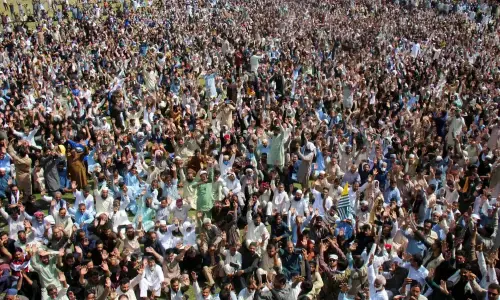
Reports of civilian casualties have already triggered anti-American demonstrations across the Islamic world.
Half the parliament in Kuwait, rescued from Iraqi occupation a decade ago by a US-led multinational force, issued a statement on Tuesday calling for an end to the airstrikes in Afghanistan.
The protests have left the Americans working hard to keep Arab states committed to the anti-terror coalition, an effort not helped by a continuing escalation of violence on the Israeli-Palestinian front.
One area where the Americans have claimed success is in freezing the assets of organizations suspected of financing terrorism. But here again, experts say the results may be mixed.
“No one is sure of the extent this method may have been used,” said Richard Seaman of the US Treasury Department. “The potential for sending money and laundering money through this system is totally unlimited.”
While US soldiers, diplomats and money experts were seeking to combat terrorism abroad, Americans were facing their own scare at home from a deadly anthrax-by-mail scheme.
Polls show the anxiety taking a toll. Nearly three-quarters of those questioned in one survey believed large numbers of Americans would die in the near future through the use of conventional explosives. Fifty-seven percent felt anthrax, smallpox or some other disease would produce massive victims. —AFP