0
0

ISLAMABAD, Oct 9: The army has built bunkers outside key installation in the federal capital to preempt any possible violent protests by religious parties or terrorist attacks in the wake of US-led bombing on Afghanistan.
The commander 111 brigade and in charge of Capital’s security, Brig Shafqat Ahmed, told Dawn that the bunkers built around government offices and diplomatic enclave would remain in place till things returned to normalcy.
He said, although, there were no clear threats, it was being feared that any quarter might try to take advantage of the current volatile situation.
“These fears have been reinforced by the fact that we are the frontline state in this war against terror”, he added.
The bunkers appear to be an unusual phenomenon for the residents of the Capital, and are raising concerns and fears among them for being a premonition of something unpleasant.
Manned by armed military personnel, the bunkers have been built at the entrances to the diplomatic enclave, foreign office, parliament house, secretariat and television station.
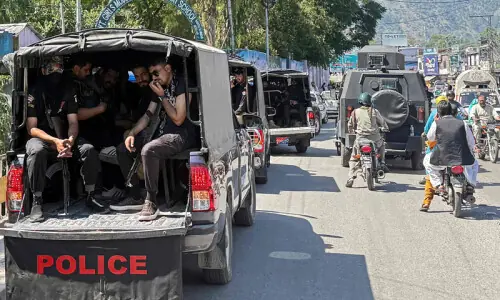
Moreover, military vehicles, mounted with machine guns, continue to patrol the city throughout the day with a view to providing a sense of security to the people. Brig Ahmed also confirmed that the main purpose of the heightened security was to “give confidence to the public.”
The diplomatic enclave and several other key installations have also been fenced with barbed wire to regulate movement into these places.
Besides putting the country’s three leading clerics under house-arrest to discourage anti-US protests, the security agencies have reportedly stepped up surveillance of madressahs and offices of religious parties.
These measures have been taken in the backdrop of violent protests by the religious parties in Quetta and Karachi, where the United Nations’ offices were reportedly ransacked.
The UN officials, when contacted, said the ransacking of Unicef building in Quetta and violent protests had given rise to concerns, but their offices remained open.
When asked if the authorities lacked confidence in police and civil administration’s capability to handle the situation, Brig Ahmed said: “Our concerns are high and we feel that routine measures cannot be relied upon.”