• ISPR chief says an overhaul is overdue, but leaves it up to politicians
• Insists four-province structure should be reviewed against present-day realities
• Maintains AJK issues should be resolved through Constitution, rule of law
• Rejects claims that Balochistan security situation deteriorating
• Blames elitism, external backing, Afghan sanctuaries for unrest
ISLAMABAD: The military on Friday urged political parties to consider an administrative reset for improving governance, arguing that the country’s security and stability depended on adapting its governance structure to the requirements of modern times and a growing population.
The remarks came a day after Interior Minister Mohsin Naqvi said the governance system in the country had “collapsed” and argued that the country needed new administrative units, or provinces, to improve service delivery, accountability and access to justice.
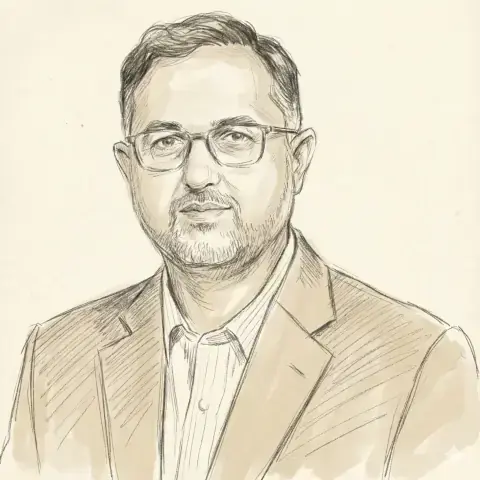
Speaking at a news conference, Inter-Services Public Relations Director General Lt Gen Ahmed Sharif Chaudhry said governance had long been identified by the military as a prerequisite for national security, while insisting that any decision on restructuring the administrative system rested entirely with politicians and had to be pursued through constitutional means.
“We have been saying this earlier also as a primary stakeholder in security that good governance is due for the security and stability of Pakistan,” Gen Chaudhry said. “Without this, none of our issues could be resolved.”
Echoing the central theme of Mr Naqvi’s speech, while simultaneously distancing himself from the interior minister’s remarks as his personal view, Gen Chaudhry said Pakistan’s existing administrative structure deserved a serious political review.
Recalling the National Action Plan adopted after the 2014 Army Public School attack, he said its 14-point agenda, unanimously endorsed by political parties, had also rested on effective governance.
“The National Action Plan, with its 14-point agenda and consensus of all political parties, was dependent on good governance for its implementation,” he said. “Good governance is quintessential for Pakistan.”
When asked how that objective could be achieved, the military spokesman said the answer lay with the political leadership. “Now how to get the good governance? The politicians and political parties have to decide. If you ask us, yes, there has to be a serious discussion on it.”
He said the country’s administrative model should be evaluated against present-day realities. “Our population is 240 or 250 million people, and we still have four provinces. We have to see whether it is serving good governance,” he said, adding that the debate should be undertaken by those currently in power, those who had previously governed and all those answerable to the people.
While stopping short of advocating a specific model, the military spokesman said structural changes should not be ruled out if they were necessary to improve governance. “If good governance requires an administrative reset, then it has to be done, through the constitutional methods, legal methods and through political representatives,” he said.
AJK unrest
On the political and security situation in Azad Jammu and Kashmir (AJK), where simmering unrest over electoral representation has coincided with phased Legislative Assembly elections, Gen Chaudhry said the solution to the region’s problems lay in the Constitution and the rule of law.
He reaffirmed Pakistan’s position on the Kashmir dispute and described the bond between Pakistan and Kashmiris as “unbreakable”. “Kashmir was, is and will remain the jugular vein of Pakistan,” he said, asserting that there was “only one voice” in Pakistan that Kashmir would become part of Pakistan and “only one voice” from Kashmir that “Pakistan is ours, we are Pakistani, nothing can change that.”
Referring to the JAAC agitation, the spokesman alleged that the authorities knew who was behind the movement but had allowed them to “expose themselves”.
He said the group had opposed refugee representation in the AJK legislature despite being told it was free to contest elections and pursue its objectives through constitutional and legal means.
“They have been exposed now,” he said, adding that while political activity remained open to all within the law, “they want to do this by force, but only the state has the monopoly of violence.”
Saudi defence ties
Responding to a question on regional security and recent threats by Yemen’s Houthi movement to target vessels linked to Saudi Arabia, the ISPR chief reaffirmed Pakistan’s commitment to its strategic partnership with the kingdom, describing bilateral ties as unique in their historical, religious, economic and security dimensions.
“We have a Strategic Mutual Defence Agreement and remain committed to fulfilling our commitments under that agreement,” he said.
Pakistan has also joined the new coalition for protecting maritime traffic in the Red Sea, Bab al-Mandeb and the Gulf of Aden.
While avoiding any comment on operational contingencies, the military spokesman underscored that Pakistan regarded the security of Saudi Arabia as closely linked to its own strategic interests and reiterated Islamabad’s commitment to honouring its defence obligations towards the kingdom.
Balochistan security
Addressing concerns over the security situation in Balochistan, where terrorist attacks have continued despite an intensified counterterrorism campaign, the military spokesman rejected suggestions that the province’s security environment was deteriorating.
He argued instead that the state had become more proactive and uncompromising in its campaign against terrorist groups.
Presenting what he described as the security forces’ operational record for the year, he said nearly 40,350 intelligence-based operations had been conducted across Pakistan so far in 2026, including more than 31,000 in Balochistan alone.
He said 2,084 terrorists had been killed, an average of 10 every day, while security forces were carrying out about 194 intelligence-based operations daily.
The campaign, he said, had also come at a heavy cost, with 819 people, including security personnel and civilians, losing their lives this year.
He argued that the increase in militant incidents reflected the state’s aggressive operational posture rather than a weakening of its writ, saying there was now “no space for appeasement” or negotiations with armed groups.
Terrorists and their backers, he said, had realised that the state would only accept their submission to the Constitution and the law.
The military spokesman identified what he called “elitism and sardarism” as the root of Balochistan’s problems, accusing sections of the tribal elite of resisting reforms to preserve a decades-old status quo that denied ordinary Baloch opportunities in education, public service and economic life.
He also blamed external actors, particularly India, for backing terrorist organisations operating in the province, while insisting that they continued to receive sanctuary and operational support from Afghan Taliban-controlled territory.
The military spokesman rejected as “deplorable” recent remarks by Maulana Fazlur Rehman, saying martyrdom remained the central ethos of the armed forces and law enforcement agencies.
Published in Dawn, August 1st, 2026