KARACHI: The Pakistan Institute of International Affairs (PIIA) on Saturday held a webinar on ‘Post Covid-19 World Order: Challenges and Strategies’.
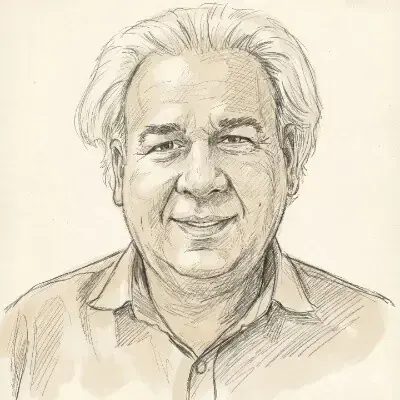
Human rights activist and lawyer Hina Jilani said with regard to the Covid-19 crisis there’s so much to lament but also so much to reflect upon. It isn’t just a health crisis; it’s a human rights crisis. It’s also an opportunity to correct what we have neglected in the past. The foremost aspect of the situation is that how weak the world is, developed or underdeveloped — employment opportunities have been affected, the right to work has been affected, there have been increased prices (of commodities) etc in the early days of lockdown, it was a matter of survival for many. The issue that arose was how to survive physically. But social isolation affected us badly because the support systems we usually turn to were not available.
Ms Jilani said the crisis has a global dimension because the multilateral system did not respond the way it ought to have, indicating that the system is weak. Agreeing with an earlier speaker, she remarked it was the fragmentation of the multilateral world that impacted the response to the situation.
Advocate Hina Jilani terms coronavirus pandemic a human rights crisis
She hoped that it (time to come) will not be the new normal and we will emerge with a better understanding of how to readjust our priorities. “We need to make sure that we give attention to the marginalised and vulnerable segments of society. There has to be a global response to the crisis and there’s a need to recognise that there are more stakeholders who need attention not just the victims [of illness] and government. One of the least recognised sectors that have stepped up in the situation is civil society.”
She also talked about how women suffered during the Covid-19 period.
Conflict between US & China
Former federal minister Javed Jabbar spoke on the ‘Great power competition between China and the US’.
He said in the last two to three decades there’s been a shift from external polarities to internal polarities within countries which has a connection with how they behave outside. The way the two countries reacted to Covid-19 illustrated remarkable weaknesses they have. Initially, China was slow off the mark; so too America. “One wonders whether this has to do with their respective internal political culture.”
After underlining the positive and negative trends vis-à-vis both countries, Mr Jabbar raised the question whether the two major powers can cooperate on issues like Covid-19.
He argued that the reality was that in the last few decades the world had become interdependent in a comprehensive and complex manner. The interdependence will survive. Therefore, he hoped the next 10 to 20 years would see a greater cooperation between the US and China on multilateral and bilateral levels.
“There are 400,000 Chinese students studying in America and only 11,000 American students in China. There is that asymmetry but there’s constant interaction. I see these two countries managing conflict in a non-violent way,” he said.
‘Protecting individual privacy is a real issue’
The topic for Dr Rabia Akhtar, director Centre for Security, Strategy and Policy Research, University of Lahore, was ‘Combating Covid-19 by advanced technologies’.
She pointed out while advanced technologies were helping countries around the world to manage the outbreak, protecting individual privacy is a real issue.
Dr Nausheen Wasi, assistant professor, Department of International Relations, University of Karachi, gave a presentation on ‘Moving towards a fragmented world’.
She said ever since the pandemic hit the world, 49.1 million people had been affected by it; 32.3m have so far recovered; and there have been 1.24m deaths. A second major lockdown has begun in parts of Europe.
She commented that the world was moving towards a fragmented order but it was not because of the pandemic — there had been warnings earlier on (such as when the SARS outbreak happened) but there was no cohesive response from the states.
The webinar was conducted by PIIA chairperson Dr Masuma Hasan.
Published in Dawn, November 8th, 2020