1
1

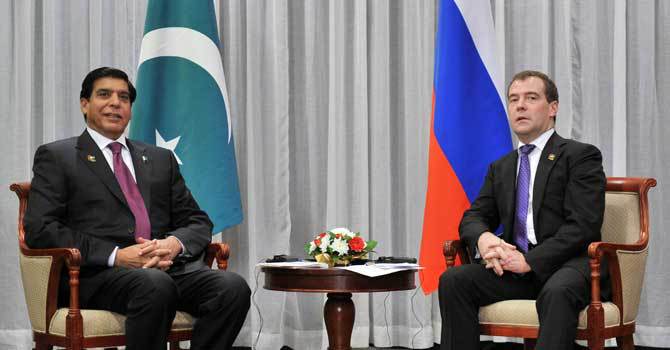
KARACHI: While the relationship between Pakistan and Russia has seen many ups and downs over the past 65 years, with the most difficult phase being the era of Gen Zia-ul-Haq, the biggest shift in the ties came about only last decade when the two countries were united by a common cause of fighting religious extremism and terrorism.
These views were expressed by Consul General of the Russia Federation in Karachi Andrey Demidov while giving an insight into the 65-year-long relationship between the two countries at a talk organised at International Relations Department of Karachi University on Thursday.
The former Soviet Union was one of the first countries that recognised Pakistan as an independent state and helped Pakistan to get into the United Nations.
It acted as the mediator in 1966 at the signing of the Tashkent Declaration between Pakistan and India in the aftermath of the Indo-Pak war of 1965. The then Prime Minister Zulfikar Ali Bhutto visited Moscow in 1974 during a difficult time in the country’s history and managed to come to an agreement.
Mr Demidov said Mr Bhutto also laid the foundation stone of Pakistan Steel Mills which was established with the technical and financial assistance of the former Soviet Union. He said the era in which General Mohammad Zia-ul-Haq governed Pakistan was the most difficult time in Pakistan’s relationship with Russia.
“The biggest shift in Pakistan-Russia relations came about in 2001,” said Mr Demidov, adding that the two countries were united by a common interest of fighting terrorism. That was followed by a series of visits by Pakistani statesmen and military figures to Russia and Russian statesmen to Pakistan.
Mr Demidov said that since 2009, representatives of Pakistan, Afghanistan, Tajikistan and Russia had been meeting regularly. “As a result of these talks relationships have improved,” he said, adding that stability and prosperity in this region was in everyone’s interest.
In 2011 representatives of the two countries met over six times, he said. He added that the position of Pakistan and Russia was very close on the issues of drug trafficking, militancy and war.
He mentioned that talks between the two states focused on the opening of Pakistani and Russian banks in each other’s country, facilitating cross-border education for students in the two countries, increase in trade. He said that a series of Memorandums of Understanding (MoU) were signed. However, he added, “We have reached a stage where we have to go beyond signing MoU.”
Legally-binding contracts targeting specific issues that would put plans into action were necessary, he added. “Russia and Pakistan are condemned to come closer together. We have to go forward and advance for the better future of the world.”
Responding to a question by a student regarding the US-led war in Afghanistan in light of their impending withdrawal in 2014, Mr Demidov said: “What we want from the US is to not repeat the scenario in Iraq.”
He explained: “It’s not just our wish but also a mandate of the UN Security Council to leave behind a viable country with a workable government, friendly relations etc. We want the US to give a detailed report on the mandate that was given to them in 2001 and how they have met that.”