0
0

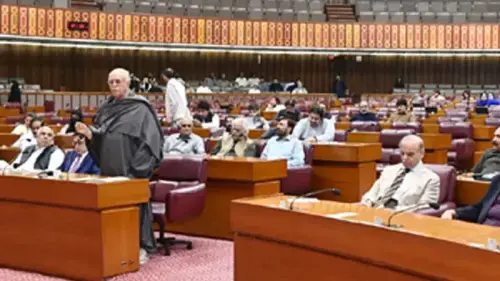
IT IS time to say goodbye to parliament’s bitter-sweet final year. Though the parliamentary year will last until March 16, which will make the present National Assembly Pakistan’s first to complete its five-year term – and hopefully experience a political, democratic transition to its next tenure – the calendar year 2012 was marked by some agony after earlier periods of crossing proud landmarks.
Earlier years after the 2008 elections had seen the end of General Pervez Musharraf’s dictatorship and some historic amendments to the Constitution that restored a genuine parliamentary system and freedom of Judiciary, enhanced provincial autonomy and created an independent Election Commission.
But unfortunately, the year 2012 saw parliamentary supremacy being compromised by acts like a court order removing a prime minister whom the parliament wanted to stay, and there were some other lawmakers who were hounded over disputed charges of corruption, with several of them losing their seats for not being university graduates or holding dual nationality.
Both houses of parliament and three of Pakistan’s four provincial assemblies backed prime minister Yousuf Raza Gilani in what he called a defence of the Constitution by refusing a Supreme Court order to write to Swiss authorities to reopen disputed money-laundering charges against President Asif Ali Zardari – on grounds of a presidential immunity. After Mr Gilani was convicted for contempt of court and sentenced to a token “imprisonment till the rising of the court”, National Assembly Speaker Fehmida Mirza used her constitutional discretion to exempt him from attracting disqualification. But then a smaller bench disqualified and removed him from office on June 19.
Neither parliament, nor the speaker, who had been struck by serious illness, would stand up, and the National Assembly elected a new prime minister in Raja Pervez Ashraf, who later agreed to write a court-approved compromise letter, re-stating the president’s immunity from prosecution.
Mr Ashraf’s June 22 election was marked by drama in a helpless parliament which saw him propelled to being the front-runner from a mere back-up after the ruling Pakistan People’s Party’s main candidate, Minister for Textiles Makhdoom Shahabuddin, was hounded out of the race by an arrest warrant of a Federal Investigation Agency that seemed acting against its political bosses.
Humiliations came when protests over energy shortages and prices, along with a spate of judicial actions, seemed to have weakened the PPP nerve that had previously enabled a parliamentary consensus in authorising the 2009 military operation against Taliban militants in the Swat Valley or in passing the Eighteenth and Nineteenth amendments to the Constitution in 2010 and the Twentieth amendment in February 2012.
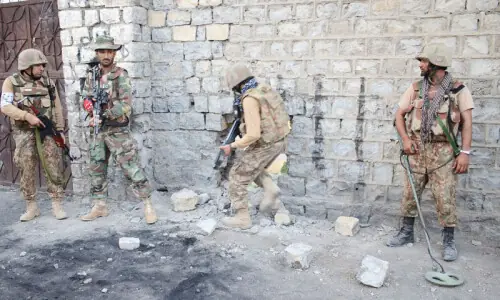
Also, some PPP allies would not stick their necks out over causes that the military establishment did not seem to hold dear when it itself faced a challenge to deflect focus from the 2011 failures to detect US helicopters that had come to Abbottabad to kill Osama bin Laden on May 2, 2011, or to protect its personnel from a Nato cross-border helicopter raid that had killed 24 Pakistani soldiers on a border post in the tribal area later in November.
However, despite setbacks, parliament’s legislative work was outstanding, with the Constitutional amendments being among more than 110 bills passed, including 25 in 2012 alone, with the latest addition being a bill unanimously passed by the National Assembly on Dec 20 – but not by the Senate yet – to authorise state interception of private communications like telephone calls, e-mails and SMS texts to collect evidence against terrorism suspects.
Some of the other significant laws passed by the present parliament were for the prevention of domestic violence, barring sale of human organs, protection against harassment of women at workplace, prevention of anti-women practices, such as forced marriages and the so-called ‘marriage with holy Quran’ and creation of a state-funded National Commission of Human Rights.
The outgoing year also saw a bipartisan parliamentary committee on national security framing foreign policy guidelines, for the first time, for Pakistan’s future ties with the United States after intense tensions over the Abbottabad and cross-border raids, and one-in-three-year elections to more than half of the Senate, which gave the PPP dominance and the ruling coalition a two-third majority in the upper house, and eliminated the country’s most organised religio-political party, Jamaat-i-Islami, from parliament at a time when its ideological brothers, like the Muslim Brotherhood, were winning power in countries like Egypt and Tunisia.
The remaining two-and-a-half months of the present government are likely to be quite challenging, with most tussles likely to be fought over a long-pending controversial government bill to create an independent National Accountability Commission, the ruling coalition’s plans to further amend the Constitution to create two new provinces in southern Punjab and the formation of a caretaker administrations at the Centre and the four provinces to oversee the next elections.
The writer is a member of staff.