15
15

FRIDAY night’s drone attack brings to mind another one from March 2011. Raymond Davis had barely left Pakistan when a strike killed 40 men at a jirga in North Waziristan. Like the Nato supplies stand-off, the Davis incident had fuelled anti-Americanism in Pakistan, become a bone of contention in the US-Pakistan relationship and was only solved after prolonged wrangling. Now the resolution of another crisis in ties — except this one lasted seven months, and had more significant consequences — has also been marked by a drone attack, this one killing 20 people. Although they are more likely to have been militants this time, the message was obvious: America intends to get back to business immediately, and will not let Pakistani concerns get in the way of its counterterrorism goals. But the sheer insensitivity — and imprudence — of the timing demonstrates that, after a rocky year and a half with Pakistan, the US still hasn’t realised how carefully certain aspects of the relationship need to be handled.
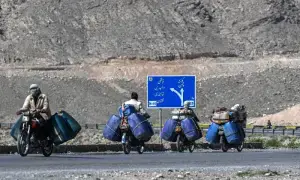
Friday’s strike will play right into the hands of opposition parties and right-wing elements that are inciting public opinion against the reopening of Nato supply routes; a lack of resolution on the drone programme was precisely one of the points they have been bringing up. It also has the potential to increase the security risk to truckers and the communities they pass through. And the attack has exposed the fact that, despite parliament having taken a strong stand against unilateral drone strikes and despite the public rhetoric of Pakistani officials, a new approach was not developed behind the scenes as the two countries tried to revive the relationship. Which also suggests that the US views this moment not as a new chapter in ties, but as a continuation of the old story now that one inconvenient road block has been removed.
Pakistan need not deny that the drone strikes have done this country good too, taking out senior figures in the Pakistani Taliban. Despite their civilian casualties, they are more precise than conventional Pakistani air strikes can ever be. And this country has not played its cards right either, supporting the programme in private conversations with American officials — at least historically — while railing against it in public. Ultimately, though, these are now unilateral strikes carried out by a foreign country on Pakistani soil, and they anger citizens across the ideological spectrum. A joint mechanism to run the drone programme needs to be developed and made public. And until then, it would be wise to ensure that the biggest strikes do not take place at the worst possible times.