0
0

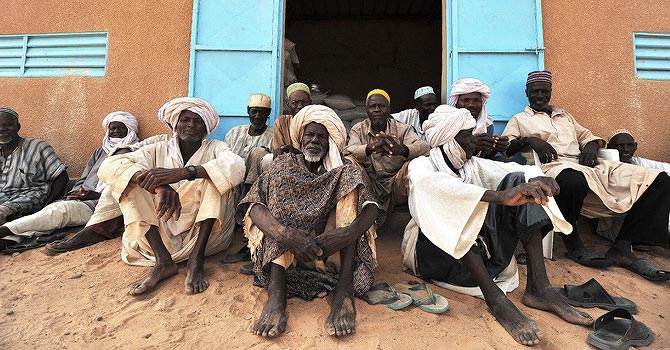
ZINDER: In a shady corner of a remote, sun-baked village square in Niger, aid worker Boubacar Halirou wraps his measuring tape around the skinny arms of a hungry toddler and identifies another victim of severe malnutrition.
Halirou, who works for the local aid group Befen, is crisscrossing the region looking for emaciated youngsters as the impoverished west African desert nation faces a drought-driven food crisis.
In the remote village of Tiss in Niger's southeast, Halirou and his colleague Jarjussou identify two other children with severe malnutrition, as well as six less serious cases in this community of squat clay dwellings, 10 kilometres (six miles) to the west of the large town of Zinder.
In Niger, one in four children will not reach the age of five. Dozens of mothers have gathered around Halirou so their youngsters can be examined.
“It's not always easy to be accepted. Some prefer traditional treatments to modern medicine,” Halirou says.
Workers for Befen, which is financed by the European Union and the French aid group Alima, instruct mothers of malnourished children to take their offspring to the nearest health centre.
Some villages in the region are 20 kilometres (12 miles) from the nearest centre - a round trip which must be done on foot.
“It's one of our biggest worries”, says Halirou, calling the mothers “courageous”.
'My child will regain health'
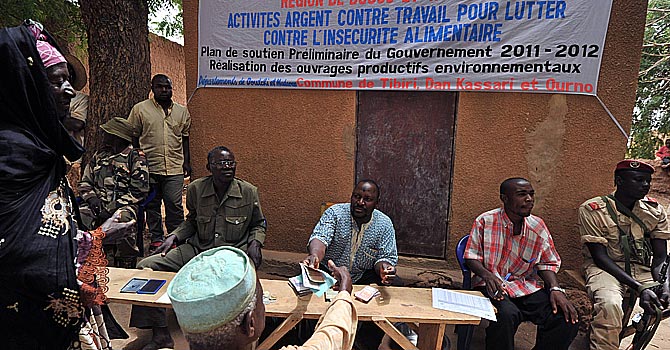
To try to improve the situation, Befen has set up 17 care centres in the region, like one in Tirmini, which Halirou and Jarjussou reach in 4x4 trucks.
In Tirmini, Rabu, 18, her face framed with a veil, quietly recounts how her boy “started to get diarrhoea and vomiting, before becoming malnourished.”Crying children are inspected one by one. The mothers wait anxiously, sitting inside and outside on mats.
After a consultation, the worst-off kids receive some “plumpy nut”, a mixed paste of sugar, peanuts, milk powder and vitamins that keeps well in the high heat. The mothers pack a week's rations into their scarves.
“I think my child will regain his health,” murmurs Rakia, 28, with another baby on her back. She was visiting for the first time and will make the journey again in a few days with other women from her village to avoid the walk through the bush alone.
Severe malnutrition brings the risk of other diseases, such as malaria, pneumonia or respiratory infections.
The most serious cases are sent to the intensive care centre in the hospital in Mirriah district, 30 kilometres (18 miles) west of Zinder, which partners up with Befen.
The worst time of year is usually between June and September when food stocks fall short and before the new harvest, and it is the busiest time for the centre, which can take in up to 200 children.
A doctor in the hospital said the children who came here have a 99 per cent chance of survival.
In 2011, Befen took charge of 2,086 children in the area. This year, with a drought- and price-driven food crisis threatening six million people in Niger out of 18 million people in the Sahel desert region, the number of children in the group's care could rise by about 15 per cent.
On the way back to his Zinder office, Hamidine Illa, a doctor working for the local branch of Befen, dreams aloud. He would like to see children followed up “from conception and for 1,000 days”, the phase of life in which they are most vulnerable.