0
0

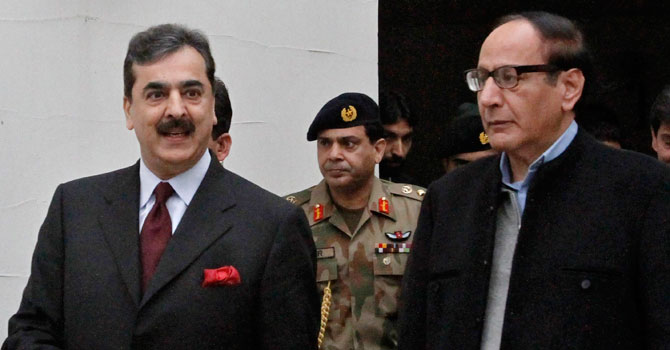
ISLAMABAD, May 10: The ruling coalition appears to be heading towards a split with the Pakistan Muslim League-Q threatening to part ways with the government in protest against its indifference to the worsening electricity crisis.
“It’s a clear warning for the government. It is not possible to continue with the discussion on the president’s address to parliament while ignoring frequent power outages,” Kamil Ali Agha of the PML-Q said in the Senate on Thursday.
He said the power crisis was intensifying and a city like Lahore was facing hours of loadshedding each day. “The government must listen to what people are saying about it, otherwise it will be difficult for us to continue as an ally,” he warned.
Mr Agha regretted that the Senate session was about to be prorogued but the minister concerned was not available to respond to a motion on the energy crisis. “He must be brought out of a deep slumber and called to explain government’s position,” he said.
Leader of the House Jehangir Badr was given the floor, but Mr Agha kept on shouting despite Chairman Nayyar Hussain Bokhari’s request to listen to Mr Badr. This enraged Jehangir Badr who pointed out that not a single megawatt had been added to the national grid during the previous regime.
“You cannot resolve the issues by clamouring. Let us discuss them,” he urged.
Finally, Mr Badr was directed by the chair to ensure presence of the minister for water and power in the house on Friday.
The Senate unanimously adopted a resolution moved by PPP stalwart Raza Rabbani to form a house committee to examine implementation of the devolution process and procedural hitches in its way.
Chairman Bokhari will decide the composition of the committee and its terms of reference in consultation with the leader of the house and the leader of the opposition.
The resolution was allowed to be moved after the federal government came under criticism for taking over vertical programmes of the health sector through an executive order in violation of the 18th Amendment. “Executive orders cannot override the constitutional provisions,” Mr Rabbani remarked.
He said there was no parliamentary oversight to ensure devolution of powers to the provinces after the implementation commission ceased to function last year.
Mr Rabbani said the PPP leadership remained committed to the cause of provincial autonomy. He said Pakistan should not step aside its constitutional obligations for donors.
Minister for Law and Justice Farooq H. Naek said under Article 147 of the Constitution, the provincial governments could entrust their functions to the centre and the respective assemblies were supposed to approve it within 60 days, but the Leader of Opposition Ishaq Dar of the PML-N and Hasil Bizenjo of the BNP informed the house that the governments of Punjab and Balochistan had not given such a consent.
Zahid Khan of the ANP and Dr Farogh Naseem of the MQM also termed the executive order a violation of the Constitution.
Mr Naek said he was unaware of the facts and the ministry of inter-provincial coordination would be in a better position to explain why the vertical programmes were retained with the federation.
NEW PRIME MINISTER: The PML-N called upon the PPP to get a new prime minister in accordance with the law to fill the constitutional vacuum caused by conviction of Prime Minister Yousuf Raza Gilani.
Speaking on a point of order, Syed Zafar Ali Shah of the PML-N pointed out that the Supreme Court had sent copies of its detailed judgment in the contempt case to 14 important functionaries, including the president, ‘for information and necessary action’. He said President Asif Ali Zardari should summon a meeting to elect a new prime minister.
Mr Shah said the prime minister was now a stranger for the parliament and urged the chairman to give his ruling on the matter.
The PML-N members chose not to stay in the house to listen to the government’s position or a possible ruling by the chairman and walked out.
In the absence of the opposition, Law Minister Naek said the apex court in its detailed judgment had not said that the prime minister stood disqualified and ceased to be a member of the National Assembly. “Let the process go on in accordance with law and the Constitution. Let the appeal to be filed by the prime minister be decided, followed by the decisions of the National Assembly speaker and the Election Commission.”
Mr Naek said that under the Constitution it was for the speaker to decide if a question of disqualification had arisen, and the Election Commission would come in the picture only if she failed to form an opinion within the specified time of 30 days.
The house will resume its proceedings at 10am on Friday.