0
0

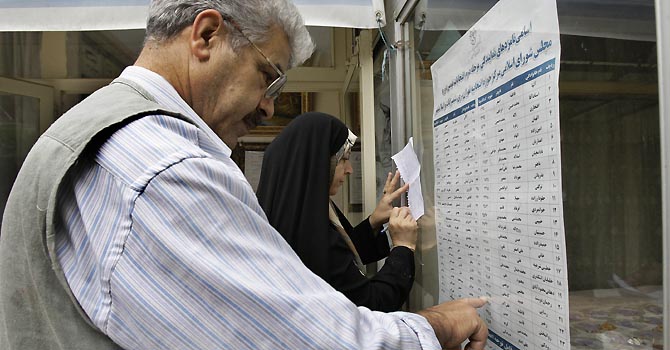
DUBAI: Iranians voted on Friday in a run-off parliamentary election that could establish a new balance between Iran’s top leader and its president in the legislative assembly.
State television reported that polling stations in 33 constituencies, including the capital Tehran, opened to voters at 8 am (local time). They are due to close at 6 pm (local time), although officials have said the time could be extended.
Some 65 seats from the 290-member assembly are up for grabs, after loyalists to Iran’s Supreme Leader Ayatollah Ali Khamenei won a majority at the expense of President Mahmoud Ahmadinejad in the first round.
Khamenei called for a high turnout in Friday's second round.
“My suggestion is that they(people) should take the second round as seriously as the first round. The higher the number of votes for lawmakers ... the better they can work,” state television quoted him as saying after he cast his vote.
The parliamentary vote has been seen as a test for the popularity of Iran's clerical establishment, which was rocked by the bloody aftermath of a 2009 presidential vote that reformists said was rigged in Ahmadinejad’s favor.
In the race for the 30 seats in Tehran, five candidates were able to secure victory in the first round and about 50 are competing for the remaining 25 seats, Iranian media reported.
With reformists mostly sidelined and opposition leaders Mirhossein Mousavi and Mehdi Karoubi under house arrest, the vote is mostly a duel between rival conservative hardliners - those loyal to Khamenei and those in Ahmadinejad’s camp.
Khamenei swiftly endorsed Ahmadinejad’s re-election in 2009, rejecting opposition allegations of widespread fraud that led to eight months of unrest.
But a rift opened between the two leaders when the president tried to undermine the leading political role of clergy in the Islamic Republic, Ahmadinejad’s critics said.
Ahmadinejad is expected to face more challenges during the rest of his second and final term, after the wide defeat of his allies in the first round of the vote in March.
The election result will have a bearing on the country’s 2013 presidential election.
Iran is facing growing isolation and threats of Israeli military action over its disputed nuclear program which the West suspects is aimed at making nuclear weapons, a charge Tehran denies.
Turnout in the first round of parliamentary election was 64 per cent. The interior ministry has said final results were expected within 24 hours after the polls close.