0
0

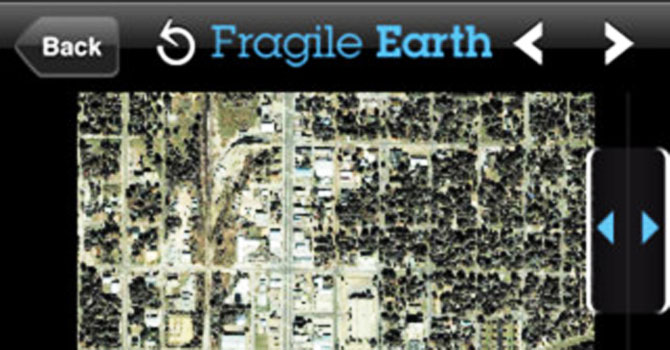
TORONTO: Whether it is melting glaciers, coastal erosion or drying lakes, a new app displays the impact of climate change on the planet by using before and after satellite images.
Called Fragile Earth, the app for iPhone and iPad shows how our planet is impacted by global warming by featuring more than 70 sites such the receding Muir Glacier in Alaska, the impact of Hurricane Katrina in New Orleans and the draining of the Mesopotamia Marshes in Iraq.
“We don't necessarily put an opinion on it,” said Jethro Lennox, head of publishing at Collins Geo, a division of Harper Collins UK which created the app. “We're just trying to visually portray some of the geographical features and changes around the world.”
The app also shows the impact of natural disasters including the devastating earthquakes in Haiti and Pakistan and the tsunami in Japan, and how mining, deforestation and dam building have changed areas of the planet.
Users of the app slide birds-eye photographs depicting before and after states of environmental changes.
“When you're looking at the earth changing, it's almost surprising and it shows how amazing the place is,” said Lennox.
“For years glaciers have been retreating and advancing, and we don't really know exactly why this is taking place. But the rate of some of these changes is amazing.”
Lennox said that some of the most astounding images are of the Aral Sea, which was once the world's fourth-largest lake but has drastically reduced in size over the past 40 years.
“We even have to change our world maps quite regularly because it changes so fast,” he said.
The app explains what is happening in the images, which Lennox thinks is part of its appeal because a user doesn't need to be a scientist to understand what is happening.
It is an extension of the book “Fragile Earth,” which was published in 2006 and is now out of print. A second edition of the book will be published later this year.
Collins Geo plans to continue to develop the app, adding more image sets and other features.
Lennox said the company views apps as an important channel, especially for visual content.
“Some of the more reference and illustrative books are starting to really come alive in the app environment,” he said.
Images within the app come from a variety of sources including NASA and GeoEye, a satellite imagery company. They date from 1914 up to the present day.
The app is available worldwide and costs $2.99.