0
0

KARACHI, April 7: Over 37 per cent people living in urban areas are food insecure, the State Bank of Pakistan said in its latest report while advising the government to ‘reduce risk of severe hunger-like situation.’
The research report “Development Finance” issued on Friday provides detail on agriculture and its impact on economy as well as the common people.
“According to the UN World Food Program, out of 56 million people living in Pakistan’s urban areas, about 21 million are now deemed food insecure,” the SBP report said.Research and effective policies regarding agricultural resource, policies for water irrigation, skilled labor, technology, transportation and marketing, can be much helpful ‘to reduce risk of severe hunger like situation and improve food security,’ the report noted.
Pakistan is vulnerable to food insecurity due to slowdown in availability of irrigation water, slower growth of food crops, insufficient storage capacity, higher post harvest losses, weaker management, ongoing war against terrorism, rising trade deficit, high inflation, rising cost of production and rising oil prices, said the report.
According to the report Pakistan is facing food security challenges due to population growth, substitution of food crop lands with bio-fuel crops and inefficiencies in irrigation.
The population consuming less than 1700 calories per day, which is far below the international levels, has increased from 35 million to 45 million during last couple of years.
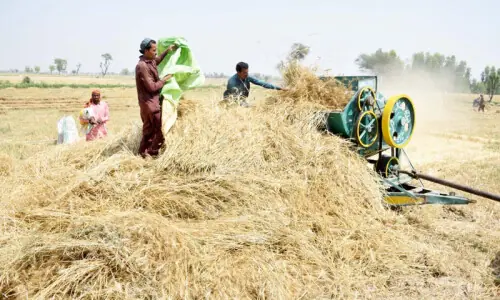
The report said wheat is the staple food for Pakistanis and the yield per acre is stagnant for a decade. It is the main source of providing food to the fast growing population of the country with a growth rate of 2.23 per cent, or there is a net addition of around 3 million persons annually.
“Wheat production in the country, however, has been well below potential and stagnant around 2400 kg/ha since more than a decade,” said the report.
Though the banks have taking keen interest in the disbursement of loans to the agriculture sector but being largest segment of economy the supply of money is still not sufficient.
However, the rate of non-performing loans is also higher in this sector, the report noted.
According to this report, the non-performing loans in agriculture financing stood at Rs32 billion or 17 per cent of the outstanding loans as on 31st Dec-11 compared with Rs28.8 billion or 16.5 pre cent of the outstanding loans as on Dec-10.
Agriculture is considered the mainstay of Pakistan’s economy and nearly one-fourth of the GDP and 44 per cent of total employment is being contributed by the agriculture.
More than 67 per cent of the country’s rural population is directly or indirectly linked with agriculture for their livelihood.
The new food policy ensures adequate supply of food by achieving an average agriculture growth rate of at least 4 per cent per annum in this decade.