0
0

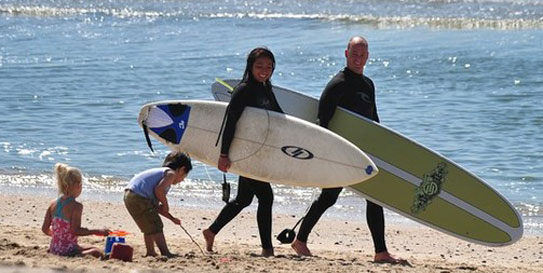
Roughly half of preschoolers don't spend time playing outside with a parent each day, despite the fact that outdoor play has been tied to a host of benefits for young children, including avoiding childhood obesity, a recent US survey found.
In interviews with parents of close to 9,000 children, fewer than half of mothers and only a quarter of fathers reported taking their child for a walk or playing with them in the yard or park at least once a day.
“Especially for parents who work outside the home ... it's not so easy to have outdoor playtime with your children every day,” said Pooja Tandon, a pediatrician at the University of Washington in Seattle, who worked on the new study.
Guidelines from the National Association for Sport and Physical Education suggest that children get at least an hour of physical activity a day for long-term health benefits, such as helping to ward off childhood obesity.
Preschoolers should also get a few hours of unstructured playtime each day.
But while some parents may assume their children are getting outdoor time in childcare or preschool, that may not always be the case, Tandon said.
She and her colleagues used data from a nationally-representative study of US children born in 2001.
Along with other information collected when the children were infants, researchers, whose findings were published in the Archives of Pediatric & Adolescent Medicine, asked parents of preschool-aged youngsters how often they'd taken their child outside to play in the last month.
Forty-four per cent of mothers and 24 per cent of fathers said they had parent-child outdoor playtime each day.
According to the interviews, half of the children got to play outside at least once daily with either one of their parents.
Neighborhood safety didn't seem to be an important deterrent to going outside with more than nine in ten parents saying they felt their neighborhood was safe.
Girls and non-white children were less likely to go outside with a parent, as were children whose mothers spent more time working outside the home.
Tandon and her colleagues did find that children with a few regular playmates were more likely to get daily time outside, perhaps because parents take turns taking a few children to the park at a time - a good strategy for time-pressed parents.
Tami Benham Deal, who studies children's physical activity at the University of Wyoming in Laramie, said it's also important to consider what type of exercise children are getting when they go outside.
“They might be sitting in a sandbox - they could be spending 20 to 30 minutes building sand castles and tunnels and the activity could be very low in intensity,” Benham Deal, who wasn't involved in the new research, told Reuters Health.
“Parents encouraging their children to be physically active and parent recognising the importance of and valuing physical activity are really key factors that influence kids' physical activity,” she added. “That's true across the age spectrum.”