0
0

CHICAGO: Using a heart scan in the emergency room to rule out heart attacks and other problems in low-risk patients with chest pain can save hospitals billions of dollars, researchers said on Monday.
Chest pain is the most common reason people visit the emergency room, yet 85 per cent of the time, it is not related to a heart problem.
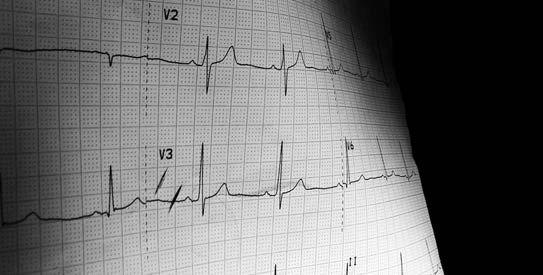
The usual course of events when a patient with chest pain checks into the emergency room starts with an electrocardiogram, or EKG, a noninvasive test that checks for problems with the electrical activity of the heart.
If the EKG does not show evidence of a heart attack, the patient usually is admitted to the hospital for a series of tests to rule out heart problems.
The patient then gets blood tests over 12 to 24 hours to check for high levels of a certain enzyme that suggests there was damage to the heart muscle. If those tests are also negative, then the patient takes a stress test -- with or without imaging -- to look for reduced blood flow to the heart due to a blockage.
If results are positive, the patient is likely to get a cardiac catheterization, an invasive procedure that involves threading a catheter, or a thin tube, into the heart. The procedure requires the use of contrast dye.
A coronary computed tomography angiogram, also known as a coronary CT scan, is a test used to diagnose coronary artery disease, the narrowing of the small blood vessels that supply blood to the heart that can lead to chest pain and heart attack.
It is usually used after the patient undergoes EKG, blood tests and nuclear stress tests.
“Our idea is to use coronary CT scans as a triage tool for patients coming into ER,” said Dr. Harold Litt, chief of cardiovascular imaging in the Radiology at the Perelman School of Medicine at the University of Pennsylvania and lead researcher on a study presented at the Scientific Sessions of the American College of Cardiology meeting in Chicago.
The scan works with an intravenous iodinated contrast dye to produce an image of the coronary arteries. Such dyes can cause kidney failure, so the test should be used only if a patient has normal kidney function, Litt said.
Different test, similar risk
The 2.5-year study of nearly 1,400 adults -- about evenly divided between men and women -- in five centers in Pennsylvania and North Carolina was published in the New England Journal of Medicine. It showed that the rate of heart attack and heart-related deaths 30 days after discharge with a negative CT scan was less than 1 per cent.
That meets the standard for emergency rooms discharging a person with chest pain.
“I think the data is very convincing,” Litt said in a telephone interview. “There have been smaller studies like this, but this is the first one that's large enough to show ... that is safe to send someone home after a CT scan.”
Of 640 patients who had negative CT scans, there were no heart attacks or cardiac deaths after 30 days, according to the study, which the Pennsylvania Department of Health paid for with U.S. tobacco settlement funds.
Some 50 per cent of patients who got a CT scan in the emergency room were discharged directly from there, compared with 23 per cent of those who received traditional care.
The CT scan group were in the hospital for an average of 18 hours, compared with 25 hours for the traditional care group.
The CT scan is also an attractive tool because it can rule out coronary blockages at about half the cost of the leading competing test, a nuclear stress test, which uses more radiation, he said.
“We think most of the cost saving is in faster discharges,” Litt said. “ER crowding is a major issue. All patients do worse when there's crowding.”
Doing CT scans in emergency rooms saved $2,500 per patient, according to a study based on 2006-2007 data from the Hospital of the University of Pennsylvania.
“If you have a history (of heart problems), a CT would not be the right test for you,” Litt said, noting that two-thirds of patients who go the ER with chest pain are low- to intermediate-risk and therefore would be eligible for a CT scan.
The other one-third would be deemed high risk and ineligible. He said 9 per cent of patients who got the CT scan were diagnosed with coronary artery disease, compared with only 3.5 per cent of those who received traditional care.