0
0

VANCOUVER, Canada: Biological research increasingly debunks the view of humanity as competitive, aggressive and brutish, a leading specialist in primate behavior told a major science conference Monday.
“Humans have a lot of pro-social tendencies,” Frans de Waal, a biologist at Emory University in Atlanta, told the annual meeting of the American Association for the Advancement of Science.
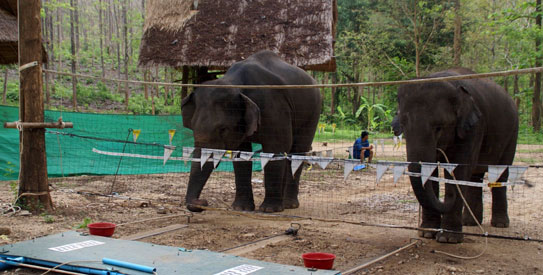
New research on higher animals from primates and elephants to mice shows there is a biological basis for behavior such as cooperation, said de Waal, author of “The Age of Empathy: Nature’s Lessons for a Kinder Society.” Until just 12 years ago, the common view among scientists was that humans were “nasty” at the core but had developed a veneer of morality -- albeit a thin one, de Waal told scientists and journalists from some 50 countries.
But human children -- and most higher animals -- are “moral” in a scientific sense, because they need to cooperate with each other to reproduce and pass on their genes, he said.
Research has disproved the view, dominant since the 19th century, typical of biologist Thomas Henry Huxley’s argument that morality is absent in nature and something created by humans, said de Waal.
And common assumptions that the harsh view was promoted by Charles Darwin, the so-called father of evolution, are also wrong, he said.
“Darwin was much smarter than most of his followers,” said de Waal, quoting from Darwin’s “The Descent of Man” that animals that developed “well-marked social instincts would inevitably acquire a moral sense or conscience.”
De Waal showed the audience videos from laboratories revealing the dramatic emotional distress of a monkey denied a treat that another monkey received; and of a rat giving up chocolate in order to help another rat escape from a trap.
Such research shows that animals naturally have pro-social tendencies for “reciprocity, fairness, empathy and consolation,” said de Waal, a Dutch biologist at Emory University in Atlanta, Georgia.
“Human morality is unthinkable without empathy.” Asked if wide public acceptance of empathy as natural would change the intense competition on which capitalist economic and political systems are based, de Waal quipped, “I’m just a monkey watcher.”
But he told reporters that research also shows animals bestow their empathy on animals they are familiar with in their “in-group” -- and that natural tendency is a challenge in a globalized human world.
“Morality” developed in humans in small communities, he said, adding: “It’s a challenge... it’s experimental for the human species to apply a system intended for (in-groups) to the whole world.”