0
0

ISLAMABAD: More than two months after devolution, the government has managed to create two ministries where one existed earlier, when none should exist now.
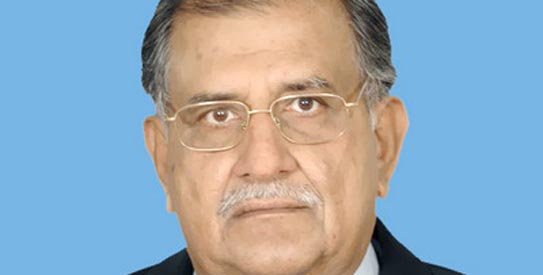
Within 40 days of the devolution of the Ministry of Labour and Manpower on June 30, 2011, the government created the ministry of Human Resource Development (HRD) headed by Chaudhry Wajahat Hussain and a ministry of Professional & Technical Training (PTT) headed by Riaz Peerzada, PML-Q, entrants to the cabinet.
Both the ministries have almost completely brought back the staff and officers which were transferred to various other departments and almost nothing has changed at the federal level.
Minister for PTT, Riaz Pirzada expressed ignorance when asked if he thought the functions of his ministry might be part of the concurrent list: “I do not make ministries; that is the job of Raza Rabbani or Nargis Sethi.”
An official of the former Ministry of Labour and Manpower told Dawn that the federal government has retained seven departments of the ministry, which have been divided between the ministries of HRD and PTT.
1) To maintain the trade/labour unions at the national level the National Industrial Relations Commission has been given to HRD
2) The responsibilities of dealing with international organisations and donors such as the International Labour Organisation have also been retained at the centre with the HRD.
3) Overseas Employment Corporation will also remain with the centre with the HRD.
4) The National Training Bureau has been handed over to the PTT.
5) Directorate of Workers Education has also been given to the PTT.
6) Pakistan Institute of Manpower has been shifted to the PTT.
7) Human Resource Department has been given to the HRD.
The official justified the retention of these departments by saying their work had national and international significances. "The Overseas Employment Corporation has to deal with other countries and the Human Resource Department and Pakistan Institute of Manpower are also of national importance,” he argued.
But the most controversial move is the retention of EOBI and Workers Welfare Fund (WWF) within the HRD.
Critics allege that the Employees Old-age Benefits Institution (EOBI) has assets worth around Rs50-Rs60 billion and this money is the reason for the ongoing tug of war. The WWF’s assets amount to more than Rs20 billion and this bone too is being fought over.
“Major players are interested in EOBI,” said an official of finance ministry. “This includes minister and former ministers who, through their relatives and front men have been awarded contracts to carry out EOBI projects. In addition, the ministry of Inter Provincial Coordination also wanted EOBI under it while the provinces are also not willing to let go of this pot of gold.”
Despite the fact that HRD oversees EOBI, the Institution is being run by Zafar Gondal, who has served as its chairman for the past two years.
But for once, the provinces are in no mood to let the federal government get away with this move.
The Punjab government has demanded distribution of EOBI assets using the National Finance Commission (NFC) formula, which is based on the number of registered industrial units and workers.
An official of the Punjab government said that the Chief Minister of Punjab is likely to take up the matter and he may even file an appeal in the Supreme Court for the release of EOBI and WWF once the dengue crisis is over.
The Sindh government is also demanding its share: it wants the distribution to be based on which province collected how much, a majority of industrial units and commercial offices registered with WWF and EOBI are in Karachi.
“We have our concerns and Sindh will take up the matter with Council of Common Interest to get the EOBI and WWF devolved,” Raja Muhammad Abbas, Chief Secretary Sindh told Dawn.
However, Khyber-Pakhtunkhwa and Balochistan governments are in favour of the existing formula, under which both provinces are receiving comparatively higher funds. An official of the ministry of Inter- Provincial Coordination said that the two provinces were willing to accept the status quo if the funds stayed with the federal government and if the payments continued as before.
But for those at the centre, there is only one solution — retaining the programmes.
“Many labourers work in Lahore or Karachi but they go to their native areas in Khyber-Pakhtunkhwa or Balochistan after retirement and receive pension there,” he said.