0
0

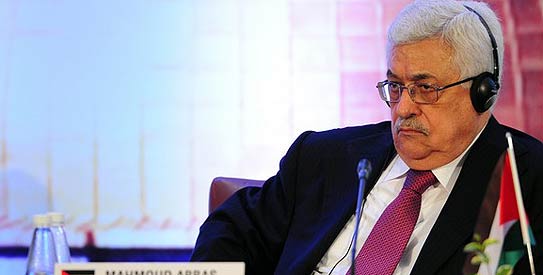
RAMALLAH, Palestinian Territories: When the unassuming Palestinian leader Mahmud Abbas takes to the podium at the United Nations on Friday, he will be haunted by the ghost of his iconic predecessor Yasser Arafat.
In 1974, Arafat mustered all his rhetorical skills to give an emotional speech before the UN General Assembly, brandishing a holster in one hand and an olive branch in the other.
“Today I have come bearing an olive branch and a freedom-fighter's gun. Do not let the olive branch fall from my hand,” he implored the world body.
Abbas's speech, after which he will present a formal request for UN membership for a Palestinian state, is likely to be much less theatrical, in keeping with a man known for his austere bearing and simple lifestyle.
In style as well as substance, little links the two men. Abbas is a low-key chain-smoker who speaks quietly about peace and negotiations, and favours muted suits.
Arafat, by contrast, had a charismatic, tempestuous style and liked to sport military fatigues, hearkening back to his time as a guerrilla, topped by his trademark black-and-white keffiyeh.
Israeli politicians called him a “terrorist” and accused him of orchestrating the deadly second intifada which began in 2000.
Abbas was born on March 26, 1935 in the northern town of Safed in Galilee, which is today inside Israel.
With the founding of the Jewish state in 1948, Abbas fled into exile along with hundreds of thousands of Palestinians, and in the late 1950s he and Arafat co-founded the Fatah party.
But their lengthy friendship and cooperation frayed towards the end of Arafat's life, and by September 2003, Abbas's political career appeared over - his relationship with the veteran Palestinian leader broken beyond repair.
A damaging power struggle, centring on control of the myriad security apparatuses, led Abbas to step down as the first Palestinian prime minister after less than four months in power, and he stopped attending Fatah and PLO meetings.
The pair reconciled only as Arafat lay dying in November 2004, with Abbas putting aside any lingering resentment and being designated successor to the larger-than-life leader.
Two months later, he was officially elected president in a tough Palestinian political environment in which he would face opposition from the Islamist Hamas movement that would one day threaten both his rule and the political dominance of Fatah.
By contrast with Arafat, Abbas was warmly received by the international community, praised by Washington and the Europeans for his emphasis on negotiations and peaceful resistance to the Israeli occupation.
Israel also called him a good partner, both in peace talks and on the issue of bilateral security cooperation, a primary concern for the Jewish state.
Abbas was the chief architect on the Palestinian side of the 1993 Oslo accords, and also the first high-ranking Palestinian to initiate contact with left-wing Israeli figures and peace groups back in 1974.
But in recent years, he has begun to show an independent streak, resisting for months US attempts to lure him to new negotiations after Israel imposed a temporary freeze on West Bank settlement building in November 2009.
Eventually he agreed, and direct talks were launched in September 2010 - only to fizzle out a few weeks later after the settlement freeze expired and was not renewed.
Despite international pressure to continue talking regardless of the renewed settlement building, Abbas held firm, and when it became clear that no new freeze would be forthcoming, he began steering his negotiating team towards the UN membership option despite opposition from Israel and Washington.
He insists this is the only way to keep the dream of a two-state solution alive, and to strengthen the Palestinian negotiating position vis-a-vis Israel.
But the UN move has met opposition domestically from Hamas, the long-time rival of Abbas's Fatah movement.
Although the two factions recently signed a reconciliation deal after years of bitter conflict, it has yet to be implemented.
Abbas has said he will not run for president again, but a poll released this week showed he would easily beat a Hamas candidate and that Fatah is now more popular than the Islamist movement in both the West Bank and Gaza.