0
0


ISLAMABAD, July 31: Gwadar, already being used for illegal immigration, is becoming a major transit point for drugs and their precursors entering and leaving Afghanistan, according to a United Nations report.
The report titled ‘The global Afghan opium trade: A threat assessment’ released by the UN Office for Drugs and Crime (UNODC) after a case study on trafficking through Balochistan and Fata said the location of Gwadar port provided an opportunity to subvert trade sanctions on Iran.
It said the rapid increase in trade volume transiting the region was likely to overwhelm the customs and law-enforcement agencies and the port’s vicinity to regional trade centres would most likely see Gwadar targeted by illicit traffickers.
Apart from official ports, a significant volume of drugs is trafficked by sea from Balochistan at various unofficial points along the Makran coast. Key exit points along the coast include Ormara, Talar, Hingol, Sur Bander, Peshukan and Jiwani, although Kund Malir in Lasbela district and Jirwani in Gwadar are reported to be the most vital unofficial natural jetties used by drug traffickers.
It is estimated that most of the heroin reaching Pakistan is trafficked through the Helmand and Kandahar borders with Balochistan because of limited law-enforcement capacity on both sides of the border and the strong presence of Taliban and other anti-government elements.
Despite being the main entry point and transit route, there is no strong evidence that heroin processing take place in Balochistan.
Heroin laboratories have been identified along the unclear Afghan border but it has not been confirmed whether any of them is in Pakistani territory.
According to the report, Pakistani criminal groups paid an estimated $400 million to Afghan drug traffickers for 160 tons of heroin that entered the country. They then sold 138 tons to international traffickers for $700 million, making a $300 million profit.
Pakistanis consumed 20 tons of heroin at a street price of $400 million.
For consumption of some 132 tons of raw opium, users paid about $95 million to drug traffickers.
In total, Pakistan’s opiate market was worth $1.2 million in 2009 -- including both transitional trafficking and domestic consumption -- with Pakistani drug traffickers making a net profit of $650 million.
The exact beneficiaries of the opiate trade through Pakistan are difficult to specify, although it appears that extremist groups in Fata and criminal groups in Balochistan are key recipients, according to the study.
Heroin trafficked from Pakistan met the majority of demand in the Near and Middle East Asia.
During the year, 17 to 18 tons of heroin was consumed in the region -- 16 tons in Iran and one to two tons in Israel, Saudi Arabia, Jordan, Lebanon and Kuwait.
Heroin was brought into these countries mainly across the coastline of Pakistan -- especially via the UAE -- using speedboats and other marine transport.
The UNODC said drugs flowing through both Balochistan and Fata were delivered to safe houses along the Makran coast before being prepared for export.
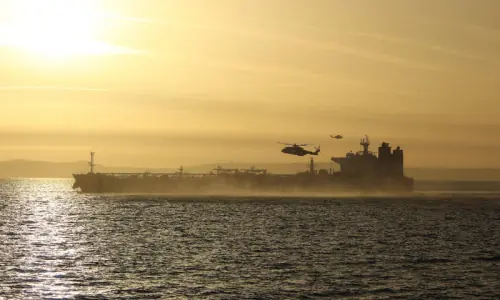
Drugs trafficked by sea from the Balochistan coast are usually first loaded onto small boats before being taken out to international waters where they are transferred to larger cargo ships.
The report alleged that the small boat transport system and broader drug trade along the coast were dominated by the power clans of Awaran and Lasbela districts, particularly the Bizanjo, Kalmati and Dashti tribes. It alleged that the groups worked in conjunction with the Buledi tribes of Makran.
It said that although the cargo ships were operated by large international trafficking networks, some Pakistani networks reportedly operated their own drug trafficking boats along the smaller distances, especially between Pakistan, Oman and Yemen.
The report said drug trafficking from Balochistan into Iran was streamlined depending on the route and the same tribes controlled the entire area from the Afghan to the Iranian border.
Drugs and precursor chemicals are transported across the Pakistan-Iran border on motorbikes, camels, donkeys and in small caravans of two or three vehicles. They are also concealed in specially designed vehicle cavities or in bags and cartons of items meant for legal import.
The report said the large drug trafficking networks of Balochistan did not fully monopolise the market and smaller groups were emerging to capitalise on the perceived easy money. However, they not well connected and are more likely to be of a criminal nature and ultimately these groups are more frequently intercepted by law-enforcement agencies.
Drug trafficking from Fata to India is less compared to China or Karachi’s international routes, entering India mainly via Sialkot and Wagah.