



 0
0

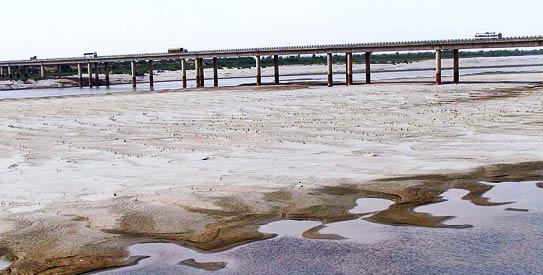
ISLAMABAD: The federal and provincial governments have agreed to set up a permanent national water commission to regulate water uses and balance in different basins and oversee replenishment of lost storage capacity through construction of new reservoirs. The commission would be headed by the prime minister and comprise the federal and provincial ministers for water, irrigation and agriculture besides heads of relevant agencies and private sector water sector experts, a senior government official told Dawn on Thursday.
The provinces have, however, opposed the creation of a regulatory body proposed by international lending agencies to enforce water user charges for full-cost recovery from farmers and other consumers. Pakistan is currently recovering only 50-60 per cent of its water supply cost from consumers and intends to ensure full cost recovery as part of a new reform process.Sources said Wapda chairman Shakil Durrani had started the process of making presentations to provincial chief ministers to persuade them to also give regulatory functions to the proposed commission to enable it to serve as a regulatory and recommendatory body on all water issues.
The commission will oversee formulation of a national water policy to include elements such as reducing inefficient water usage, improving cost recovery, increasing water storages, removing subsidies and improving the water management system.
The initiative is part of efforts of the so-called Friends of Democratic Pakistan led by the United States that is also assisting the country under the water working group. The Asian Development Bank has been assigned the task of preparing a national water policy, for which a water sector task force has been set up to prepare recommendations in about a month.
The US will provide expert input for water sector regulatory reforms, including glaciology, dam design and operations and remote sensing. Under the plan, Pakistan and the US have agreed to involve technical experts and arrange visits by the US Army Corps of Engineers and US Bureau of Reclamation in Pakistan and for training Pakistani water professionals in America.
The government will soon introduce an enabling legislation at the federal and provincial levels to enact the national water policy and to ensure its implementation through the national water commission. The US is helping the federal government in preparing the required legislation on the basis of its experience in water sharing among its states and recovery of water use charges from different consumers.
The water commission will be responsible for prioritising and sequencing the construction of replacement storages to increase water availability, approve measures for reducing seepage losses, particularly in saline areas, by canal lining and oversee the use of technology – drip, sprinkler, rainwater harvesting and telemetry systems.
It will also recommend crop substitution – giving up crops that require more water and introduce water-efficient crops commensurate with water availability and taking steps for water quality management – both for irrigation and municipal use. It will take steps to reduce government subsidies in the water and agriculture sector and full cost recovery of all prices that reflect its scarcity.
It will also be the responsibility of the commission with regulatory powers to conduct studies for determining anticipated water shortages due to climate change and glacial melting effects in view of estimates that eastern Himalayan glaciers may retreat for the next 50 years because of global warming causing increase in Indus river flows and afterwards decrease in river flows by 40-50 per cent.
The new initiative is being taken because of regular water shortages for irrigation and decline in hydropower contribution in total power generation to about 30 per cent from 50 per cent in 1995 as Pakistan's per capita water availability declined from 5,300 cubic metres in 1951 to less than 1,038 cubic metres this year, projected to further drop to 877 cubic metres in 2020. Countries with less than 1,000 cubic metres per capita water availability are described as “acute water scarce”.


























