0
0

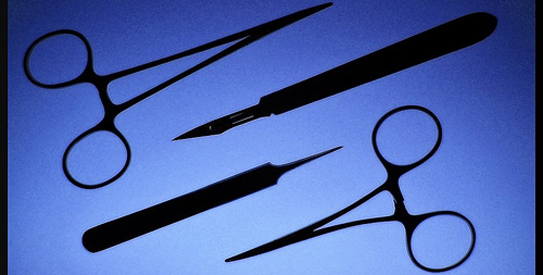
KARACHI: The medical community has taken exception to the proposed exclusion of 'forensic medicine' from the MBBS curriculum, fearing that the move would jeopardise the availability of medico-legal officers in hospitals.
Doctors and medical teachers talking to APP on Tuesday said the proposal laid before Pakistan Medical and Dental Council (PMDC) to abolish forensic medicine as a full fledged subject and to place it with pathology for MBBS students will have its serious fall out.
Presently, any medical graduate who has sufficient knowledge and training in the subject of Forensic Medicine, and is registered with PMDC, is authorised to perform medico-legal procedure and discontinuation of the subject will deprive country of easy availability of qualified professional.
"Discontinuation of the subject, taught in two parts as Medical Jurisprudence and Toxicology in third year MBBS will deprive medical graduates of essential and extremely relevant medical knowledge," said Dr Qudsia Hasan, a senior medical teacher.
Dr. Hasan reiterated that country would be exposed to serious shortage of medico legal officers and the fall out would be most severe in the small cities and towns.
In reply to a question, she said that there were around 15 doctors holding FCPS degree in Forensic Medicine and that the post graduate level training was introduced by CPSP some eight years ago.
"This is already a neglected subjected and we need to focus on its improvement at the undergraduate level too instead of diluting or doing away with it altogether," said Prof. Said Minhas.
Dr. Muhammad Qutub Siddiqui of Dow University of Health Sciences (DUHS) said that placing Forensic Medicine with Pathology will lead to confusion among the students as Pathology is in itself a wide subject with its own sub-groups.
"This confusion will deny students of the knowledge and enhance chances of error among graduates assigned the responsibility to perform autopsy or any other medico-legal examination," elaborated the former medico-legal officer.
"The poor knowledge among doctors will on one hand may turn beneficial for the criminals or culprits and on other compromise concerned doctor's proficiency to handle varied forms of inflicted injuries, assaults or de-poison and may lead to unintentional murder," he warned.
Prof. Minhas, associated with Jinnah Post Graduate Medical Centre, urged for a proper mechanism under which more and more teachers could be available to impart updated training in forensic medicine to the under graduates.
The teachers were of unanimous opinion that the move to exclude forensic medicine from MBBS curriculum was mainly manoeuvered by private medical colleges.
"These colleges are mainly catering to needs of international market for doctors as their graduates rarely stay back in the country," said Dr. Syed Ali Ashad.
He mentioned that medico-legal procedures are only performed in public sector hospitals and not at any of the private tertiary care facility, adding, "The owners of private medical colleges and universities are little interested in the subject of forensic medicine itself."
Dr. Ashad said the proposal may also be in line with practice in USA and other developed countries where medico-legal examination can be conducted only by post graduates holding certificates in forensic medicine as a specialty.
"Medical graduates from Pakistan and other developing countries have to acquire a full-fledged degree or certificate equivalent to degree if keen to practice forensic medicine," he said.
Meanwhile, Dr. Qudsia said that a majority of our medical graduates who go to rural areas have the added responsibility of looking after medico-legal cases which can be done only when basic knowledge of the subject is sound.
She also referred to a Supreme Court of Pakistan's decision passed some 15 years ago under which women medical graduates were also to be necessarily to be assigned as medico-legal examiners in all basic health units, district headquarter hospitals and tertiary to ease the process of justice in cases involving women.
Our medical and legal systems are in equal need of easy availability of qualified medico-legal officers so that justice could be ensured without any compromise, the doctors asserted unanimously.