0
0

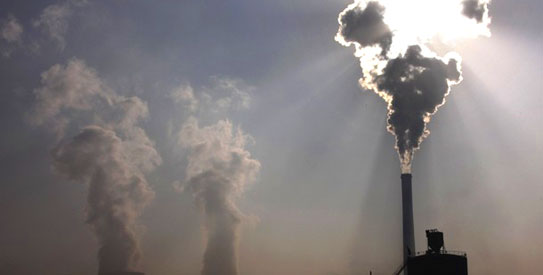
BEIJING: China’s industrial firms will be forced to cut their carbon and energy intensity levels by as much as 18 per cent over the next five years, according to mandatory targets announced on Monday.
The target was higher than first planned, with industries originally expected to cut CO2 and energy intensity – the amount per unit of industrial added value – by 16 per cent over 2011-2015, the official Xinhua news agency said, citing the Ministry of Industry and Information Technology.
For this year alone, Chinese industry will have to cut carbon and energy intensity levels by more than 4 per cent, Xinhua said.
Industrial sectors will also be forced to slash water use by 30 per cent by the end of 2015, and must also raise solid waste recycling rates to around 72 per cent over the period.
China, the world’s biggest producer of climate-changing greenhouse gases, has pledged to cut carbon produced per unit of GDP by 17 per cent by the end of 2015, with energy intensity also slated to fall 16 per cent.
Much of the burden will be placed on energy-guzzling industrial enterprises like power plants, steel mills, aluminium smelters and cement factories.
The country has made a commitment to explore the use of “market mechanisms” in its efforts to reduce greenhouse gas and pollutant emissions, and experts have suggested that mandatory targets for big industrial firms could be the first step in the establishment of pilot sector cap-and-trade schemes.
China’s beleaguered steel sector, the world’s biggest, is expected to bear the brunt of the new targets, with smaller industry players complaining that environmental compliance costs have severely eroded their already thin margins.
Hundreds of small mills were forced to shut down in the second half of last year after their power supplies were cut in order to meet 2006-2010 energy efficiency targets.
National Development and Reform Commission chairman Zhang Ping said earlier this month that the enforced blackouts were a mistake and would not be repeated.