0
0

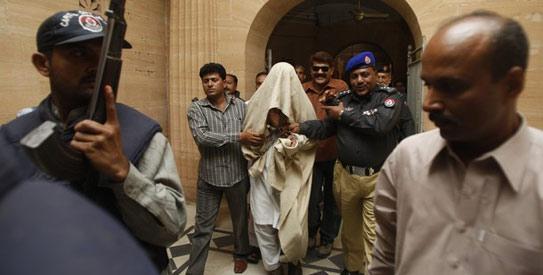
ISLAMABAD: He is a self-declared warrior against US and Nato troops in Afghanistan. He allegedly ran terrorist training camps there when the Taliban was in power. He was suspected of involvement in the attempted assassination of two Pakistani leaders.
And today, Qari Saifullah Akhtar is free.
Punjab Law Minister Rana Sanaullah, the top judicial official in Akhtar’s native Punjab province, told The Associated Press he was released from four months of house arrest in early December because authorities finished questioning him in connection with the October 2007 attempted assassination of former Prime Minister Benazir Bhutto and found no grounds to charge him. Bhutto was killed in December the same year.
However, one US official said Akhtar has extensive ties to al Qaeda and other terrorist groups and is someone who should not be free to walk around the streets of Pakistan or any other country. The official spoke on condition of anonymity because he was not authorized to speak to the media.
Former US intelligence officials and analysts said Akhtar’s release is yet another sign of Pakistan’s reluctance or inability to crack down on the most dangerous terrorist organizations.
The leader of Lashkar-e-Taiba, Hafiz Saeed, was freed from custody on more than one occasion and is currently free. Lashkar-e-Taiba, headquartered in Punjab, is believed to be the mastermind behind the November 2008 Mumbai attacks that killed 166 people.
As part of Pakistan’s battle with neighbor India, the military and intelligence helped train and arm militant groups who fought in the disputed Kashmir region. Many of those groups cut their teeth on guerrilla warfare in the US-backed 1980s insurgent war against Russian soldiers in Afghanistan.
But military and intelligence officials have told The AP their relationship with such groups was severed after the Sept. 11, 2001 attacks, which marked a turning point that moved Pakistan into a closer alliance with the US However there are lingering concerns that some links with militants remain.
Pakistani military officials say the military and intelligence services fighting insurgents in the northwestern tribal regions along the border with Afghanistan are stretched too thin to open another front against militants in the Punjab. The officials spoke on condition of anonymity because they are not allowed to talk to the media.
A number of militant groups active within Pakistan are headquartered in Punjab, where 60 per cent of Pakistan’s 170 million people live. Religious tensions have been running so high in the province that its governor, Salman Taseer, was assassinated by one of his own bodyguards last week for criticizing blasphemy laws that impose the death penalty for a variety of religious offenses, including insulting Islam. The bodyguard has been celebrated as a hero by many in Pakistan.
Military officials said that gathering actionable intelligence in the tribal regions, where some al Qaeda’s leaders are believed to be hiding, has been deadly. A senior intelligence official told the AP Pakistan has lost more than 50 spies killed by militants.
‘‘I think it is clear that Akhtar is going to go back to the front lines of the fight against the United States, which complicates our mission in Afghanistan, and threatens the stability and security of the region in general,’’ says Charles Bacon a US-based intelligence analyst.
Pakistani and US analysts say Akhtar’s release reflects a growing lack of control by the country’s security agencies over one-time prodigies who have broken away and turned their weapons on the state.
Mohammed Amir Rana, who runs the Pakistan Institute for Peace Studies, said freeing Akhtar was a desperate attempt by the security agencies to reunite militant groups whose members have splintered into smaller groups and in some cases, turned against Pakistan because of its support for the US-led war in Afghanistan and its attacks on the Taliban at home.
Bhutto had named Akhtar as a person she feared might try to kill her.
To protest his innocence, Akhtar’s lawyer has filed suit against Bhutto’s widower, President Asif Zardari, complaining that Bhutto had referred to his client as her would-be assassin, said author and defense analyst Ayesha Siddiqa. Bhutto named him as the bombmaker in the October attack on her in her posthumously released book.
‘‘But the real reason is simply that there are elements in the (intelligence) agencies who are sympathetic to these guys,’’ said Siddiqa, referring to militants.
No charges were ever brought against Akhtar over Bhutto or his suspected involvement in an earlier assassination attempt against former president Gen. Pervez Musharraf, according to Jane’s Defense.
Akhtar’s operational chief Ilyas Kashmiri had connections with some of the Mumbai conspirators. He was linked to David Coleman Headley, the Pakistani American in jail in the United States for his involvement in the Mumbai attack.