1
1

KARACHI: The record borrowing by the government and its heavy reliance on printing of notes created fears among the investors and analysts that the average inflation could even reach 16 per cent by the end of this fiscal.
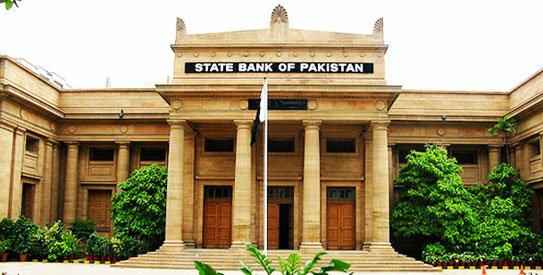
The desperate need of cash seems to have forced the government to make unprecedented borrowing of Rs336 billion from the State Bank leaving no option for the latter to further tighten the policy interest rate.
The inflation fears already forced the central bank to raise the policy interest rate to 14 per cent last month despite serious resistance from business community.
The SBP reported on Tuesday that the rate of monetary growth till Dec 11, since July, reached 6.24 per cent, much higher than 4.61 per cent during the same period last year.
While the business community fears further increase in the cost of borrowing, analysts see much higher inflation in near future. The government's borrowing from the central bank is inflationary since more notes would be printed to meet the government demand.
For the budgetary support the government has already borrowed Rs416 billion compared to Rs278 billion last year. However, it retired Rs43 billion loans regarding commodity operations.
The government has also borrowed Rs82 billion through commercial banks. It was less than last year's borrowing of Rs179 billion, which invited severe criticism from the State Bank and the independent economists, who said that no room was left for the private sector to borrow from the banking system.
“This printing of notes will further fuel inflation in the economy,” said Mohammad Sohail, chief executive of Topline Research.
“This may take the average Consumer Price Index (CPI) to 16 per cent for FY 11,” he said, adding that SBP may further tighten the interest rate.
Analysts see worst period for investors and other borrowers as the cost of borrowing could alienate them in the market already invaded by the cheaper products of neighbouring countries.
While millions have been seeking employment, jobs cuts are in pipeline since the economy could not perform with this high price of money, they said.
“If the situation prevails and the government continues to borrow through printing of notes, more miseries are there for the private sector,” said Khurram Shahzad, head of research at InvestCap.
He said banks would have to face more defaults of loans and the size of Non-performing Loans (NPLs) would be much larger.
He said the central bank could increase the policy interest rate by another 50 basis points to curtail the inflationary pressure building in response to heavy government borrowing.