0
0

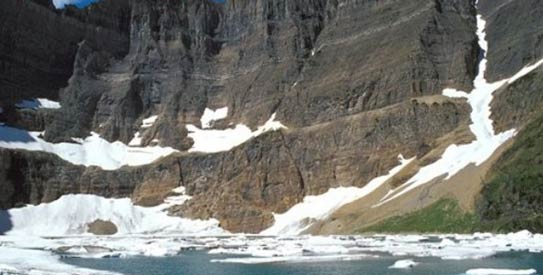
CANCUN, Mexico: Residents of the Himalayas and other mountain areas face a “tough and unpredictable future” as global warming melts glaciers and threatens worse floods and water loss, officials said during U.N. climate talks on Tuesday.
A study said that glaciers in southern Chile and Argentina, followed by ones in Alaska, had been losing mass “faster and for longer than glaciers in other parts of the world.”
Negotiators at two-week talks in Cancun, a seaside resort in Mexico, have been seeking agreement on how to cut the greenhouse gases from fossil fuels, forest loss and land changes that are stoking global warming and threatening dangerous climate changes.
Tuesday’s report, by the United Nations Environment Program, found that many people in vulnerable mountainside homes are already living with the growing risks of global warming and need more support to help them adapt to a changing landscape.
The melting of glaciers was triggering more frequent “glacial lake outburst floods,” when masses of melted water burst through brittle rock barriers and inundating valleys below, said the report.
“People in the Himalayas must prepare for a tough and unpredictable future,” said Erik Solheim, Norway’s environment minister, in a statement accompanying the report.
“Global climate change has posed a serious threat to the Himalayan region. Countries are highly vulnerable to climate change, due to their vast dependence on water...originating in high mountains,” said Madhav Karki, of the Nepal-based International Centre for Integrated Mountain Development, at a news conference to release the report.
An earlier U.N. scientific panel’s assessment of global warming was criticized for overstating the rate of melt of Himalayan glaciers and wrongly claiming they could all vanish by 2035.
The new report said the threat to glaciers was likely to unfold unevenly and over a longer time.
“In some regions, it is very likely that glaciers will largely disappear by the end of this century, whereas in others glacier cover will persist but in a reduced form for many centuries to come,” it said.
Paradoxically, in parts of some mountain ranges, such as the Karakoram in Asia, glaciers have expanded, apparently due to increased snowfalls brought by the warmer, moister air caused by climate change, the report said.
It can be found on the U.N. Environment Program’s website (www.unep.org). – Reuters