0
0

LONDON: The prominence of Britain's Muslim minority in the nation's debate about security and social cohesion provides the backdrop to journalist Zaiba Malik's memoir of growing up a British Muslim of Pakistani descent.
“We Are A Muslim, Please” tells how she was raised by first generation immigrant parents in the run-down former industrial centre of the northern English city of Bradford in a tradition of conservative piety.
At the same time she was desperate to fit in at school, an overwhelmingly white British institution, an effort that led to years of excruciating anxiety and moments of low comedy.
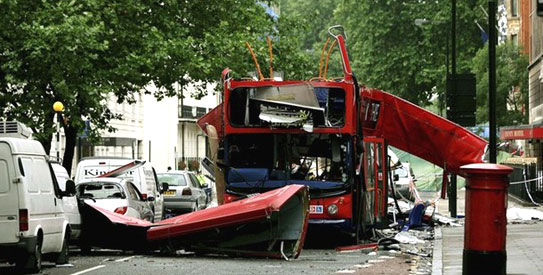
Malik's story is shaped by her curiosity about the roots of the militancy that has taken hold in some parts of Britain's Muslim communities. She was born in nearby Leeds in 1969, on the same street where, decades later, the bombers who killed 52 people in London in 2005 manufactured their bombs in a rented apartment.
Malik spoke to Reuters about Britain and Muslim communities:
Q: Is communal integration inevitable, as generations pass?
A: “I go back to Bradford a lot and the lack of integration is absolutely still stark. I find that really disappointing. I don't think there is anything natural about communities integrating over time. If they don't integrate from an early stage, then differences propagate themselves over time.
When my Dad came in the 1960s most Asian people were working class, they came to work in factories and on the buses. Now we have a middle class living in the nicer parts of Bradford...which means the knock-on effect is of white flight.
It seems to me there is a problem. I don't know how you solve it. If it's not going to happen naturally, then you can't really force it. We've had strategies such as bussing in Bradford in the 70s. That lasted a very short time.
I'm not a big fan of faith schools per se because I feel they exacerbate segregation. So I'm not massively optimistic about the level of integration, certainly in Bradford.”
Q: In Bradford I heard people questioning whether the bombers did the 2005 attacks. Have you heard views like that?
A: “That's a really widely held view. I'm not joking. Quite a lot of young people hold the view that the 2005 attacks were a state conspiracy. I was chatting to a young UK-born woman of Pakistani descent and the subject turned to 9/11 and she said it never happened. I was so amazed. That view is something you hear time and time again. If we want to make things better surely we need to start from an honest base.”
Q: Should the state be assertive about British identity, instead of appearing to be embarrassed about it?
A: “We do have this oath of allegiance now for newly arrived people. I'm a fan of things like that. Even my Mum holds the view that if you're going to make a life here, it's not just a case of abiding by its laws, but trying to be a part of it.”
Q: What's happening in the home life of militants?
A: “There's always been a kind of duality in a place like Bradford. Whatever happens in the home stays in the home. People really put on a face. They don't actually deal with what's happening in their own home.
They tend to shy away from it because it's too embarrassing, and they cannot talk to external agencies. A very prominent problem now in Bradford is drugs, probably more than radicalism. I spent a couple of days at a drug clinic in Bradford and I was gobsmacked...95 per cent of patients were young Asian lads addicted to heroin and crack and still living with their parents.
There's a need to save face and not wash your dirty linen in public.
Until people start from a fairly honest point of view about what's happening, you're never going to acknowledge there's a problem. Until that happens I don't know how issues about what's happening in the home are ever going to get dealt with.”
Q: Is your success paradoxical in light of your upbringing?
A: “I can get on my high horse about this because I feel I understand. Sometimes people link poor social economic conditions with radicalisation and think it's about poverty and lack of opportunity.
I don't support that. Having come up from the background I did, when for most of the time my Dad was unemployed, I don't think radicalisation is about not having opportunities because in this country there are opportunities.
The Pakistanis who came to this country were very entrepreneurial. I think they made something out of nothing. We're always seen as hard-working and wanting to make something for our children.
But I think that's a generational thing. That tendency has just died the death. You'll see a lot of young kids driving in 50,000 pounds ($80,790) worth of car and everyone whispers they made that because they are into drug dealing. If it's entrepreneurship, it's not a good type, and it won't have a positive legacy.” – Reuters