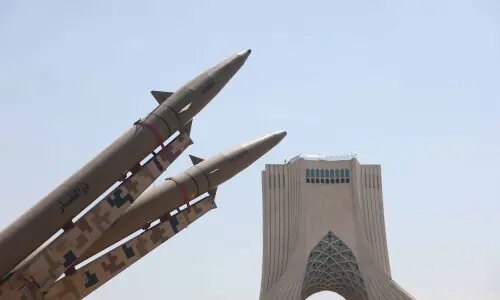
GOVERNMENTS around the world might be heralding an age of austerity and warning citizens they will need to cut public services, but the aftershocks of the global financial crisis have had little impact on military budgets, a leading thinktank says.
Last year, $1.5tr was spent on weapons, an annual increase in real terms of 5.9 per cent, according to the latest report by Sipri, the Stockholm International Peace Research Institute.
The US accounted for more than half of the total increase, though arms spending increased fastest in Asian countries, with China raising its military expenditure most, followed by India. Global spending has risen by nearly 50 per cent over the past decade, said Sipri.
The US headed the list of the world's top 10 arms buyers last year, spending $661bn on military equipment. It was followed by China (spending an estimated $100bn), France ($63.9bn), Britain ($58.3bn), Russia (an estimated $53.3bn) and Japan ($51.8bn), according to the report.
Though some large-scale weapons programmes were cancelled in the latest US budget plans, notably the F22 stealth fighter, more money was earmarked for other projects, including unmanned aerial vehicles (UAVs) and cyberwarfare, said Sipri.
The British government is likely to follow suit in the forthcoming strategic defence review, though it is expected to make significant cuts in the number of F35 Joint Strike Fighters proposed for the British navy's two planned large aircraft carriers. Sipri notes that the US has actually increased its JSF programme.
Of European countries, Britain accounted for the biggest absolute increase (of $3.7bn) followed by Turkey and Russia. Cyprus increased military spending most in real terms, taking inflation into account.
Given its financial woes, Greece, which has traditionally devoted a higher percentage of its wealth to defence than most Nato countries, has already decided to cut military spending this year, the report says.
— The Guardian, London