PM seeks grant-based climate financing for vulnerable nations
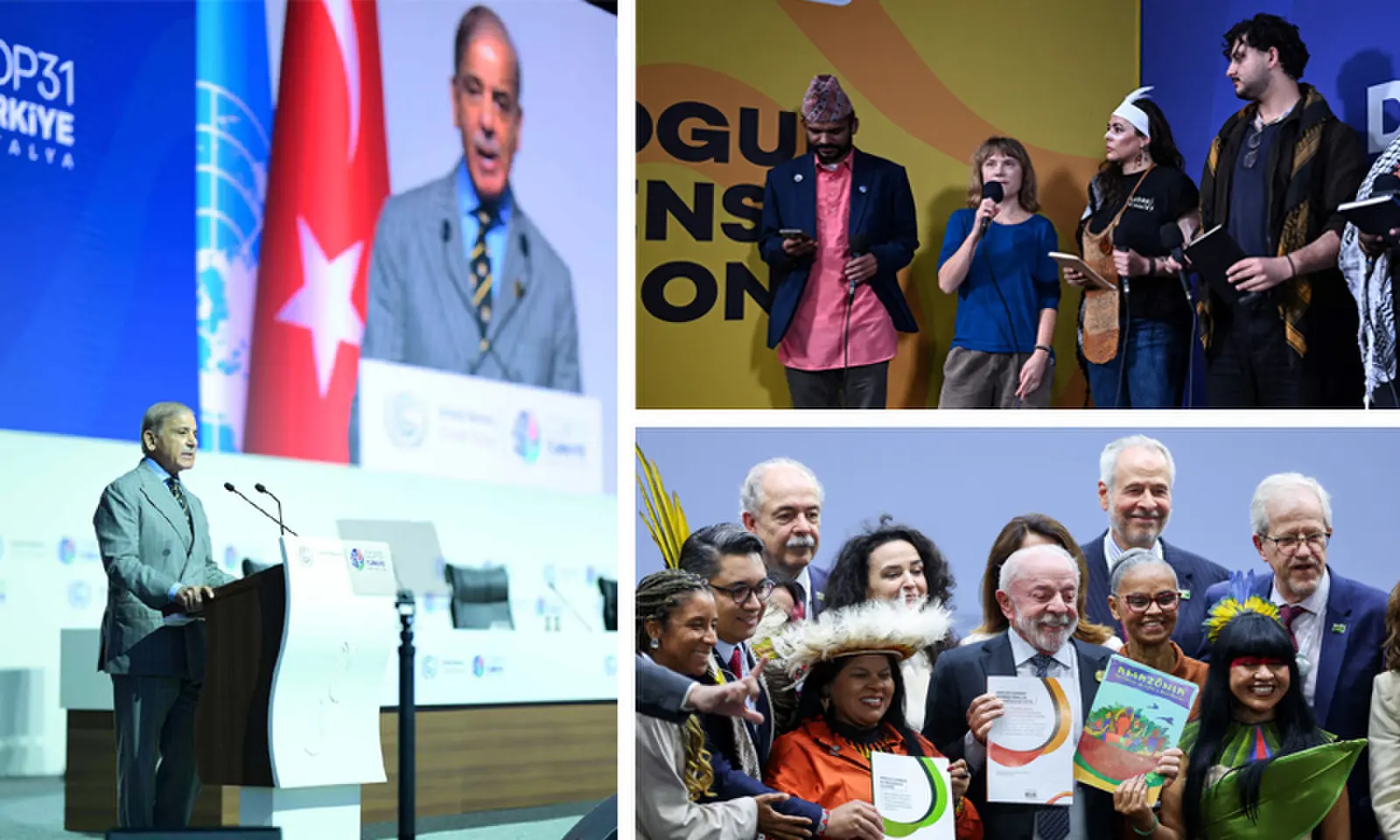
• At COP31, Shehbaz urges world leaders to turn climate pledges into action; says no country can face the crisis alone
• Highlights Pakistan’s clean energy efforts, calls for water-sharing agreements to be honoured
• Meets Turkish, Iraqi, Sudanese and Finnish leaders on sidelines of UN climate summit
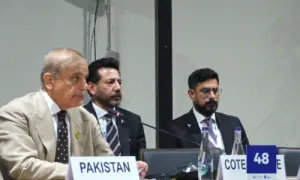
ISLAMABAD: Prime Minister Shehbaz Sharif on Thursday called for grant-based climate financing, including through public-private partnerships, and a significant increase in funds for resilience and adaptation to help climate-vulnerable countries cope with the growing impacts of climate change.
In his national statement at the Antalya Leaders’ Summit of the 31st UN Climate Change Conference (COP31), he stressed that vulnerable nations needed timely assistance and financial support that did not add to their debt burden.
“Resilience and adaptation funds are essentially survival funds, particularly for struggling economies facing increasingly devastating climate disasters,” he said.
Mr Shehbaz recalled the devastating floods of 2022 in Pakistan, noting the economic damage and mass displacement caused by the catastrophe.
More than 1,700 people lost their lives and economic losses exceeded $30 billion, the prime minister said.
Referring to the flash floods in Buner in August 2025, he shared the heartbreaking story of a young man who was just two days away from his wedding when floodwaters swept through his village, turning a home prepared for celebration into a house of mourning.
He said the tragedy reflected the plight of millions across Pakistan and the developing world who had contributed the least to climate change but were bearing its heaviest consequences.
Mr Shehbaz recalled his address to the UN General Assembly in 2022. “I had warned that what is happening in Pakistan will not stay in Pakistan, and unfortunately, that warning has become a stark reality,” he said.
“Climate change knows no borders. No nation can face it alone. Solidarity must mean action.”
He expressed gratitude to Turkish President Recep Tayyip Erdogan for his country’s support for Pakistan during the 2010 and 2022 floods.
Highlighting Pakistan’s efforts towards clean energy, he said the country had added more than 20 gigawatts of distributed solar capacity in just two years, while clean sources now accounted for nearly 55 per cent of its energy mix.
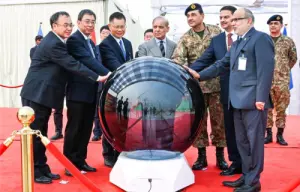
He also referred to Pakistan’s progress in nuclear energy, saying that on his way to Antalya, he had witnessed the placement of the dome at the Chashma-5 Nuclear Power Plant, which, once commissioned, would add 1,200 megawatts of clean, emission-free electricity.
He said Pakistan was also advancing electric mobility and had set a target of reducing projected emissions by up to 50pc by 2035.
Emphasising the importance of water security, the prime minister declared that water must never be weaponised and stressed that no country should be allowed to endanger the lives and livelihoods of downstream populations. He also called for water-sharing agreements to be honoured in letter and spirit.
The prime minister urged world leaders to translate their commitments into meaningful action, saying the success of COP31 should be measured not by promises but by the families protected, resources delivered and sustained action taken to safeguard the planet.
Meetings with other leaders
Separately, Mr Shehbaz held a series of meetings on the sidelines of the COP31 summit, including one with the Turkish president.
The Prime Minister’s Office said Mr Shehbaz and Mr Erdogan held wide-ranging discussions on ways to further enhance bilateral cooperation, with particular focus on trade and investment, defence collaboration, energy cooperation and connectivity.
The prime minister highlighted ongoing efforts by regional countries, particularly members of the Makkah Joint Defence Agreement, to promote de-escalation and dialogue.
The Turkish president appreciated Pakistan’s constructive role and mediation efforts that led to the signing of the Islamabad memorandum of understanding (MoU) between Iran and the US.
Mr Shehbaz also met Iraqi President Nizar Mohammed Saeed Amidi. The two leaders expressed satisfaction over the positive momentum in bilateral relations and underscored the importance of sustained high-level exchanges and institutional engagement.
The prime minister also met Gen Abdel Fattah al-Burhan, the president of Sudan’s Transitional Sovereignty Council.
He expressed solidarity with the Sudanese people amid the prevailing challenges. The two leaders had a productive exchange on ways to further strengthen bilateral relations in various areas of mutual interest.
In a separate meeting with Finnish President Alexander Stubb, Mr Shehbaz reaffirmed Pakistan’s desire to transform its longstanding friendly relations with Finland into a forward-looking partnership, focusing on trade and investment, education, skills development, technology, climate resilience and people-to-people contacts.
The prime minister highlighted the considerable potential for enhancing bilateral trade and welcomed the presence of Finnish companies, including Nokia, Wartsila, Metso and Vaisala, in Pakistan.
Published in Dawn, November 13th, 2026