War, poverty, repression stalk Yemen's ancient capital
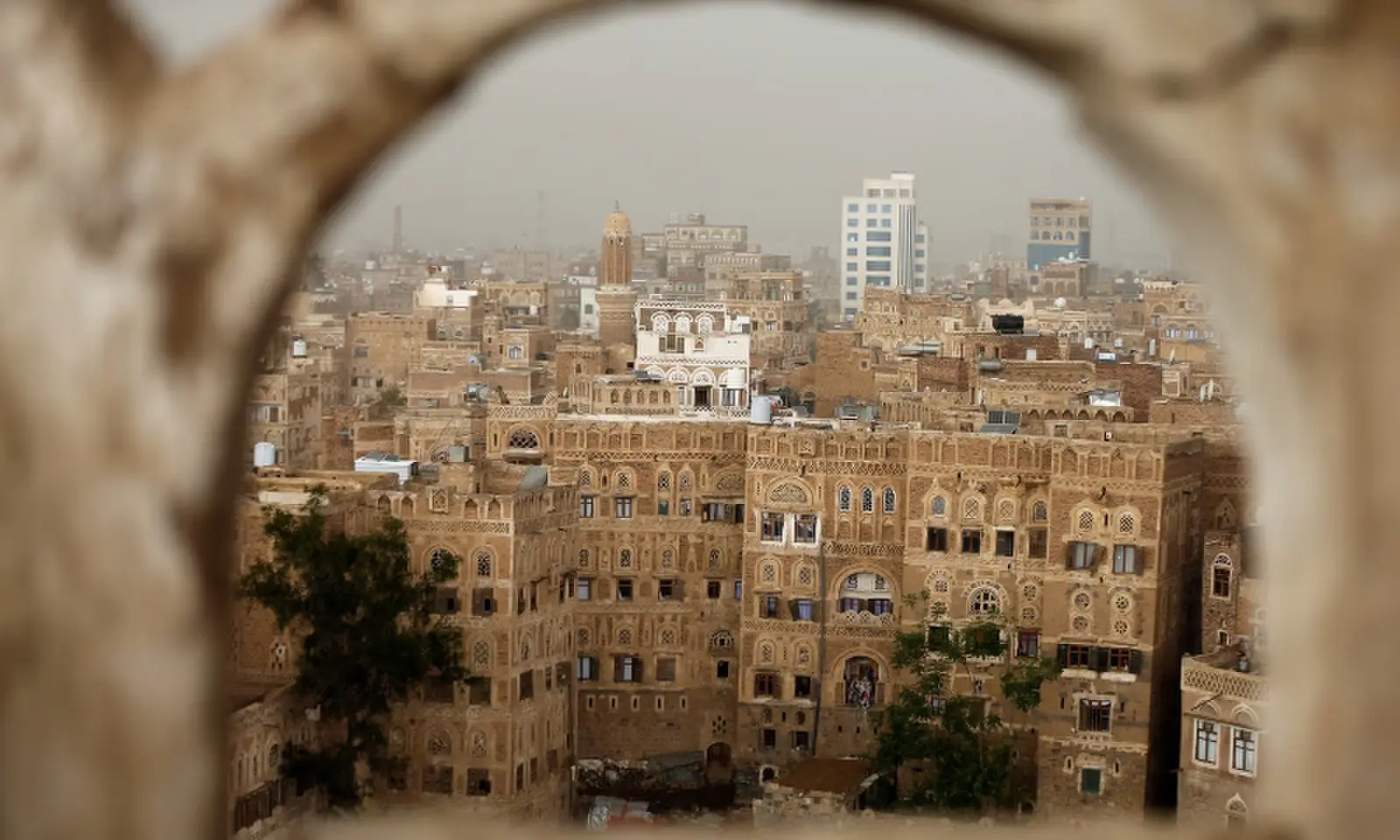
Beset by poverty, war and repression, the residents of Yemen’s ancient capital Sanaa, under Houthi control for over a decade, struggle to survive.
The Houthi movement seized the city in 2014, forcing the government to flee south and sparking a brutal civil war in one of the world’s poorest countries.
In Sanaa, said to be one of the world’s oldest continuously inhabited cities, residents say they long for the pre-war days and a measure of prosperity.
“Before the war, salaries were paid in full on a regular basis,” Ammar, a 24-year-old university student who asked not to use his last name for security reasons, told AFP by phone.
“Today, the Houthis have divided salaries into categories,” he said.
“My father is a civil servant; he falls into the category that receives half a monthly salary once every three months. My mother is a teacher and receives half-a-salary each month.”
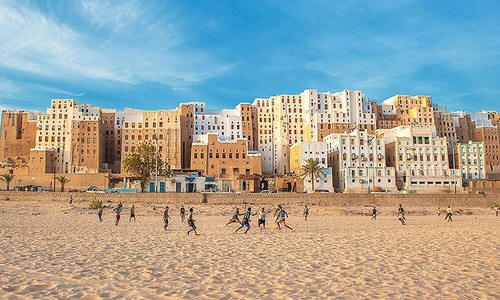
The Old City, with some buildings dating back nearly a millennium, bustles with life as vendors display foodstuffs including grains and spices in large sacks, and restaurant owners grill meat over charcoal.
Unesco added the Old City to its World Heritage in Danger list in 2015, after it was damaged in fighting between the Houthis and a Saudi-led coalition backing the government.
The historic alleys between tall, decorated mud-brick buildings are crowded with passers-by filing beneath banners reading “Boycott American and Israeli goods”.
But many residents struggle to afford basic necessities.
Two electricity bills
“We are a family of six, and my siblings are still in school. What our parents earn is not enough to cover basic needs,” Ammar said, adding that “prices have risen sharply”.
He recently lost his job at a private school, which helped him pay his university tuition fees, amid layoffs.
Alongside the struggle to secure basic necessities, residents of Sanaa complain of constant power cuts.
Residents pay two electricity bills, one to the authorities and another to private generators that fill in the gaps during the many blackouts.
“We try to ration our electricity use as much as possible. Water is also cut off in our neighbourhood, so we have to buy water from trucks at high cost,” Iman, a mother of two, told AFP by phone.
“Inflation and the soaring cost of living are not matched by any change in salaries. My husband works in the private sector and has not received a raise in three years, and there are no other job opportunities.”
Living conditions have worsened in recent weeks with Saudi Arabia intensifying its airstrikes on Sanaa, according to Houthi media and officials.
Since a 2022 truce between the two sides collapsed in July this year, fighting has only escalated.
Forty-four people were killed in the outlying village of Al-Sharia in Sanaa province on Saturday, the Saba news agency said, citing a spokesperson for the Houthi Ministry of Health.
‘Uneducated generation’
Under the weight of poverty, the education system in Yemen has largely collapsed, and many of Sanaa’s youths have dropped out of school.
Bilqis Abu-Osba, a former political science lecturer at Sanaa University who now lives outside the city, said dropouts have become endemic. Her colleagues have had to find new ways to make ends meet, like selling cakes out of their houses.
Meanwhile, “the battlefields have become a refuge for young people to earn a scrap of bread”.
“Poverty has played a very significant role in changing Sanaa,” she said, especially in eroding the formerly salaried middle class.
She said the quality of education has also declined, not least because the Houthis have modified curricula to suit “a sectarian ideology that serves their political project”.
“A new uneducated generation is now growing up, which will affect Yemen both in the present and in the future.”
“Sanaa used to be a city that was culturally, politically, and socially diverse, but it is now witnessing systematic exclusion to change its identity… into a Houthi ideological identity,” Abu-Osba added.
“Everyone is afraid to speak, as they can be arrested or severely punished,” she said.
“There is intense terror about expressing any political opinion, even a simple one, within the city, and silence has become the norm.”
Above an archway in the Old City a banner flutters with the Sarkha, the Houthis’ ubiquitous slogan: “Death to America, death to Israel, curse the Jews, victory to Islam.”