In Berlin meeting, Siemens affirms support for strengthening Pakistan's healthcare infrastructure
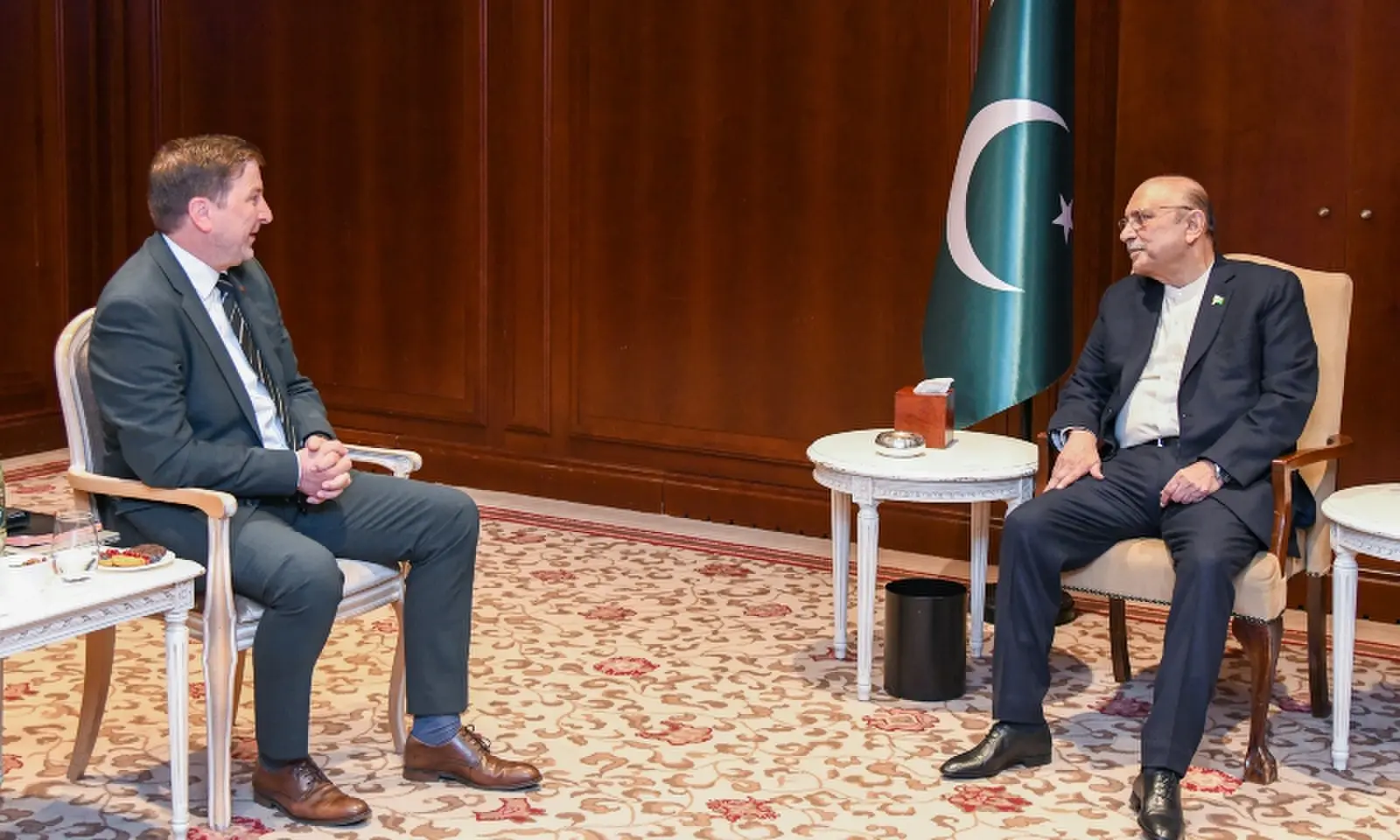
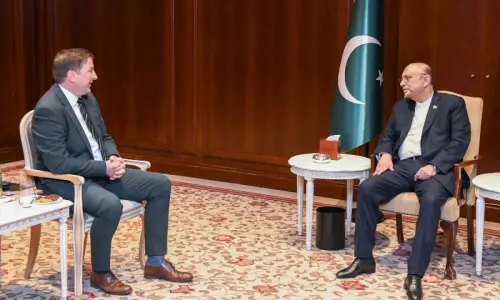
The executive vice president of technology giant Siemens on Saturday met with President Asif Ali Zardari in Berlin and expressed his readiness to enhance support for strengthening existing healthcare infrastructure in Pakistan, the Presidency said.
The president is currently on a three-day visit to Germany, having departed on Thursday, as the two countries are set to mark the 75th anniversary of their diplomatic relations.
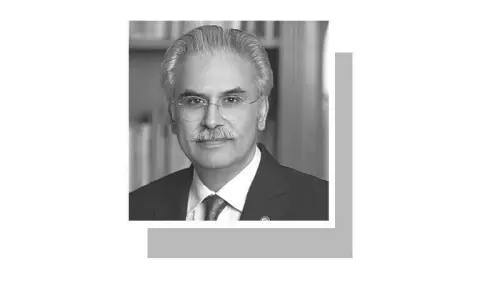
According to a statement by President Zardari’s office, he was called on by executives from the health company, including Siemens Executive Vice President Daniel Frisch.
The executive briefed the president on his company’s accomplishments in Pakistan and acknowledged the difference in health services as a positive outcome of the Sindh health department’s “rationally networked steps”.
According to the Presidency, Frisch “expressed his readiness and desire to enhance existing support through innovative solutions and technological applications for strengthening existing healthcare infrastructure of Pakistan”.
“The Siemens delegation told the president that their representatives will soon visit Pakistan to sign MoUs (memoranda of understanding) with their partners in capacity building and technological domains in the health industry of Pakistan,” the Presidency said.
“The delegation told the president that the technological infrastructure cooperation of the company extends to cancer, stroke and other diseases.”
Meanwhile, President Zardari called for the absorption of research-based and technology-driven solutions to improve health services in Pakistan.
He affirmed that Islamabad highly values German industrial, technological and infrastructural support from organisations like Siemens’ health division, which has been present in Pakistan for decades, with over 100 employees in three major cities.
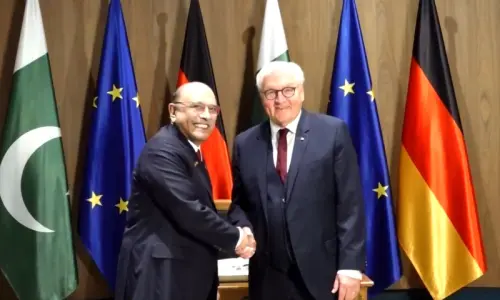
President Zardari expressed appreciation for Siemens’ presence in Pakistan and noted that the “long-awaited mutual desire of expanded and augmented bilateral partnership” between Islamabad and Berlin was affirmed during his meeting with German President Frank-Walter Steinmeier yesterday.
He also opined that “affordable, yet qualified and highly standardised health service delivery, stays fundamental to enable each and every citizen to realise unhindered potential”.
“We strive for broadened and all-inclusive provision of quality healthcare, particularly for poverty-stricken people in remote areas,” the president was quoted as saying by his office.
President Zardari encouraged Siemens to further engage with Pakistan and diversify its investment across multiple sectors across the country. He also assured the company’s upper echelon of the “fullest institutional cooperation” through the Special Investment Facilitation Council (SIFC).
Sindh Chief Minister Sindh Murad Ali Shah, Senator Saleem Mandviwalla, the Ambassador of Pakistan to Germany Salman Sharif and Sindh provincial ministers were also present during the meeting.
On Friday, Zardari and his German counterpart discussed bilateral relations, with Steinmeier praising Pakistan’s “rising diplomatic profile in the resolution of regional and global disputes”.
They also discussed challenges related to Afghanistan, with President Zardari stressing that while Pakistan “has no conflict with the Afghan people”, it would not allow terrorists to use Afghan soil to attack Pakistan’s citizens and violate its sovereignty.
Steinmeier appreciated Pakistan for facilitating the verification of 500 Afghans “destined to be repatriated to Germany” and also commended its humanitarian assistance to “millions of Afghans” over more than four decades, President Zardari’s office said.
He also took a “significant interest” in the Makkah defence pact signed between Pakistan, Turkiye and Saudi Arabia, which is aimed at collective deterrence.
Pakistan and Berlin formally established diplomatic ties on Oct 15, 1951. Both countries remain actively engaged in the areas of economy, defence, education and culture.
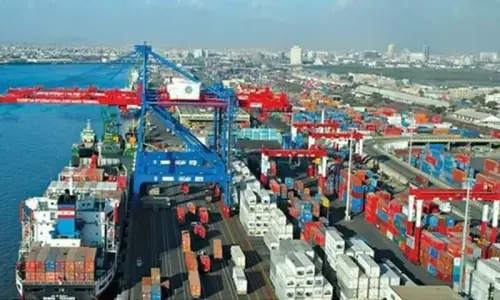
Exports to Germany dipped 3.53 per cent to $1.369 billion in the first 10 months of the previous fiscal year (FY2025-26) from $1.419bn in the same period the year prior.