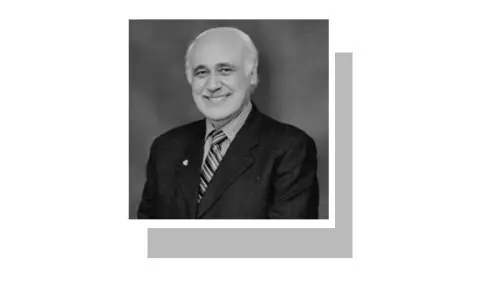
‘Letting roots of Pak-India conflict fester invites more danger’

ISLAMABAD: Failure to address the underlying disputes that engender crises between Pakistan and India could lead to more dangerous confrontations in the future, a former chairman of the Joint Chiefs of Staff Committee warned on Wednesday.
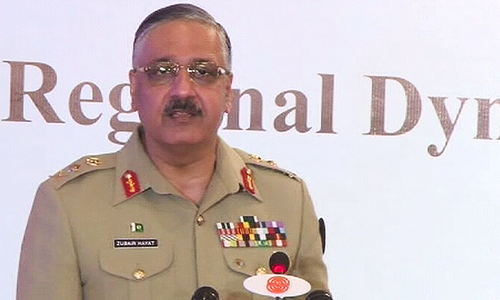
“Terminating a crisis without addressing its root causes only sets the stage for the next, more dangerous conflict,” retired Gen Zubair Mahmood Hayat said at the concluding session of the second Islamabad Non-Proliferation Conference, organised by the Strategic Vision Institute (SVI).
Ex-CJCSC warns against ignoring Kashmir dispute, Indus treaty suspension
He said that in the subcontinent, the core issue of Jammu and Kashmir could not be wished away or reduced to an administrative matter. “Similarly, water cannot be converted from a shared necessity into an instrument of power and pressure,” he said while stressing the need for resolution of the Kashmir dispute and restoration of the Indus Waters Treaty.
Gen Hayat warned that repeated crises between the nuclear-armed neighbours could become increasingly dangerous if unresolved disputes, diminishing restraint and the absence of sustained political dialogue continued to undermine regional security.
Referring to the May 2025 conflict, he said Pakistan had demonstrated its military capabilities and political control through a calibrated response that denied India a unilateral fait accompli without pursuing an unlimited war.
“The larger lesson is not that conflict between two nuclear-armed neighbours can be made routine; it is that there is no tested and certified safe space for war,” he said, warning that future crises would involve different leaders, emerging technologies and shorter decision-making timelines, heightening the risk of miscalculation.
He said South Asia lacked an inclusive regional security framework, effective crisis-management mechanisms and sustained political dialogue. “The region lives between deterrence that prevents the worst and disputes that repeatedly regenerate danger,” he said.
Gen Hayat warned unverified allegations could trigger conflict before the facts were established, with a future confrontation potentially arising from an accident rather than a deliberate state decision. He cited the continuing Operation Sindoor in this context.
Published in Dawn, October 22nd, 2026