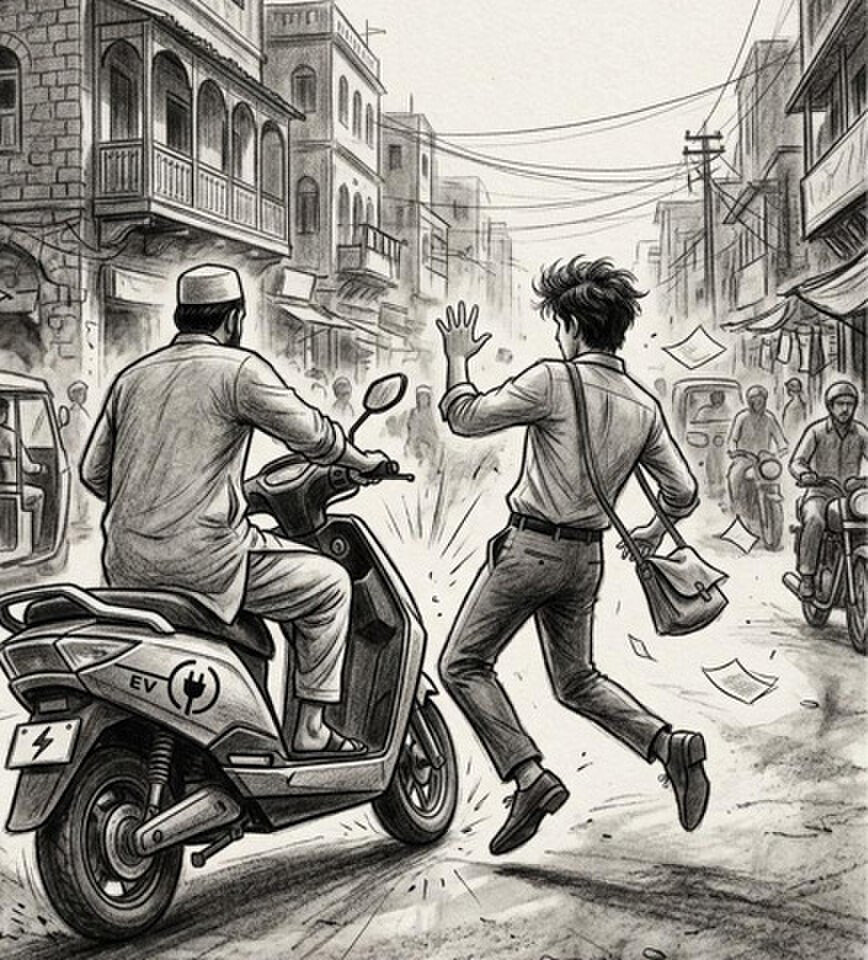
THE advent of electric mobility is no doubt a welcome development, particularly in a country that is grappling with alarming levels of air pollution and environmental degradation. The New Electric Vehicle Policy (NEVP) 2025-30 aims at accelerating the adoption of electric vehicles (EVs), with the government targeting 30 per cent of new vehicle sales to be electric by 2030. Yet, technological progress ought not to come at the expense of pedestrian and road-user safety.
An electric motorcycle approaching from behind or crossing a pedestrian’s path can provide little of the familiar auditory warning associated with conventional motorcycles, leaving pedestrians, cyclists and other motorists with drastically reduced reaction time. The danger would become considerably more acute during the coming winter months when fog and smog could severely restrict visibility.
A silent vehicle travelling at consider-able speed may remain undetected until the moment of impact, leaving pedestrians with little or no time to react. Given the momentum generated by these high-speed vehicles, such collisions can result in grave and potentially fatal injuries. This concern deserves particular attention in Pakistan because the problem of ‘silent’ vehicle is compounded by another, distinctly human, variable: reckless speed.
A growing number of young riders of electric two-wheelers clearly appear to treat the quietness and rapid acceleration of such vehicles as an invitation to ride aggressively, weaving through traffic or approaching pedestrians without adequate warning. A ‘silent’ electric vehicle becomes considerably hazardous when operated at an excessive speed.
The authorities must, therefore, ensure that environmental progress does not come at the expense of public safety. Appropriate regulations should be introduced, requiring all EVs, particularly two-wheelers, to incorporate audible warning mechanisms or pedestrian-alert sounds.
Manufacturers, too, should be required to treat pedestrian awareness as a design consideration rather than an afterthought. Public campaigns should particularly educate young riders about acceleration, braking distance and the dangers of silent approach. The objective should not be to impede Pakistan’s EV revolution, but to make it safer and more sustainable. A cleaner vehicle indicates progress; a cleaner vehicle that is also conspicuous, regulated and responsibly driven is genuine progress.
M. Abdullah Asghar
Lahore
Published in Dawn, October 22nd, 2026