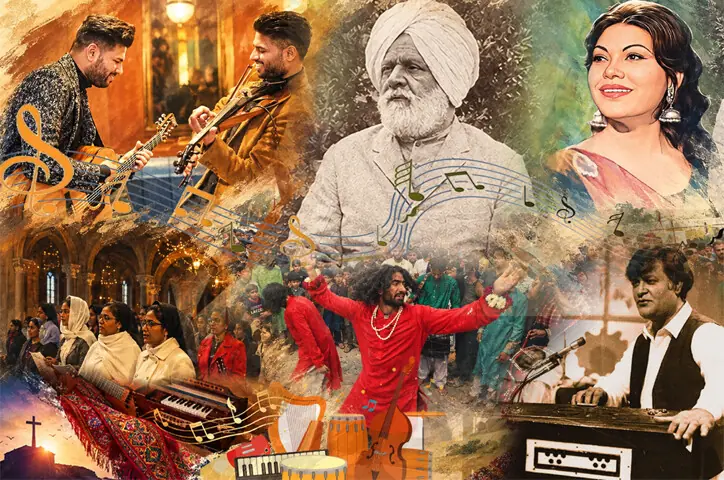
Christianity’s presence in South Asia predates colonial modernity by many centuries and its story in what is today Pakistan cannot, and should not, be understood solely through the lens of empire.
According to long-held tradition among the St Thomas Christians of southwestern India, the apostle Thomas, one of the original 12 disciples of Jesus Christ, arrived at the Malabar Coast (present-day Kerala) around 52 CE, establishing Christian communities that have endured for nearly two millennia.
While the historicity of Thomas’ journey remains debated, there is broad scholarly consensus that Christian communities have existed in the Subcontinent since at least the early centuries of the Common Era and were integrated into wider Eastern Christian networks centred in West Asia, particularly through Syriac-speaking churches linked to Persia and Mesopotamia.
Long before the arrival of European powers and their ecclesiastical institutions, these early South Asian Christian traditions evolved in dialogue with local languages, poetic forms and musical sensibilities.
From the Punjabi Zaboor of Imam-ud-Din Shahbaz to church choirs, Karachi’s golden age of live music and the digital worship of today, the story of Christian music in Pakistan reveals a rich musical heritage shaped by vernacular traditions, cultural exchange and generations of Christian musicians
THE MAKING OF A VERNACULAR CHRISTIAN TRADITION
From the 16th century onwards, the arrival of Portuguese, Dutch and, later, British missionaries significantly expanded Christianity’s demographic and institutional presence, gradually extending it into northern India and regions that would eventually form Pakistan.
During the British colonial period, especially in the late 19th and early 20th centuries, Christianity took root most visibly among marginalised and oppressed communities, particularly the Dalits — so-called ‘low-caste’ Hindu groups in Punjab and Sindh. Scholars widely agree that the overwhelming majority of Pakistani Christians today trace their ancestry to these mass conversions, undertaken not merely as acts of faith but as responses to entrenched caste hierarchies, social exclusion and economic exploitation. For many, conversion represented the promise, if not always the fulfilment, of dignity, education and social uplift.
This social history is crucial to understanding the development of Christian music in Pakistan. Unlike the courtly or classical traditions of the West, church music here emerged largely from village congregations, mission schools, urban settlements and labouring communities, where biblical texts were sung in Punjabi, Urdu, Sindhi and later Siraiki, often set to familiar melodic modes and rhythmic cycles.
From its earliest stages, Christian musical expression in the region developed in close conversation with its surroundings, absorbing influences from folk idioms, Sufi devotional practices and South Asian poetic metres, while gradually shaping a distinct sacred repertoire.
THE PSALMS IN PUNJABI
The indigenisation of Christian congregational music in Punjab found its most decisive expression in the translation and musical interpretation of the Zaboor, the Book of Psalms.
Inherently poetic and lyrical, the Psalms were especially amenable to translation, versification and song. As a scripture acknowledged not only in Christianity but also in Islam, where it is understood as a Divine revelation granted to Prophet Dawood, the Zaboor also occupies a unique interreligious position. By the late 19th century, it had begun to circulate widely in Punjabi, composed explicitly for singing rather than recitation.
Central to this process was Reverend Imam-ud-Din Shahbaz. He was a gifted poet who rendered all 150 Psalms into metrical Punjabi between the late 1800s and early 1900s.
Drawing on Punjabi poetic metres and indigenous melodic frameworks, including ragas [musical scales] such as kaafi, bhairavi and paharri and performed in bhajans [Hindu devotional songs] and kaafi-like forms accompanied by harmonium and tabla, Shahbaz’s Psalms entered the shared village soundscape, resonating beyond church walls among Muslim and Sikh listeners as well.
The raga-based musical settings of this Punjabi Psalter were composed by Radha Kishan, a Hindu musician, further underscoring the collaborative and intercommunal nature of this musical project. Shahbaz’s translations remain in use among Punjabi-speaking churches today and represent one of the earliest sustained efforts to express Christian scripture within the musical tradition of the region.
This vernacularisation was consolidated by the Sialkot Convention, established in 1904, which emphasised collective Psalm singing and preaching in Punjabi and Urdu.
Offering a revivalist alternative to Western ecclesiastical formality, the Convention embedded local sound and language at the heart of Protestant worship. Vernacularisation was not limited to Punjabi alone. Urdu hymnody, which developed alongside it, drew on the language’s rich tradition of devotional and lyrical poetry. Collections such as Geet Ki Kitaab and later Naya Geet Gao compiled Psalms and hymns in easily singable Urdu, using straightforward verse forms and melodies that congregations could quickly learn and follow.
As church historian Robert Eric Frykenberg has observed, Christianity in South Asia was shaped through sustained intercultural engagement with local religious worlds rather than being simply transplanted from Europe.
By the early 20th century, Punjabi and Urdu Psalm singing had become central to Christian communal life in what would soon become Pakistan, resonating in village churches, mission schools and urban congregations. While doctrinally distinct, this emphasis on sung scripture, emotional supplication and communal participation created a cultural familiarity with Sufi and folk devotional practices.
Punjabi and Sindhi Christian hymns often moved within the same emotional registers as kaafi and bhajan, drawing upon idiomatic expressions shaped by Sufi figures such as Bulleh Shah, Shah Hussain and Sachal Sarmast. Transmitted both orally and in print, these musical practices were shaped less by court musicians than by local singers, harmonium players and choir leaders, through whom Zaboor and hymnody emerged in Pakistan not as imported artefacts but as living, vernacular traditions.
THE HARMONIUM AND THE CHURCH

The trajectory of the harmonium in the Subcontinent closely mirrors that of Christian music itself.
Originally patented in 1842 in France by inventor Alexandre-François Debain as a foot-pumped reed organ, the harmonium reached India through missionaries and military regiments and was even reportedly used by the poet and composer Dwijendranath Tagore in his private theatre as early as 1860. It was later modified into its hand-pumped form by Dwarkanath Ghose of Bengal — one of the first inventors of the Indian-style harmonium — making it better suited to local performance contexts.
As Brian Bassanio Paul notes in his article From Hymn Books to Hashtags, following the British annexation of Punjab in 1849, Presbyterian, Anglican and Methodist missions established centres in Ludhiana, Jalandhar and Sialkot, introducing European hymnody, choral singing and the harmonium into churches and educational institutions.
Over time, the instrument’s portability and sonic compatibility led to its widespread adoption in rural congregations and, by the early 20th century, it had become central not only to Christian worship but also to Sikh, Hindu and Sufi devotional practices. By this period, the growth of mission schools, urban congregations and parish churches had also provided the institutional scaffolding for Christian musical life in Pakistan.
Church choirs, often guided by clergy or dedicated lay musicians, offered structured opportunities for musical training and cultivated generations of skilled singers and instrumentalists, who performed in worship, weddings, religious festivals and community events. Notably, many Christian choirs sing in four-part harmony, blending South Asian melodic sensibilities with choral techniques introduced through missionary education.
FROM CHURCH CHOIRS TO POPULAR MUSIC
From the mid-20th century onward, Christian musicians trained in church choirs, mission schools and parish ensembles played a subtle but formative role in Pakistan’s emerging media industries.
Mission schools and church choirs encouraged musical training, particularly in harmony, choral technique and sight-reading. These skills of instrumentalists, arrangers and vocalists were much sought after in professional settings. As musicologists such as Regula Qureshi and Alison Arnold have noted in their respective studies of South Asian music, this kind of training positioned Christian musicians to move fluidly between devotional, theatrical and popular idioms without rigid genre boundaries.
Music composers such as Robin Ghosh played pivotal roles during the golden age of Pakistani cinema; orchestras led by figures such as Sohail Rana, Master Inayat Hussain and Khwaja Khurshid Anwar frequently employed violinists, cellists, pianists and other players drawn from church-trained ensembles; and playback singers such as Irene Parveen, Sunny Benjamin John, Saleem Raza (born Noel Dias) and A. Nayyar lent their voices to many iconic geets and ghazals of the era.
Their proficiency in Western harmonies and experience with choral and instrumental textures enabled them to refine film scores, particularly in orchestration and background arrangements, even if their individual contributions were rarely credited. This subtle presence helped shape the sonic sophistication of Urdu and Punjabi cinema from the 1950s onward, while also influencing the formative musical ambience of radio and television.
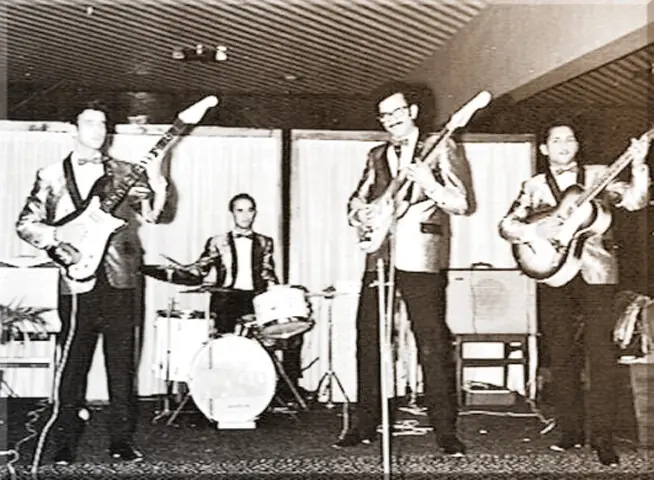
In the wake of Independence in 1947, Karachi, then the nation’s capital, had emerged as a vibrant hub of cultural fusion. Its cosmopolitan population and growing economy fostered a lively music scene, where nightclubs and cabarets became stages for experimentation and live performance.
Many of the city’s skilled musicians, largely from Christian communities of Goan and Anglo-Indian descent, brought Western styles such as jazz and swing to local audiences. These venues were not just entertainment spaces, but sites of cross-cultural exchange, where diverse communities gathered to celebrate music.
This golden era of live music helped cement the foundations for Pakistan’s pluralistic musical landscape, complementing the enduring influence of church-trained musicians in film, radio and television.
FROM TELEVISION TO THE DIGITAL AGE
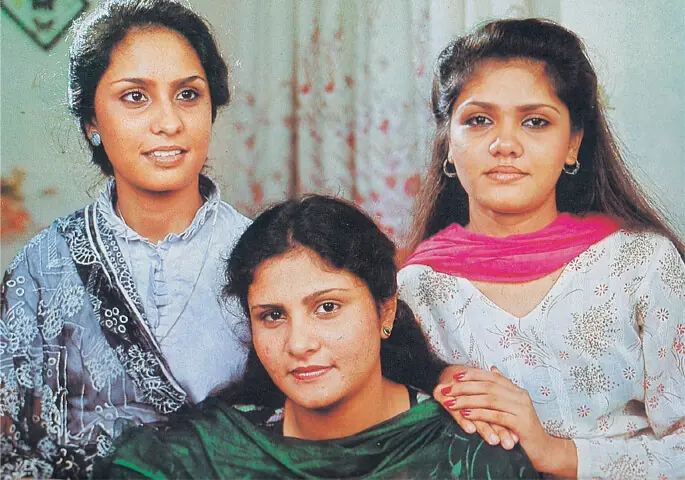
Television further expanded these opportunities: programmes around Christmas and Easter, as well as variety shows, showcased Christian musical talent, most famously the Benjamin Sisters, whose harmonised vocals brought church-trained choral aesthetics into millions of homes.
Yet, the vibrant nightclub and cabaret scene that had nurtured many Christian musicians was largely dismantled during the Ziaul Haq era, curtailing live performance opportunities and leaving numerous musicians unemployed. Despite this, the pre-Zia live music culture had already laid the groundwork for Pakistan’s rock and pop explosion in the 1990s, with many artists drawing on the technical skills, improvisational fluency and Western-influenced aesthetics honed by Christian performers a decade earlier.
In the 21st century, Christian music in Pakistan has increasingly found a home in digital spaces, extending its reach far beyond parish walls and broadcast studios. Online platforms host vernacular Psalm renditions, hymn recordings and experimental projects, often produced by independent musicians or parish collectives.
Collaborative initiatives, such as the Leo Twins’ masterful renditions of the Zaboor, exemplify this evolution, blending Eastern and Western instrumentation with traditional Psalms and featuring instrumentalists including Louis J. Pinto (Gumby) on drums, Melvin Arthur on bass and Joshua Keyth Benjamin on keys.
By reinterpreting centuries-old musical practices in contemporary idioms, these digital projects continue a historical trajectory of adaptation, resilience and local resonance, linking the church-trained expertise of past generations to a globally accessible audience and demonstrating the enduring creativity and vitality of Pakistan’s Christian musical heritage.
This essay is the third in a series on religious music in Pakistan, originally commissioned by the Centre for Social Justice. The first, Sounds of the Sacred, was published in Icon on December 7, 2025. The second, When Punjab Sang As One, was published on May 24, 2026.
The writer is an author and musician. He can be reached at ariebazhar@gmail.com
Published in Dawn, ICON, September 13th, 2026