 Livestock plays a pivotal role in socio-economic life of the rural community. It contributed 10.8 per cent to GDP and 46.8 per cent to the agriculture production during the year 2004-2005.
The livestock population consists of 50.3 million large ruminants 81.6 million small ruminants
The livestock sector offers great potential for exports if it is completely free from trans-boundary animal diseases. Under the transboundry animal diseases, rinderpest, foot and mouth disease and pest des petites ruminants (PPR) are the main diseases of global concern.
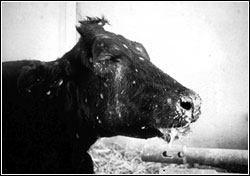
Rinderpest not only kills cattle, but it also has a devastating impact on rural incomes, livestock production and ultimately on food security.
Pakistan suffered major epidemics of rinderpest from 1947 to 1951 and again from 1959 to 1962 after which a situation of stable endemicity prevailed.
Several dairy colonies supply milk to the city of Karachi and were known sites of rinderpest propagation since 1970s.
In 1994, there was an unusual increase of rinderpest in Punjab. This was followed by introduction of infection into Northern Areas in August – September, 1994, a region which remained free from rinderpest for a long time. Virgin-soil epidemic ensued which persisted in the Gilgit and Hunza Valleys until 1996 and which resulted in 40,000 cattle, buffaloes and yaks deaths between 1994 and 1995 alone. The epidemic was classical cattle plague. It is the last such severe cattle plague recorded anywhere.
In the year 2000, an analysis of earlier information indicated that rinderpest was mainly associated with the peri-urban dairy colonies in Karachi. The last outbreak of rinderpest diagnosed and reported was in Karachi during September, 2000. Other parts of the country were reported basically rinderpest free.
For a country to declare itself provisionally free from rinderpest, it must fulfill certain conditions, which are: * no clinical disease should have been detected for at least two years; * there is an effective veterinary service which is able to monitor the animal health situation; * all clinical evidence suggestive of rinderpest are investigated; * there is an effective reporting system, both from the field to the central veterinary authority, and by that body to the OIE; * there is a reliable system for preventing the introduction of infection which is carried out by proper border control, quarantines, etc.; * All vaccinations against rinderpest will cease by the date of the declaration. The OIE and neighbouring countries must be notified of this decision (in writing), giving the date from which vaccination ceased.
A country or a zone which has not vaccinated against rinderpest for at least five years and has throughout that period had no evidence of rinderpest may be declared free from rinderpest disease by the OIE, provided that the country maintains permanently an adequate disease reporting system.
Pakistan is on the way to get the Rinderpest disease free status from OIE in near future. The Global Rinderpest Eradication Programme was started in 1998 with the objective to eradicate the disease by 2010.
Serosurveillance and disease surveillance for the transboundry animal diseases are underway by the trained veterinary staff with efficient disease reporting system.
In year 2000, the vaccination against rinderpest disease was stopped and in January, 2003 Pakistan declared itself rinderpest disease free country provisionally.
The current year (2006) is very important as the second round of serosurveillance for 36000 animals (cattle and buffalos) and participatory disease surveillance in 1500 villages will be completed. The results of these two field activities will be added to dossier to get rinderpest infection free status.
Different chapters needed for dossier are under preparation under the guidance of Animal Husbandry Commissioner (MINFAL). The dossier will be submitted to OIE in August, 2006 . On the consideration of dossier by OIE at different level, Pakistan is expected to achieve rinderpest freedom accreditation in May, 2007.
The writer is national co-director, EU/GoP Strengthening of Livestock Services Project (SLSP) Islamabad.