Sindh, World Bank agree on unified strategy to combat child stunting
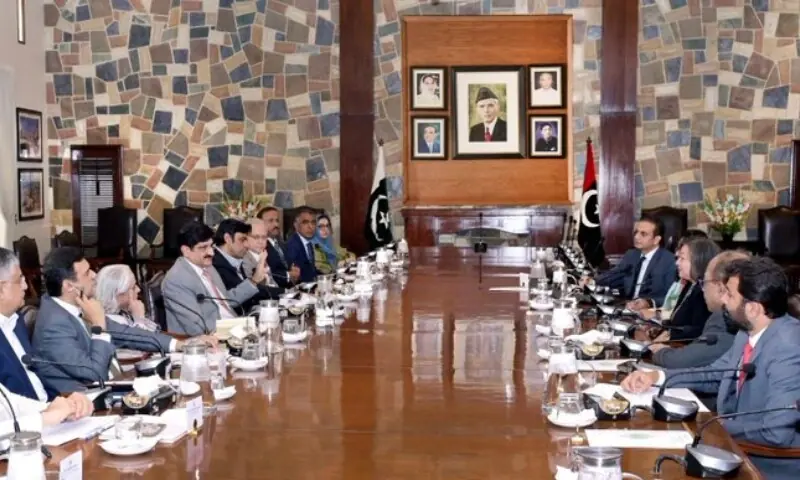

KARACHI: As child stunting remains one of Sindh’s most critical human development challenges, the provincial government and the World Bank (WB) on Monday agreed to launch a unified convergence strategy to tackle malnutrition by integrating health, nutrition, water and sanitation, social protection and agriculture interventions.
The agreement was reached during a high-level meeting between Chief Minister Syed Murad Ali Shah and WB Country Director Bolormaa Amgaabazar at CM House where both sides approved a new governance and monitoring framework designed to align sectoral programmes, budgets and performance targets under a single system.
The meeting was attended, among others, by Health Minister Dr Azra Fazal Pechuho, Chief Secretary Asif Hyder Shah, WB Lead Economist Ghazala Mansuri and Operations Officers Hina Salim Lotia and Murtaza Noonari.
According to a press statement issued by the CM House, under the proposed framework, the provincial government and the World Bank will move away from fragmented programmes and instead deliver coordinated, co-located actions across four key sectors.
Stunting Convergence Secretariat will coordinate annual work plans and address operational challenges, CM Murad tells WB country director
In the Water, Sanitation and Hygiene (WASH) sector, efforts will focus on expanding access to safely managed drinking water and sanitation services, improving sewage and wastewater treatment systems, and promoting BabyWASH practices to reduce environmental factors contributing to stunting.
In health and social protection, the programme will strengthen access to quality preventive and curative healthcare, maternal and child nutrition services, family planning, immunisation and behaviour change interventions.
Social protection initiatives, including the MAMTA and Nashonuma programmes, will provide conditional cash transfers to support improved childcare and feeding practices.
In the agri-food sector, the strategy aims to increase access to nutritious and diverse foods through crop diversification, enhanced livestock productivity, promotion of sustainable farming practices and the widespread adoption of household kitchen gardens. A province-wide behaviour change campaign will complement these interventions by encouraging healthier nutri to nutritious and diverse foods through crop diversification, enhanced livestock productivity, promotion of sustainable farming practices and the widespread adoption of household kitchen gardens. A province-wide behaviour change campaign will complement these interventions by encouraging healthier nutritional, hygiene and childcare practices.
The meeting was told that the first phase of convergence would focus on districts where health, social protection and WASH interventions overlap, including Badin, Jacobabad, Kashmore, Mirpurkhas, Shikarpur, Sujawal, Tando Allahyar, Tando Muhammad Khan, Thatta and Umerkot.
The chief minister endorsed the establishment of a multi-tier governance structure to ensure accountability.
It was decided that a policy and monitoring steering committee, chaired by the chief minister, would provide strategic guidance, approve priorities, ensure alignment of policies and financing, review performance and resolve major inter-sectoral bottlenecks.
A stunting convergence secretariat, chaired by the chief secretary or chairman planning and development, will coordinate annual work plans, monitor implementation, align sectoral interventions and address operational challenges.
At the district level, district coordination committees, chaired by deputy commissioners, will oversee implementation, coordinate sectoral activities, monitor progress against targets and identify local bottlenecks requiring provincial intervention.
The meeting also approved the development of an integrated stunting management information system that would combine sectoral data from health, social protection, WASH and agriculture programmes into a single dashboard.
The proposed system will integrate health facility data, outreach indicators from Lady Health Workers and Community Health Workers, vaccination records, beneficiary information from MAMTA and Nashonuma programmes, WASH infrastructure databases, water quality testing results and district-level budget allocations.
The chief minister said that reducing child stunting was not merely a health objective but a fundamental development priority for Sindh. “Every stunted child represents lost human potential. If we are serious about improving education outcomes, economic productivity and social wellbeing, we must tackle child stunting through a coordinated, whole-of-government approach,” he said.
He said that fragmented interventions could not effectively address the multidimensional causes of malnutrition and poor child growth, adding that the challenge cuts across health, sanitation, nutrition, poverty and food security and therefore the response must be equally integrated.
CM Murad said that district-level implementation would be the key to success. “The real impact of this initiative will be measured in our villages, communities and households,” he said.
Published in Dawn, August 4th, 2026